Over 2.2 Million Social Assistance Recipients Flagged for Online Gambling Links Prompting Urgent Verification by Indonesian Ministry of Social Affairs

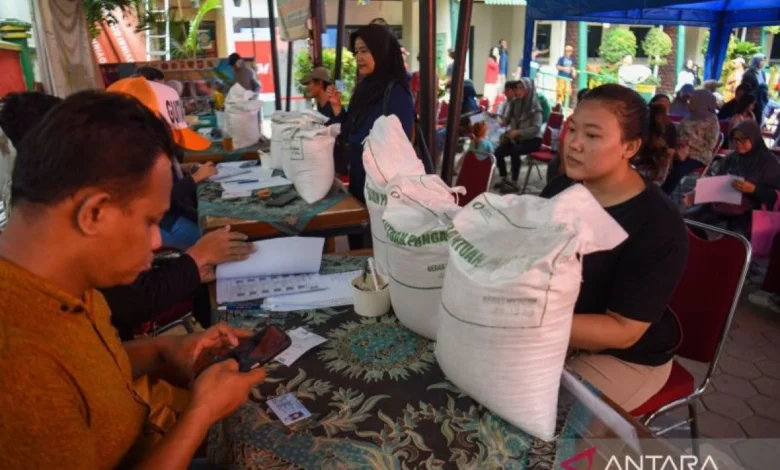
The integrity of Indonesia’s national social security framework has once again come under intense public scrutiny following a sweeping data audit that identified more than 2.2 million Keluarga Penerima Manfaat (KPM)—or Beneficiary Families—linked to suspected online gambling activities. The revelation, which emerged during the evaluation of social assistance disbursement for the second quarter of 2026, has ignited a nationwide debate regarding data accuracy, digital identity theft, and the ethical boundaries of distributing state aid.
While the sheer volume of flagged accounts has caused widespread alarm, the Indonesian Ministry of Social Affairs (Kemensos), in collaboration with the Financial Transaction Reports and Analysis Centre (PPATK), has emphasized that an electronic flag does not automatically equate to proven guilt. Millions of vulnerable citizens now find themselves caught in a bureaucratic limbo, awaiting rigorous field verifications to determine whether their state-allocated financial lifelines will be restored or permanently revoked.
The Anatomy of the Audit: Tracing the Flow of Suspicious Transactions
The joint investigative effort between Kemensos and PPATK unveiled a staggering number of flagged beneficiaries across two of Indonesia’s primary social safety net programs. Specifically, the data analysis revealed that 1,494,652 recipients of the Non-Cash Food Assistance program, commonly known as Bantuan Pangan Non Tunai (BPNT), showed transaction patterns indicative of online gambling, locally referred to as judol. Additionally, 794,475 recipients enrolled in the Family Hope Program (Program Keluarga Harapan, or PKH) were captured in the same dragnet.
The discovery is the culmination of months of cross-institutional data matching aimed at ensuring that state funds intended to alleviate poverty and boost nutritional standards are not being diverted into illicit digital wagering platforms. In recent years, the Indonesian government has intensified its crackdown on online gambling, viewing it as a systemic threat to economic mobility and social stability. However, deploying financial intelligence tools designed for banking sectors onto marginalized communities has exposed unforeseen complications, particularly concerning digital literacy and household proxy spending.
Kemensos officials have noted that the presence of a flagged National Identification Number (NIK) does not definitively prove that the registered beneficiary was the individual placing the bets. Preliminary findings from various regional social agencies (Dinas Sosial) indicate a disturbing trend: numerous beneficiaries whose aid was suspended were entirely unaware of any illicit activity tied to their accounts. In many instances, family members—such as spouses, children, or extended relatives—had misappropriated the beneficiary’s identity or digital wallet credentials to access online gambling sites without the primary account holder’s consent or knowledge.
The Mechanism of Suspension: Due Process and the Right to Clarify
Recognizing the high probability of collateral damage among innocent, elderly, or impoverished citizens, the Ministry of Social Affairs has instituted a multi-tiered response protocol ensuring that social assistance is not abruptly or permanently terminated without due process.
Under the current administrative framework, an automated flag triggers a temporary suspension rather than an immediate cancellation of rights. This grace period is designed to allow affected individuals the opportunity to present their case and rectify discrepancies through established administrative channels.
The primary vehicle for this remediation is the National Single Data System for Social and Economic Welfare (DTSEN) and the Next Generation Social Welfare Information System (SIKS-NG). Beneficiaries who believe they have been wrongfully implicated can initiate a formal rebuttal, known locally as the sanggah or objection mechanism, directly through designated local operators stationed at village or sub-district (kelurahan) offices.
Local governments have already begun reporting initial waves of clarifications. For instance, in Tangerang Regency, out of 259 beneficiary families whose assistance was initially frozen due to gambling indicators, 195 promptly stepped forward to clear their names. Local social services confirmed that the majority of these cleared cases involved NIK misuse by younger household members or neighbors who had access to the beneficiary’s mobile device or banking credentials. Similar administrative workflows have been observed in Bantul Regency, where local authorities established clear procedural dichotomies to separate innocent victims of identity misuse from willful violators.
Navigating the Rebuttal: Administrative Pathways for the Exonerated and the Guilty
For citizens who maintain their innocence, the path to reinstatement requires active engagement with municipal and village authorities. Beneficiaries are instructed to visit their local administrative office, declare that they have never engaged in online gambling, and request a comprehensive data re-verification. Field officers are then deployed to assess the living conditions of vulnerable groups—such as the elderly, disabled, and extreme poor—to ascertain whether the state aid is genuinely reaching its intended targets. If the recipient is found to be compliant with program criteria and free of direct violations, the suspension is lifted, and retroactive disbursements are typically processed.
Conversely, for individuals who admit to utilizing social assistance funds for online gambling, the government has established corrective rather than purely punitive pathways, alongside strict enforcement measures. In Bantul, for example, authorities introduced a specialized feature within the SIKS-NG platform titled "Berhenti Judol" (Stop Online Gambling). This feature allows admitting participants to formally commit to halting their gambling activities, serving as a rehabilitation-oriented step before deciding administrative sanctions.
However, the Ministry of Social Affairs has maintained a zero-tolerance policy for repeat offenders. While first-time or ambiguous infractions are met with suspension and investigation, confirmed misuse of state funds—especially when verified through repeated behavioral patterns—can result in the total revocation of beneficiary status, removing individuals from the integrated social welfare database permanently.
Broader Implications for Indonesia’s Social Protection Architecture
The intersection of state welfare distribution and online gambling crackdowns highlights the complex challenges facing digital governance in developing economies. As Indonesia increasingly digitizes its social assistance programs—transitioning from physical cash distributions to direct digital bank transfers and experimenting with biometric verifications such as facial scanning—the attack surface for digital exploitation has expanded proportionally.
Experts note that while data-driven oversight by agencies like PPATK is vital for fiscal responsibility, it must be balanced with robust social protection safeguards. Vulnerable populations often lack the digital security awareness necessary to protect their personal identification numbers and bank accounts from tech-savvy relatives or predatory third parties. Consequently, mass data suspensions risk pushing the genuinely needy deeper into poverty if administrative remediation processes are too complex, opaque, or slow.
Furthermore, the current crisis underscores the pervasive psychological and financial toll of online gambling across all strata of Indonesian society. By capturing hundreds of thousands of low-income families in its audit web, the government has laid bare the grim reality that illicit digital platforms have penetrated even the most economically fragile households, often cannibalizing funds meant for daily sustenance, education, and healthcare.
Steps for Beneficiaries and Public Transparency
To maintain transparency and assist citizens navigating this turbulent administrative period, the Ministry of Social Affairs continues to promote public access to verification tools. Beneficiaries suspecting erroneous suspensions or wishing to verify their active status can independently check their credentials through the official Cek Bansos portal provided by the ministry.
If discrepancies arise, citizens are strongly encouraged to bypass unverified intermediaries and coordinate directly with local DTSEN or SIKS-NG operators in their respective villages or sub-districts. By leveraging the formal objection mechanisms, eligible recipients can protect their entitlements and ensure that systemic flaws do not deprive them of essential state support.
As the Ministry of Social Affairs presses forward with its comprehensive nationwide re-verification of the 2.2 million flagged accounts, the coming months will serve as a critical test for Indonesia’s welfare administration. The success of this operation will not merely be measured by the volume of illicit gambling accounts purged from the system, but equally by how swiftly, justly, and compassionately the state restores dignity and livelihood to the millions of innocent citizens caught in the crossfire.
Related posts: