BRIN Accelerates Brain Gain Strategy by Empowering Indonesian Diaspora as Principal Investigators in Global Research

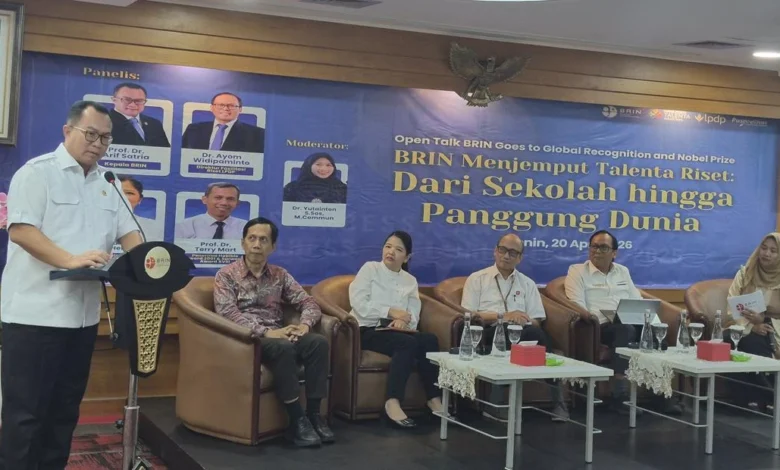
The National Research and Innovation Agency (BRIN) has officially launched a comprehensive strategic initiative aimed at elevating Indonesia’s research reputation on the global stage by positioning the Indonesian diaspora as a central pillar of the nation’s scientific advancement. Speaking at the "Open Talk BRIN Goes to Global Recognition and Nobel Prize" held at the BJ Habibie Building in Central Jakarta on Monday, April 20, 2026, the Head of BRIN, Professor Arif Satria, emphasized that the agency is now prioritizing the integration of high-level diaspora talent into the national research ecosystem. By encouraging overseas Indonesian researchers to take on roles as principal investigators in international projects, BRIN aims to create a sustainable bridge for knowledge transfer and collaborative innovation. This strategy is not merely about bringing individuals home, but about creating a global network where Indonesian talent leads groundbreaking research, regardless of their physical location, while simultaneously preparing the domestic infrastructure to welcome those who choose to return to their homeland.
Professor Arif Satria highlighted that when the Indonesian diaspora is empowered to lead as principal investigators, it creates a ripple effect that strengthens the nation’s future research capabilities. He described the diaspora as a vital bridge for international collaboration, providing Indonesian institutions with access to global networks, advanced technology, and high-impact publication opportunities. To support this vision, BRIN has been meticulously preparing a suite of regulatory instruments designed to streamline the transition for researchers abroad. These regulations are specifically tailored for those who have spent significant time in foreign academic or industrial settings and are now seeking to contribute directly to Indonesia’s development. The agency recognizes that for the diaspora to return or collaborate effectively, there must be a clear, legally-backed framework that ensures professional stability and provides the necessary resources to continue high-level inquiry.
Shifting the Paradigm: From Brain Drain to Brain Gain
A central theme of the current administration’s scientific policy is the aggressive transition from a "brain drain" scenario to a "brain gain" reality. For decades, Indonesia has faced the challenge of brain drain, a phenomenon where the country’s most educated and skilled individuals migrate to developed nations in search of better facilities, funding, and career prospects. Professor Arif Satria asserted that BRIN is currently finalizing several regulatory instruments to reverse this trend. One of the most significant developments is the upcoming Joint Ministerial Decree (SKB) between BRIN and the Ministry of Higher Education, Science, and Technology (Kemdiktisaintek). This decree, expected to be released to the public within the next week, serves as a formal commitment to synchronize research efforts across different government sectors.
The SKB will introduce two critical guiding documents that will dictate the trajectory of Indonesian science for decades to come. The first is the Indonesian Research Roadmap 2045, a long-term strategic plan aligned with the "Indonesia Emas 2045" vision, which aims to position the country as one of the world’s top economies and innovation hubs by its centenary. The second document is the National Research Agenda for 2024–2029, which outlines immediate priorities, funding allocations, and specific scientific targets for the next five years. By establishing these roadmaps, the government intends to facilitate "brain gain," a process where Indonesia becomes an attractive destination for global talent. Professor Satria noted that brain gain is not limited to returning Indonesians; it also involves attracting international researchers to work within the Indonesian ecosystem, thereby enriching the local intellectual landscape with diverse perspectives and expertise.
Strengthening the Research Ecosystem through Inter-Agency Collaboration
The realization of a world-class research environment in Indonesia requires a multi-faceted approach that transcends the capabilities of a single agency. Professor Arif Satria acknowledged that BRIN cannot achieve these ambitious goals in isolation. Consequently, the agency has forged strong strategic partnerships with the Ministry of Higher Education, Science, and Technology (Kemdiktisaintek) and the Education Fund Management Agency (LPDP). The involvement of LPDP is particularly crucial, as it provides the financial "lifeblood" for the new research ecosystem. With LPDP’s massive endowment funds, BRIN is now able to offer larger, multi-year research grants that were previously unavailable in the Indonesian public sector.
This collaboration aims to address the historical underfunding of Indonesian R&D. By pooling resources, the government is creating a more robust financial foundation for science. Professor Satria stated that the presence of LPDP within this ecosystem allows for the acquisition of advanced laboratory equipment and the funding of large-scale projects that can compete for international recognition, including the prestigious Nobel Prize. The synergy between BRIN’s research infrastructure, Kemdiktisaintek’s academic talent pool, and LPDP’s financial backing is intended to create a "virtuous cycle" of innovation where high-quality research attracts more funding, which in turn attracts more elite talent.
Infrastructure and Human Capital: The Pillars of Productivity
During the Open Talk event, Professor Arif Satria emphasized that Indonesia’s research facilities have undergone significant upgrades and are now capable of supporting world-class inquiries. "Our facilities are excellent, and our people are excellent. The challenge now lies in how we utilize this existing potential so that these facilities become increasingly productive," he remarked. The BJ Habibie Building itself stands as a symbol of this modernization, housing state-of-the-art laboratories and serving as a hub for the nation’s scientific community. The focus is shifting from "capacity building"—the procurement of hardware and basic training—to "productivity maximization," where the focus is on high-impact outputs such as patents, international journals, and industrial applications.
To ensure this productivity, BRIN is implementing a merit-based system for researchers, where career advancement and funding are closely tied to performance and global impact. This system is designed to mirror the competitive environments of top-tier global research institutions, making it easier for diaspora members to integrate into the local system without feeling a drop in professional standards. The agency is also looking into "hybrid" roles, where diaspora researchers can maintain their positions abroad while leading research groups in Indonesia, utilizing digital collaboration tools and periodic physical residencies.
Chronology of the Diaspora Integration Initiative
The current push to leverage the diaspora is the culmination of several years of policy evolution within the Indonesian government. The timeline of this initiative can be traced back to the consolidation of various research institutes into BRIN in 2021.
- 2021-2022: BRIN focused on institutional consolidation and the inventory of national research assets.
- 2023: The "Diaspora Research Program" was initially piloted, offering short-term fellowships for overseas Indonesians to visit local universities.
- 2024: The government identified a need for a more permanent regulatory framework, leading to the drafting of the Research Roadmap 2045.
- 2025: Increased coordination with LPDP resulted in the "Global Talent Program," providing dedicated funding for diaspora-led projects.
- April 2026: The announcement of the SKB with Kemdiktisaintek marks the official start of the "Brain Gain" era, providing the legal and strategic certainty required for large-scale talent repatriation and collaboration.
Broader Implications for National Development
The strategic shift toward a brain gain model has profound implications for Indonesia’s socio-economic landscape. Economically, a stronger research sector leads to increased domestic innovation, reducing the country’s reliance on imported technology and intellectual property. By fostering an environment where the diaspora can lead, Indonesia is effectively "importing" decades of global expertise at a fraction of the cost it would take to develop such expertise from scratch. This move is expected to boost Indonesia’s ranking in the Global Innovation Index (GII), where the country has been striving to break into the top 50.
Socially, the presence of highly successful diaspora researchers in local institutions serves as an inspiration for the younger generation of Indonesian students. It creates a visible pathway for scientific success within the country. Furthermore, the focus on "Principal Investigators" means that Indonesian researchers will no longer just be "data collectors" for foreign-led studies but will be the ones setting the research agendas, defining the questions, and owning the results. This shift in power dynamics is essential for national pride and for ensuring that research conducted in Indonesia primarily benefits the Indonesian people.
Analyzing the Path to Global Recognition
The ambition to achieve a Nobel Prize, as mentioned in the event title, is a high-level symbolic goal that represents the ultimate standard of scientific excellence. While critics might view this as overly optimistic, Professor Arif Satria and BRIN view it as a necessary benchmark to drive systemic change. To reach such a level, the agency is focusing on "frontier research" in fields where Indonesia has a natural advantage, such as biodiversity, tropical medicine, marine sciences, and renewable energy (specifically geothermal and nickel-based battery technology).
The success of this initiative will ultimately depend on the consistent implementation of the upcoming SKB and the government’s ability to maintain political and financial support for science across different administrations. By bridging the gap between the diaspora and the homeland, BRIN is betting on the fact that Indonesia’s greatest resource is not just its natural wealth, but the collective intelligence of its people, scattered across the globe but now being called back to build a common future. As the new regulations roll out in the coming weeks, the international scientific community will be watching closely to see if Indonesia can truly transform itself into a global hub for innovation.