Arsenal’s Defeat to Manchester City Ignites Torrent of Viral Memes, Intensifying Premier League Title Race Narratives

The football world was set ablaze following Arsenal’s significant defeat at the hands of Manchester City, a result that sent immediate shockwaves through the Premier League title race and unleashed an unprecedented flood of viral memes across social media platforms. The highly anticipated clash, seen as a potential decider in the fiercely contested championship, ended with a decisive victory for the reigning champions, triggering a digital outpouring of satire, commiseration, and schadenfreude that quickly dominated online discourse. Fans, pundits, and rival supporters alike seized upon the Gunners’ setback, transforming their disappointment into a series of sharp, often humorous, and widely shared internet memes, prominently featuring themes of "Arsenal Tears" and the club’s perennial struggle to clinch major silverware.
The Pivotal Clash in the Premier League Title Race
The match between Arsenal and Manchester City was not just another fixture; it was widely regarded as a pivotal moment in the Premier League season, carrying immense weight for both clubs vying for the coveted title. Going into the encounter, the league table had been tightly contested, with Arsenal often holding a slender lead, only for Manchester City, known for their formidable late-season surges, to close the gap relentlessly. Arsenal, under Mikel Arteta, had shown remarkable consistency and maturity throughout the season, fostering genuine belief among their fanbase that this could finally be the year they ended their long wait for a Premier League trophy, a drought stretching back to the "Invincibles" season of 2003-04. Manchester City, managed by Pep Guardiola, had been pursuing an unprecedented run of dominance, aiming for yet another league title to add to their growing collection, underlining their status as one of Europe’s most successful clubs of the modern era. The historical context of Arsenal’s recent challenges in closing out title races, often succumbing to pressure in crucial moments, added an extra layer of narrative tension to this particular fixture, making it a true six-pointer in every sense. The global audience for the Premier League, estimated to reach billions across various platforms, ensured that the outcome and its immediate aftermath would be scrutinized and amplified on an unparalleled scale.
Match Chronology: A Decisive Encounter
The build-up to the match was electric, with extensive media coverage dissecting every tactical nuance and player fitness update. When the whistle blew, the intensity was palpable. From the opening minutes, Manchester City asserted their dominance, particularly in midfield, stifling Arsenal’s creative outlets and dictating the tempo of the game. Key moments unfolded rapidly: City’s first goal came relatively early, a testament to their attacking prowess and Arsenal’s initial struggle to contain their fluidity. This early strike set the tone, forcing Arsenal to chase the game, a position they often find challenging against a well-drilled City side. The Gunners attempted to respond, showing flashes of their attacking brilliance, but their efforts were often thwarted by City’s resolute defense and tactical fouls in crucial areas.
As the match progressed, Manchester City capitalized on defensive errors and moments of individual brilliance. Erling Haaland, City’s prolific striker, played a crucial role, not only in his goal-scoring contributions but also in his ability to draw defenders and create space for his teammates. His physical presence and clinical finishing were instrumental in widening City’s lead. The second goal further deflated Arsenal’s spirits, and by the time the third hit the back of the net, the outcome seemed all but sealed. Arsenal’s manager, Mikel Arteta, made tactical adjustments, bringing on fresh legs and altering formations, but the momentum had firmly swung in City’s favour. The final whistle confirmed a comprehensive victory for Manchester City, a result that significantly altered the dynamics of the Premier League title race, putting City in pole position with games in hand and a superior goal difference. The match stats painted a clear picture: City dominated possession, had more shots on target, and displayed a level of clinical efficiency that Arsenal, despite their season-long improvements, could not match on this critical day.
The Digital Aftermath: A Flood of Memes
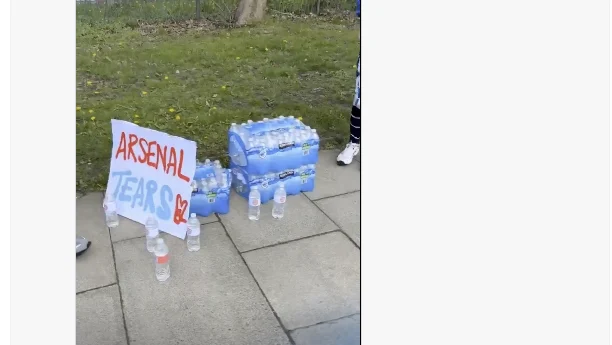
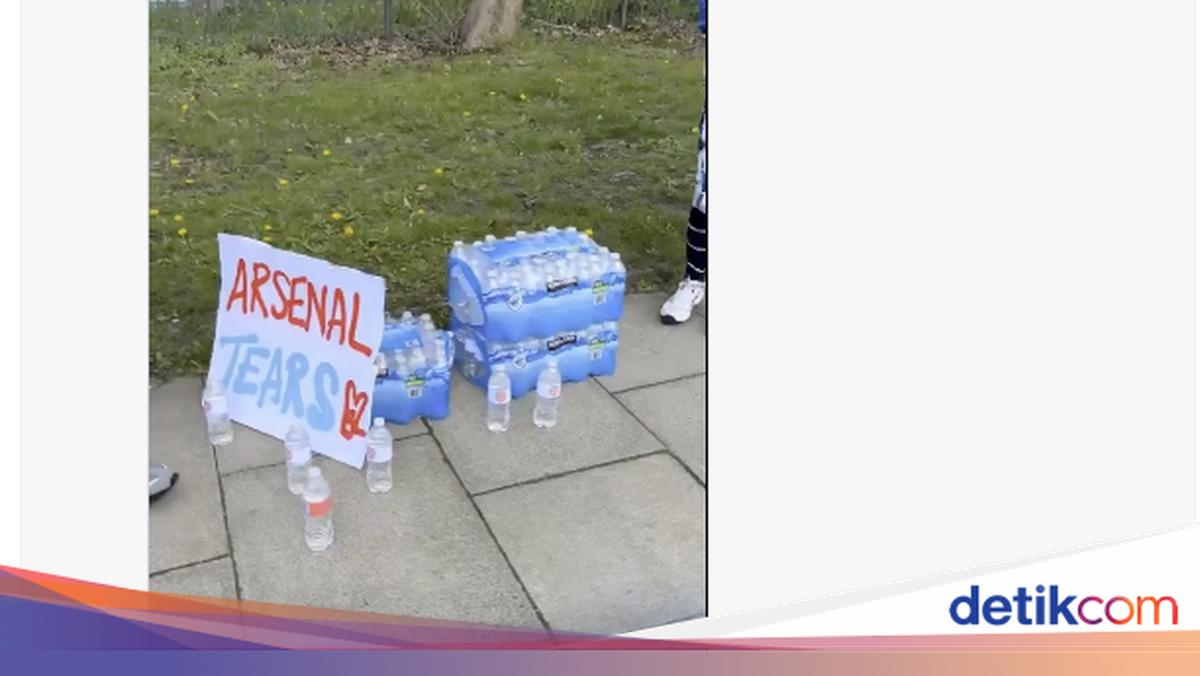
Immediately following the final whistle, social media platforms, particularly X.com (formerly Twitter), became a vibrant, often brutal, arena for football fans to express their reactions. The defeat sparked an explosion of memes, transforming Arsenal’s sorrow into viral content. The core theme of many memes revolved around "Arsenal Tears," a mocking appropriation of the club’s perceived emotional distress.
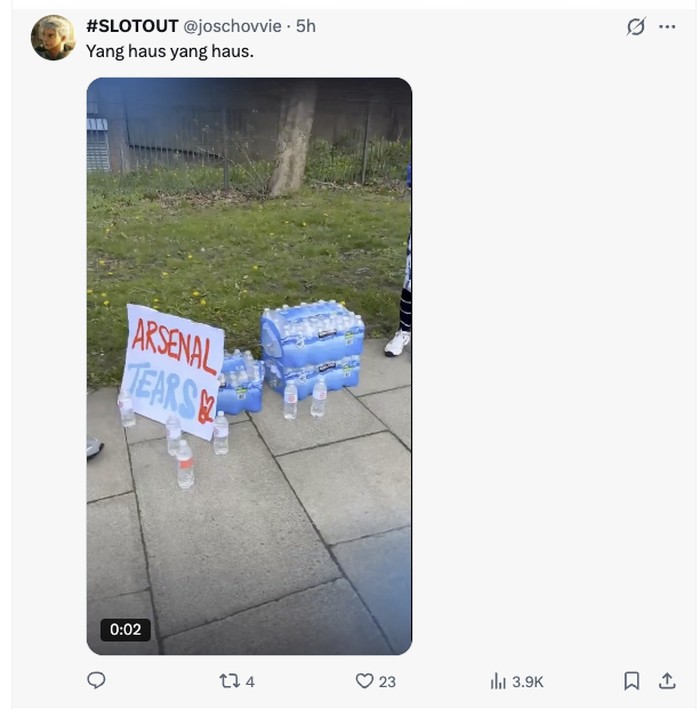
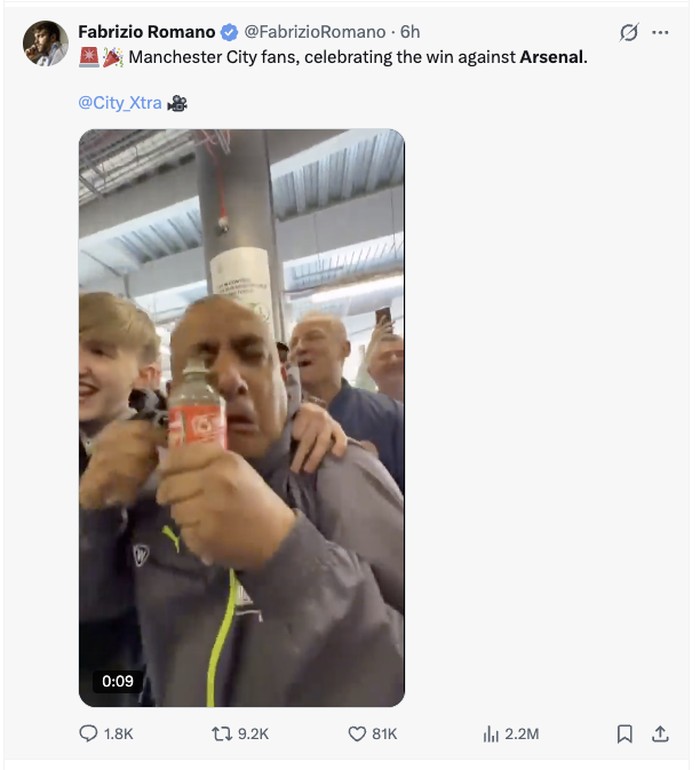
One prominent meme depicted rows of bottled water, each label emblazoned with "Arsenal Tears," sarcastically suggesting that the Gunners’ heartbreak could be bottled and sold. This image was swiftly followed by another, showing jubilant Manchester City fans dramatically pretending to drink from these "Arsenal Tears" bottles, celebrating their victory by metaphorically consuming their rivals’ disappointment. The visual impact was powerful, encapsulating the deep-seated rivalry and the victor’s joy at the vanquished’s expense.
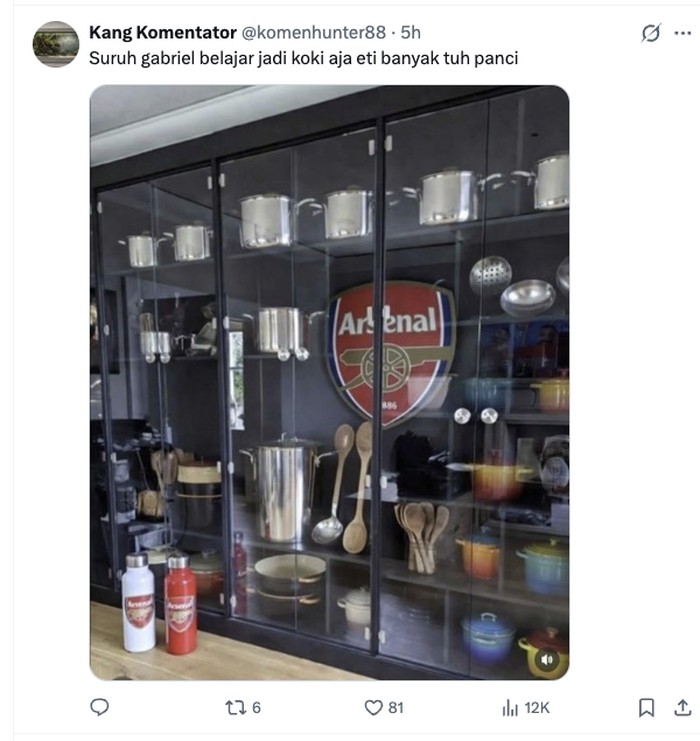
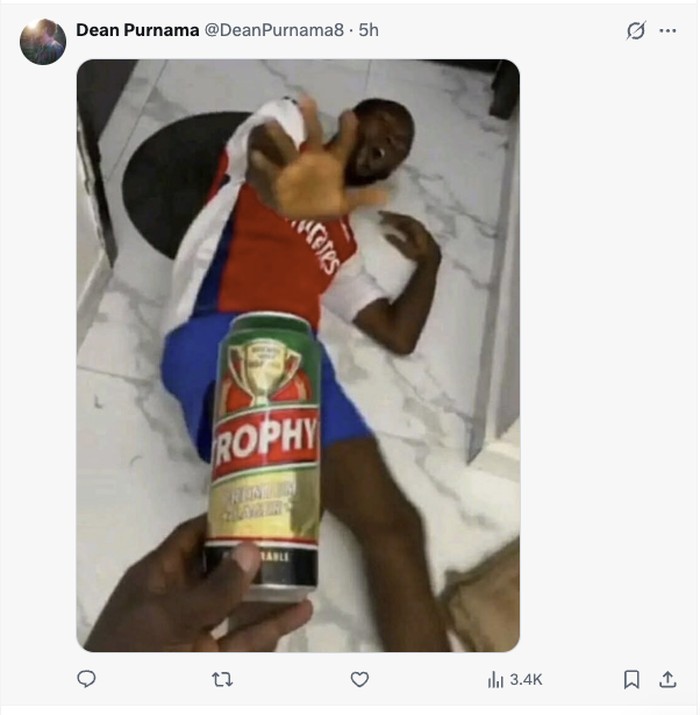
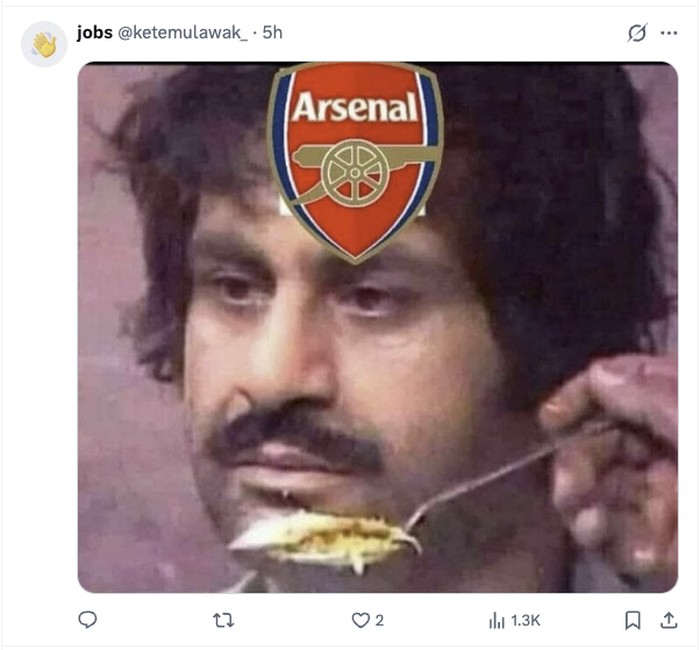
The meme factory didn’t stop there. Another widely circulated image featured an Arsenal player looking dejected, seemingly rejecting a "trophy" made from a humble tin can. This was a scathing critique, implying that despite their efforts, Arsenal consistently falls short of real silverware, even in their imagination. The notion of the "trophy drought" was further amplified by a meme showcasing a kitchen cabinet filled not with football trophies, but with Arsenal-branded pots and pans, sarcastically suggesting that the club’s true collection lay in domestic items rather than prestigious awards.
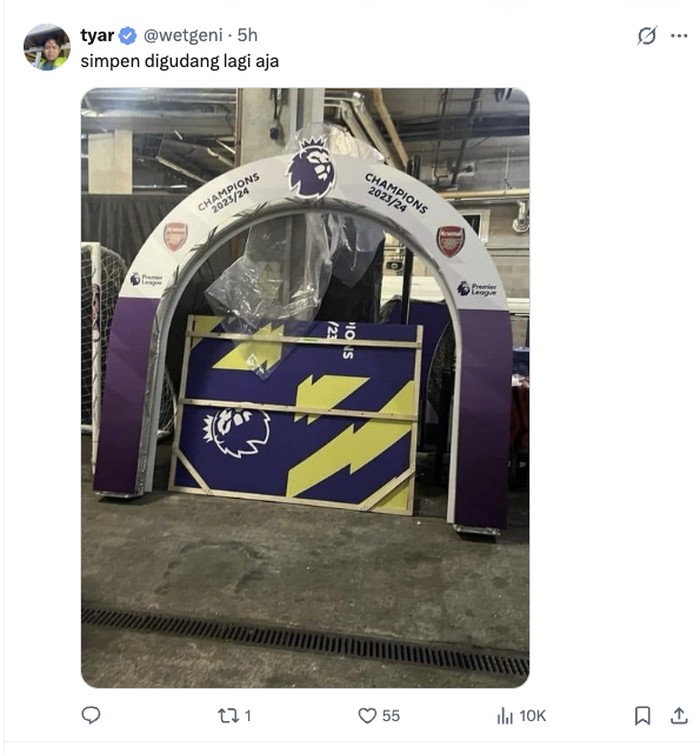
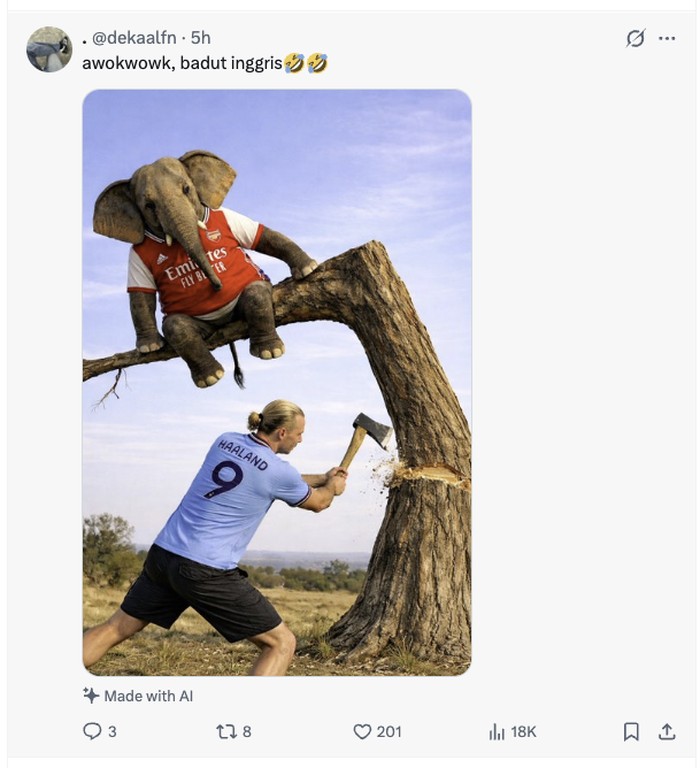
The dream of lifting the Premier League trophy was literally put "in storage" by one meme, which depicted the iconic Premier League championship arch tucked away in a dusty warehouse, symbolizing Arsenal’s fading hopes for the title this season. Erling Haaland, the bane of Arsenal’s defense, was immortalized in a meme where he was shown "chopping down" a tree representing Arsenal’s aspirations, underscoring his decisive impact on their title challenge.
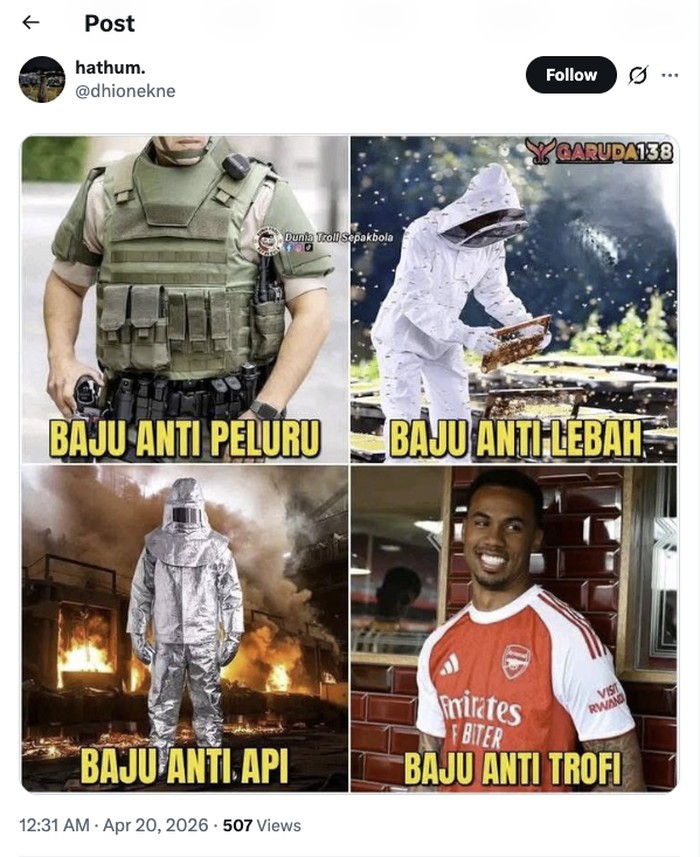
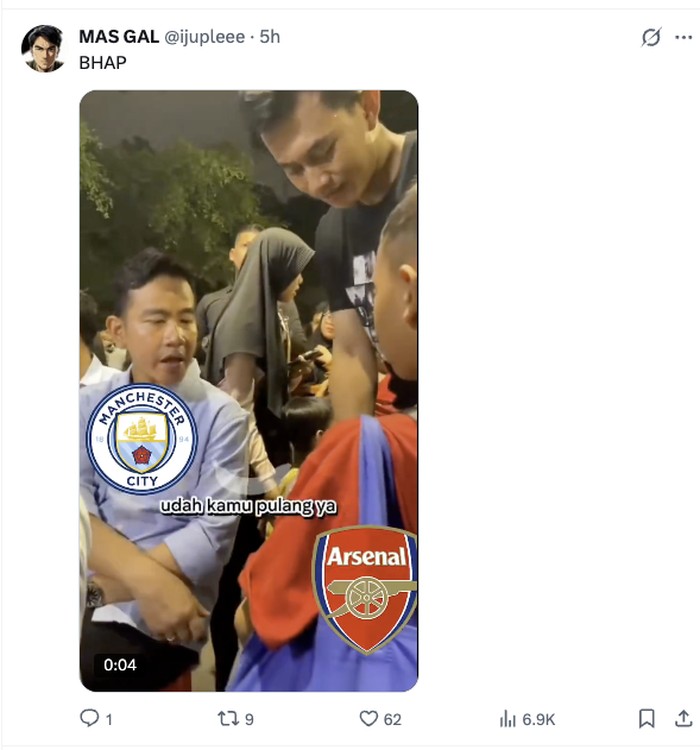
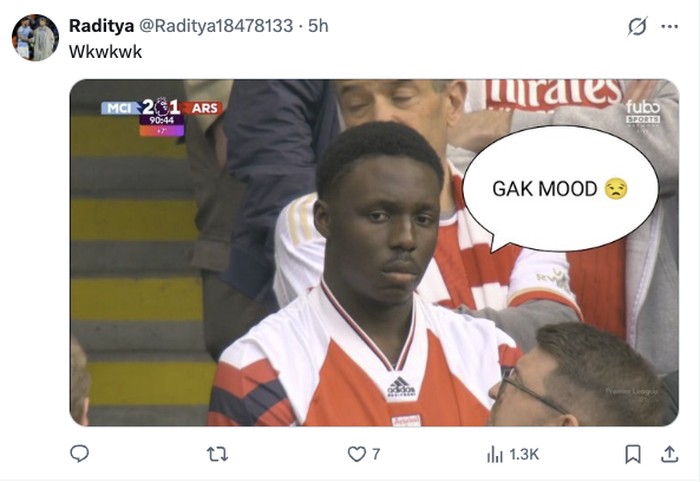
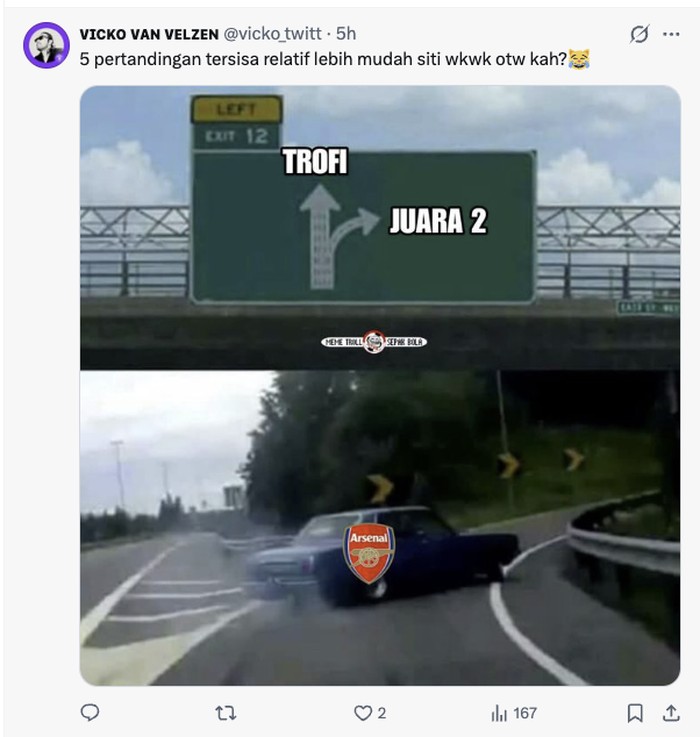
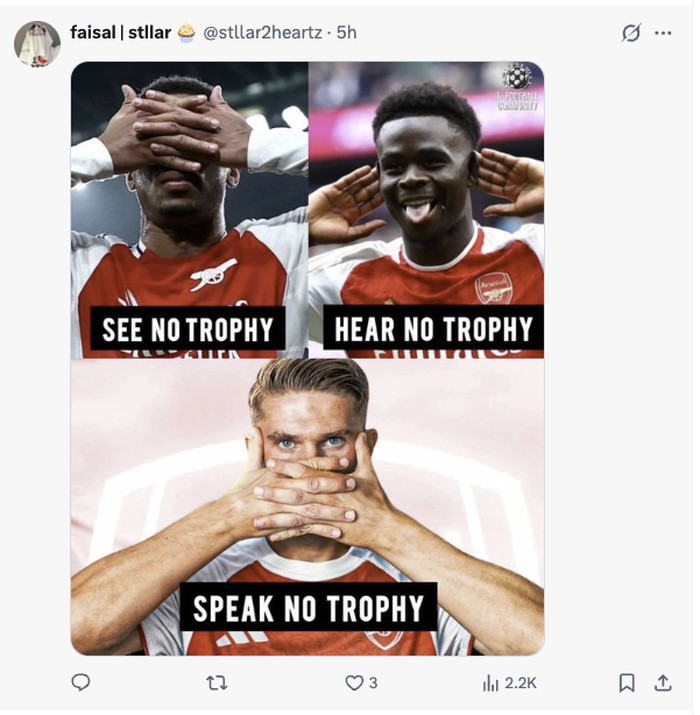
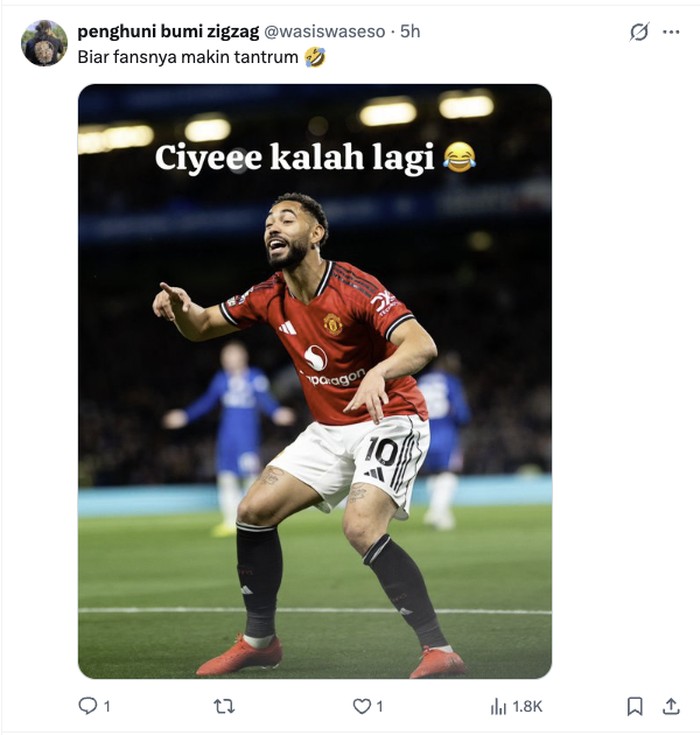
More direct and equally cutting were memes like the "anti-trophy shirt," a mock piece of apparel suggesting Arsenal players are somehow immune to winning titles, or the "no trophy" meme, a stark and simple declaration of their current reality. Rival fans, particularly those from Manchester United, reveled in Arsenal’s misfortune, with one meme humorously depicting a smiling Manchester United fan finally getting a good night’s sleep, contrasting with the presumed anguish of Arsenal supporters. Other memes included a poignant image of a sad Arsenal fan’s expression on the morning after the defeat, and a sardonic observation that "Arsenal always chooses a different path" – implying a path away from success. The meme featuring "greetings from the neighbors" further highlighted the collective amusement of other clubs at Arsenal’s plight, while the "kalah jangan nggak makan, nanti sakit" (don’t skip meals when you lose, you’ll get sick) offered a mock-sympathetic yet inherently mocking tone. Finally, the "Fans City to Arsenal: Sudah kamu pulang dulu ya…" (City fans to Arsenal: You can go home now…) meme delivered a dismissive, triumphant message. These diverse yet thematically linked memes created a viral sensation, trending across social media and becoming an indelible part of the match’s legacy.
Deconstructing the "Arsenal Tears" Phenomenon
The "Arsenal Tears" meme, in particular, resonated deeply within the football community, embodying several layers of meaning. On one hand, it served as a brutal, yet effective, psychological weapon wielded by rival fans. It tapped into the long-standing narrative surrounding Arsenal’s perceived fragility in crucial moments and their prolonged inability to convert promising seasons into league titles. The imagery of bottling tears is a hyperbolic representation of emotional distress, used to amplify the perceived disappointment of the losing side. For Manchester City fans, it was a celebratory gesture, a visual declaration of their dominance and their role in dashing Arsenal’s hopes.
Beyond mere taunting, the meme also reflects the communal aspect of football fandom. Sharing these memes creates a sense of camaraderie among rival supporters and provides a low-stakes outlet for expressing competitive spirit. The virality of "Arsenal Tears" also highlights the rapid-fire nature of internet culture, where an event’s significance is almost immediately processed, distilled, and disseminated in digestible, often humorous, visual formats. It’s a testament to how quickly online communities can coalesce around a shared narrative, transforming individual disappointment or triumph into a collective digital experience. The meme’s effectiveness lies in its simplicity and its ability to immediately convey complex emotions and historical context within a single image.
The Psychology and Sociology of Football Memes
Football memes are more than just fleeting jokes; they are a significant cultural phenomenon that reflects and shapes the collective consciousness of fans worldwide. Psychologically, memes provide an outlet for intense emotions, whether it’s the catharsis of laughter in victory or the shared commiseration (or sometimes, self-deprecating humor) in defeat. For rival fans, creating and sharing memes of their opponents’ misfortunes is a form of social bonding and an assertion of tribal identity. It reinforces group solidarity and provides a safe, often anonymous, space to engage in competitive banter without physical confrontation.
Sociologically, these memes act as a barometer of public sentiment, quickly distilling complex match narratives, team performances, and historical contexts into easily understandable and highly shareable content. They democratize commentary, allowing anyone with an internet connection to become a "pundit" or satirist. The rapid dissemination of memes across platforms like X.com, Instagram, and TikTok creates a real-time, global conversation around events, amplifying their reach and impact far beyond traditional media. This digital folklore builds on existing narratives, whether it’s Arsenal’s perceived "bottling" tendencies or Manchester City’s relentless winning machine, adding new chapters to these ongoing stories. The sheer volume and speed of meme creation after a high-stakes match illustrate the deep engagement of fans and the powerful role of digital media in modern sports culture.
Reactions from the Touchline and Beyond
While the memes provided a lighthearted (or heavy-hearted, depending on allegiance) commentary, the professional reactions were more nuanced. In his post-match press conference, Arsenal manager Mikel Arteta likely expressed disappointment but maintained a defiant stance, emphasizing his team’s efforts and the need to bounce back immediately. He would have stressed the importance of unity and focus on the remaining fixtures, reiterating that the title race was not yet over, despite the setback. His statements would aim to protect his players from the intense external pressure and maintain morale.
Conversely, Manchester City manager Pep Guardiola would have praised his team’s performance, highlighting their tactical discipline and clinical execution. He might have downplayed the significance of the win, maintaining his characteristic focus on the "next game," but the underlying satisfaction of gaining a crucial advantage would be evident.
Pundits and football analysts across various media outlets offered mixed reactions. Many acknowledged Manchester City’s formidable strength and their ability to perform under pressure, cementing their status as favorites. For Arsenal, the narrative often revolved around a mix of praise for their season-long progress and a critical assessment of their performance in this high-stakes encounter, with some lamenting their apparent inability to seize control of their destiny when it mattered most. Social media engagement metrics for hashtags related to the match and the subsequent memes would have soared into the millions of impressions, indicating a massive global audience actively participating in the digital aftermath. Official club social media channels would likely focus on rallying calls for their respective fan bases, subtly acknowledging the intense online discourse.
Implications for the Premier League Title Run-In
The defeat to Manchester City carries profound implications for Arsenal’s Premier League title aspirations. While not mathematically eliminated, the psychological blow and the shift in momentum are significant. Manchester City now controls their destiny, with a points advantage (or games in hand) and a superior goal difference, putting them in a commanding position. This result has likely intensified the "chokers" narrative that has historically plagued Arsenal in critical title challenges, adding immense pressure on the team to prove otherwise in their remaining fixtures.
For Arsenal, the challenge now transcends mere points; it’s about mental fortitude. They must quickly overcome the disappointment and perform flawlessly in their remaining games, hoping for a slip-up from Manchester City. This requires unwavering focus, resilience, and a capacity to perform under extreme scrutiny. The remaining fixtures for both teams will be intensely scrutinized. Manchester City’s schedule, while potentially challenging, is one they are accustomed to navigating successfully in the business end of the season. Arsenal’s run-in will test their character against various opponents, each with their own motivations (e.g., European qualification, relegation battle). The margin for error for Arsenal has now dwindled to almost nothing, turning every subsequent match into a must-win scenario, further intensifying the pressure.
The Broader Impact: Brand, Fanbase, and Future Prospects
Beyond the immediate title implications, the outcome of such a high-profile match, and its viral aftermath, has broader consequences for the clubs involved. For Manchester City, the victory reinforces their brand as a dominant force in European football, attracting global attention and strengthening their commercial appeal. For Arsenal, while the memes can be brutal, the intense engagement, even if negative, keeps the club in the global conversation. It highlights the passion of their fanbase and the widespread interest in their journey. The season, regardless of the final outcome, has demonstrated significant progress for Arsenal, raising expectations for future campaigns. This experience, both the highs and the lows, will be crucial for the development of their young squad and management team. The global reach of the Premier League means that these narratives play out on a massive stage, influencing merchandise sales, sponsorship deals, and the attraction of new talent.
In conclusion, Arsenal’s loss to Manchester City was more than just a football match; it was a defining moment in the Premier League title race that immediately translated into a cultural phenomenon of viral memes. From "Arsenal Tears" to sardonic portrayals of their trophy drought, the digital response underscored the passion, rivalry, and unique humor inherent in modern football fandom. While the memes offered a humorous lens on a serious sporting setback, the implications for Arsenal’s title hopes are stark, placing Manchester City firmly in control. The remainder of the season promises a dramatic conclusion, with Arsenal needing to demonstrate unprecedented resilience to overcome this latest challenge and rewrite their narrative.
Related posts: