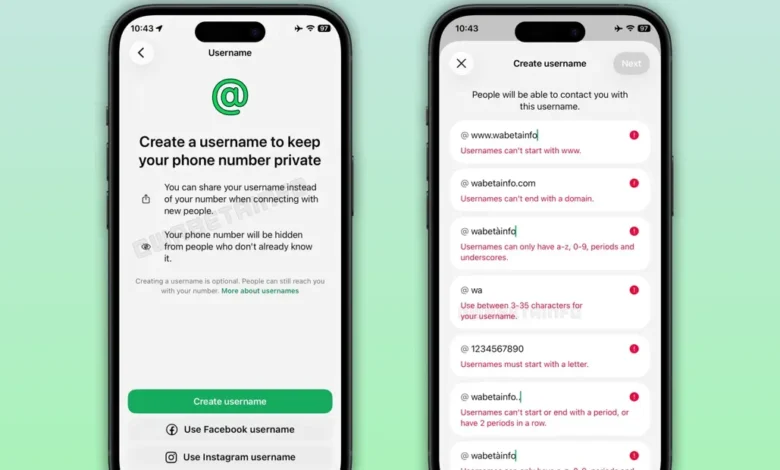
The Indian government has formally requested WhatsApp, the popular messaging platform owned by Meta, to postpone the global launch of its new username feature, citing significant concerns that it could exacerbate online criminal activity and facilitate sophisticated impersonation scams. This directive comes amidst a heightened period of digital transformation in India and an increasingly vigilant regulatory environment, particularly concerning user safety and data integrity on major digital platforms. The apprehension from New Delhi underscores a growing global tension between platform innovation designed for user convenience and national governments’ imperative to protect their citizens from emerging digital threats.
Background: WhatsApp’s Pervasive Role in India and the Drive for Usernames
WhatsApp holds an unparalleled position in India’s digital landscape, serving as the primary communication channel for over 500 million users, making it the platform’s largest market globally. Its widespread adoption spans personal communication, business interactions, and even grassroots political campaigning. The introduction of a username feature, akin to those found on platforms like Telegram, Instagram, and X (formerly Twitter), is intended to offer users an alternative method of identification beyond their phone numbers. This would allow individuals to connect and communicate without necessarily sharing their personal phone numbers, potentially enhancing privacy for some users and simplifying discoverability for others. For businesses and public figures, a recognizable username could streamline engagement and branding.
Meta, WhatsApp’s parent company, has been steadily rolling out various features to enhance the platform’s functionality and user experience. The username feature is part of a broader strategy to evolve WhatsApp beyond a mere messaging app tied strictly to phone numbers, moving towards a more integrated social and professional identity ecosystem. This shift, while offering benefits, introduces a new layer of complexity concerning identity verification and the prevention of digital fraud, a challenge that India’s Ministry of Electronics and Information Technology (MeitY) is keen to address proactively.
India’s Concerns: The Specter of Impersonation and Enhanced Fraud
The primary catalyst for India’s intervention is the perceived ease with which malicious actors could exploit the username feature to impersonate public figures, political leaders, and celebrities, thereby increasing the risk of online fraud and misinformation. Observations from tech news outlets like TechCrunch highlighted instances where usernames strikingly similar to prominent Indian personalities, such as ‘indiamodi’ for Prime Minister Narendra Modi and ‘shahrukh.actor’ for the acclaimed Bollywood star Shah Rukh Khan, were either claimed or were easily imaginable. These examples vividly illustrate the potential for confusion and deception.
Unlike phone numbers, which are linked to SIM cards requiring some form of identity verification (KYC – Know Your Customer) in India, usernames can be created with relative anonymity. This detachment from a verified physical identity makes it significantly easier for fraudsters to craft convincing fake profiles. The concern is that a scammer could create a username like ‘narendramodi.official’ or ‘srk.fanclub’ and leverage the immense trust and recognition associated with these figures to solicit funds, spread propaganda, or engage in phishing attacks, all without displaying a traceable phone number. The direct connection facilitated by WhatsApp, often perceived as a more personal and secure communication channel than open social media, makes the potential for successful scams even more potent.
Cybersecurity experts in India have echoed these governmental concerns. Dr. Sanjay Sharma, a leading cybersecurity analyst based in Bengaluru, commented, "The anonymity provided by usernames, when detached from a verified phone number, creates a fertile ground for sophisticated social engineering attacks. For a country like India, with its vast digital population and varying levels of digital literacy, this feature could pose significant risks if not implemented with robust safeguards."
Timeline of Events and Official Statements
While the exact date of WhatsApp’s announcement of the username feature’s global rollout plans remains somewhat fluid, the issue gained significant traction when the Indian government formally communicated its apprehensions to Meta. The reporting from TechRadar on Saturday, July 18, 2026, indicated a planned or ongoing rollout around that time, which prompted the governmental request for delay.
In response to these anxieties, WhatsApp, through its parent company Meta, issued a statement attempting to allay fears. The company asserted, "People making false claims about popular or famous usernames being reserved is not true. Only legitimate account holders can reserve the names of famous public figures." This statement was reiterated by Meta when contacted by TechCrunch, emphasizing that mechanisms are in place to prevent unauthorized claiming of prominent identities. WhatsApp further clarified that it has pre-emptively reserved usernames for political figures, VIPs, and celebrities, ensuring that these official identities are protected.
However, the efficacy and scope of these protective measures remain a point of contention. Critics and the Indian government question how many variations of famous names and identities are covered by this ‘blocking’ mechanism. The core concern persists that even with official names protected, slight alterations – such as adding numbers, different spellings, or additional words (e.g., ‘Modi_PM’, ‘ShahRukh.KhanOfficial’) – could still be used to create highly deceptive profiles. This ‘typosquatting’ or ‘cybersquatting’ in the context of usernames is a well-known tactic in online fraud.
Broader Context: India’s Stance on Digital Regulations and Cybercrime
India has been at the forefront of digital regulation, particularly in the realm of social media and messaging platforms. The country’s Information Technology (Intermediary Guidelines and Digital Media Ethics Code) Rules, 2021, underscore the government’s intent to hold platforms accountable for content and user safety. These rules mandate greater diligence from intermediaries and require them to assist law enforcement agencies in investigating cybercrimes. The request to delay WhatsApp’s username feature is consistent with this broader regulatory philosophy, prioritizing user protection over immediate feature rollout.
Cybercrime statistics in India paint a concerning picture. According to the National Crime Records Bureau (NCRB), cybercrime cases have been steadily increasing year-on-year. While specific data on WhatsApp-related fraud using impersonation is hard to isolate, general online financial fraud, identity theft, and phishing scams are rampant. The introduction of a feature that potentially lowers the barrier for such activities is naturally viewed with alarm by authorities tasked with maintaining law and order in the digital sphere. The digital payments ecosystem in India, robust and widely adopted, also makes citizens particularly vulnerable to financial scams perpetrated through messaging apps.
Comparison with Other Platforms and the Challenge of Digital Identity
The problem of username impersonation is not unique to WhatsApp. Platforms like Instagram, Facebook, and X have long grappled with this issue. They employ various mechanisms, including verified badges, reporting tools, and content moderation teams, to combat impersonation. However, the sheer scale of user-generated content and profiles makes it an ongoing battle. WhatsApp’s unique characteristic of being a more private, direct messaging platform often leads users to a higher degree of trust in communications received, making it a particularly attractive vector for targeted scams.
The debate also highlights a fundamental challenge in the digital age: defining and verifying digital identity. While phone numbers have served as a quasi-identifier, the move towards usernames seeks to decouple identity from a specific device or carrier. This shift, while offering user-centric benefits like privacy and flexibility, demands an equally robust framework for authentication and fraud prevention. The Indian government’s stance is effectively calling for this framework to be fully mature and proven before a wide-scale rollout, especially given the potential for misuse in a country with a massive, diverse user base.
Expert Perspectives and Broader Implications
Cybersecurity experts generally agree that while usernames offer convenience, they inherently introduce new vectors for attack if not managed meticulously. "The core issue isn’t just protecting the most famous names, but ensuring that the system can detect and prevent the myriad of variations that fraudsters will inevitably create," stated Ms. Priya Singh, a digital rights advocate. "Meta needs to demonstrate that its AI and moderation systems are sophisticated enough to handle this complexity across multiple languages and cultural contexts, which is a monumental task."
The implications of this standoff extend beyond just India. If India, a critical market for WhatsApp, successfully pushes for a delay or significant modifications, it could set a precedent for other nations with similar concerns about digital identity and online safety. This could lead to a more fragmented global rollout strategy for new features, with platforms having to tailor their offerings to individual national regulatory requirements.
Furthermore, this incident underscores the ongoing power struggle between tech giants and national governments over platform governance. Governments are increasingly asserting their sovereignty in the digital realm, demanding greater accountability and adherence to national laws and safety standards from global technology companies. The balance between allowing platforms to innovate and ensuring public safety remains a delicate one.
The Path Forward: Dialogue and Enhanced Safeguards
The immediate future likely involves continued dialogue between the Indian government and Meta. India will likely press for more transparent and verifiable assurances regarding WhatsApp’s anti-impersonation safeguards. This could include:
- Public disclosure of the methodology: How WhatsApp identifies and protects official or famous usernames and their common variations.
- Enhanced reporting mechanisms: More intuitive and effective ways for users to report suspected impersonation.
- Faster response times: Commitments to swiftly investigate and suspend fraudulent accounts.
- Localized content moderation: Ensuring that moderation teams understand the nuances of Indian political and cultural figures to better detect sophisticated impersonation attempts.
- User education campaigns: Extensive efforts to educate users about the risks of impersonation and how to verify identities on the platform.
For WhatsApp, the challenge is to strike a balance between introducing a highly anticipated feature that enhances user experience and addressing legitimate governmental and user safety concerns. Rushing the rollout without adequate safeguards could erode user trust and invite further regulatory scrutiny. The company’s success in navigating this will likely depend on its willingness to collaborate closely with Indian authorities and demonstrate a proactive commitment to user safety that goes beyond generic statements. The digital identity landscape is evolving rapidly, and the secure and responsible introduction of features like usernames will be crucial in shaping its future.
Related posts: