The collaborative initiative between the nation’s energy regulator and its primary fuel distributor marks a significant step towards stabilizing the energy supply in one of Indonesia’s most economically vibrant provinces. For several weeks leading up to this intervention, residents and businesses across North Sumatra, particularly within the bustling metropolis of Medan, experienced considerable disruptions due to prolonged queues at public refueling stations (SPBU). This situation, largely attributed to temporary bottlenecks in the distribution chain rather than an actual shortage of supply, had begun to impact daily routines, commercial activities, and public confidence. The swift and decisive actions undertaken by Pertamina Patra Niaga Regional Sumbagut, with direct oversight and strategic guidance from BPH Migas, were crucial in de-escalating what was becoming a growing concern for the regional economy and public welfare. The joint effort focused on enhancing logistical capabilities, optimizing supply routes, and ensuring round-the-clock operations at key fuel terminals, demonstrating a coordinated response to a critical public service challenge.
Background to the Fuel Distribution Challenges
The emergence of fuel queues in North Sumatra, particularly noticeable in Medan during the early part of July 2024, highlighted underlying vulnerabilities in the regional distribution network. While official statements consistently affirmed that national fuel quotas for North Sumatra remained sufficient, the visible queues suggested a disconnect between supply at the terminals and its efficient delivery to the end-users at SPBUs. The two primary types of fuel affected, Jenis BBM Tertentu (JBT) Solar (subsidized diesel) and Jenis BBM Khusus Penugasan (JBKP) Pertalite (subsidized RON 90 gasoline), are critical commodities for a vast segment of the Indonesian population. JBT Solar is predominantly used by commercial vehicles, public transportation, and agricultural machinery, directly impacting logistics, food supply chains, and rural livelihoods. JBKP Pertalite, on the other hand, is the most widely consumed gasoline type for private motorcycles and cars, making its consistent availability essential for daily commuting and household mobility.
The causes of such distribution anomalies can be multifaceted. They often include sudden spikes in demand, perhaps due to seasonal economic activities or public holidays, which can strain existing logistics. Inefficient routing of tanker trucks, delays at fuel terminals, or even speculative purchasing by consumers anticipating shortages can exacerbate the situation. North Sumatra, with its extensive road network connecting major cities like Medan, Siantar, and Kisaran, alongside its crucial ports such as Lhokseumawe and Belawan (Medan), relies heavily on robust fuel logistics. Any disruption quickly ripples through the provincial economy, affecting everything from food prices to the punctuality of public transport. The government’s commitment to providing subsidized fuel also means that any supply chain inefficiency can lead to social discontent, emphasizing the urgency of the intervention by BPH Migas and Pertamina.
Pertamina’s Enhanced Operational Response and Logistical Overhaul
In response to the escalating queues, Pertamina Patra Niaga Regional Sumbagut initiated a comprehensive operational overhaul designed to rapidly normalize fuel distribution. A cornerstone of this strategy was a significant increase in its logistical capacity. The company bolstered its tanker truck fleet, expanding its capacity by approximately 35 percent. This expansion was not merely about adding more vehicles but also involved deploying additional Awak Mobil Tangki (AMT), or tanker truck crew, ensuring that the enhanced fleet could operate efficiently and continuously. This meant more trucks on the road, making more frequent trips to SPBUs, thereby reducing the time spent by consumers in queues.
Beyond simply increasing the number of trucks, Pertamina also strategically optimized its supply chain by leveraging multiple fuel terminals across the region. Supply was re-routed and augmented from Fuel Terminal Siantar, Fuel Terminal Kisaran, and the Integrated Terminal Lhokseumawe. This multi-terminal approach provided greater flexibility and redundancy, preventing over-reliance on a single point of distribution and allowing for faster responses to localized demand surges. Crucially, the Medan Group Fuel Terminal in Labuhan Deli, a pivotal hub for fuel distribution in the provincial capital, was tasked with maximizing its reception and dispatch of fuel supplies. This terminal, strategically located near Medan, became the nexus for accelerated operations, running round-the-clock to ensure a continuous flow of fuel. These concerted efforts led to a substantial increase in fuel distribution to SPBUs, reaching an impressive 120-125 percent above normal operating conditions. This surge was a deliberate tactic to quickly replenish station tanks and assure the public of ample supply.
BPH Migas’s Oversight and Strategic Interventions
The role of BPH Migas was central to the successful normalization efforts, providing essential regulatory oversight and strategic guidance. As the Downstream Oil and Gas Regulatory Agency, BPH Migas is responsible for ensuring the availability and equitable distribution of fuel across Indonesia. Its involvement underscored the seriousness of the situation and the government’s commitment to resolving it. Head of BPH Migas, Wahyudi Anas, personally conducted an on-site inspection at the critical Fuel Terminal Medan Group. His presence and direct observation provided real-time insights into the operational status and allowed for immediate assessment of the situation.
During his inspection, Wahyudi Anas confirmed that the overall fuel stock in North Sumatra was secure and ample. This reassurance was backed by concrete data: two cargo ships had successfully completed the unloading process for JBT Solar and JBKP Pertalite, further fortifying the regional inventory. "With the routine activities of the community, God willing, the queues at SPBUs throughout North Sumatra can now be resolved," Wahyudi stated, expressing confidence in the efficacy of the implemented measures. He further emphasized that the aggressive increase in supply, reaching 120-125 percent, was a critical acceleration strategy. "This adds to the increase in supply to SPBUs by 120 to 125%. We continue to demand that the supply increase be expedited, from the previous condition of 112% to 120-125%. This is the best effort to resolve the queues at SPBUs that have become a public concern," Wahyudi added. The BPH Migas’s direct involvement ensured that Pertamina’s operational enhancements were aligned with national distribution goals and met regulatory standards for public service.
Analysis of Distribution Challenges and Regulatory Recommendations
A deeper analysis into the root causes of the fuel queues was provided by Fathul Nugroho, a Committee Member of BPH Migas. His assessment pinpointed the core issue not as a limitation in fuel quota but as a challenge within the distribution mechanism itself. Nugroho highlighted that the realization of solar and pertalite distribution in Sumatra up to mid-July 2024 remained below the national average. "This realization (solar and pertalite) is still below the national average, meaning there are no constraints from the quota that has been set," Fathul clarified, effectively dispelling any speculation about a shortage of allocated fuel. This crucial distinction shifted the focus from supply volume to the efficiency and reliability of the delivery process.
Fathul Nugroho stressed the imperative for Pertamina to enhance its distribution infrastructure and monitoring capabilities. He recommended a strong emphasis on developing an "early warning system" to proactively identify potential distribution bottlenecks or sudden demand surges before they manifest as queues. Such a system would integrate real-time data on stock levels at terminals and SPBUs, alongside GPS tracking of the entire tanker fleet, allowing for immediate intervention and rerouting. Furthermore, he advocated for comprehensive monitoring of all distribution armada, ensuring full visibility of their movements and operational status, whether they are en route or at a refueling station. "This is an operational, distribution operational issue. There needs to be a kind of early warning system. In addition, the entire fleet should be visible in monitoring, whether on the road or at SPBUs. This problem must be resolved immediately," he asserted. Nugroho underscored the non-negotiable importance of maintaining high-quality public service in fuel distribution, acknowledging its direct impact on daily life and economic activity.
Sustained Efforts and Logistical Prowess
Pertamina Patra Niaga Regional Sumbagut’s commitment to resolving the distribution challenges extended beyond initial interventions, transitioning into a sustained effort to maintain stability. Sunardi, Executive General Manager of Pertamina Patra Niaga Regional Sumbagut, affirmed that operations at the vital Fuel Terminal Medan Group were running "kondusif" (conducive) and would continue to be optimized 24 hours a day. This round-the-clock commitment was essential to meet the burgeoning fuel demands of the North Sumatran populace and ensure that the improved supply levels were consistently maintained.
Data from the period of July 14-16, 2024, illustrated the intensity of these efforts, with an average daily fuel distribution exceeding 6,000 kiloliters (KL) to SPBUs. This substantial volume represented a deliberate and aggressive push to fortify fuel stocks at the retail level, thereby restoring normal service at gas stations. "Hopefully, this increase in distribution can become additional stock at SPBUs, thus being able to resolve the queues that are still occurring," Sunardi stated, reflecting the company’s clear objective. The continuous monitoring by both Pertamina Patra Niaga Regional Sumbagut and BPH Migas, through direct visits to numerous SPBUs in Medan, confirmed that the distribution of both Solar and Pertalite was proceeding smoothly. This hands-on approach ensured that stock availability at SPBUs was consistently replenished, upholding optimal service for the community. The robust operational response, coupled with diligent regulatory oversight, exemplified a concerted effort to restore and maintain public trust in the fuel supply chain.
Real-World Impact and Public Relief
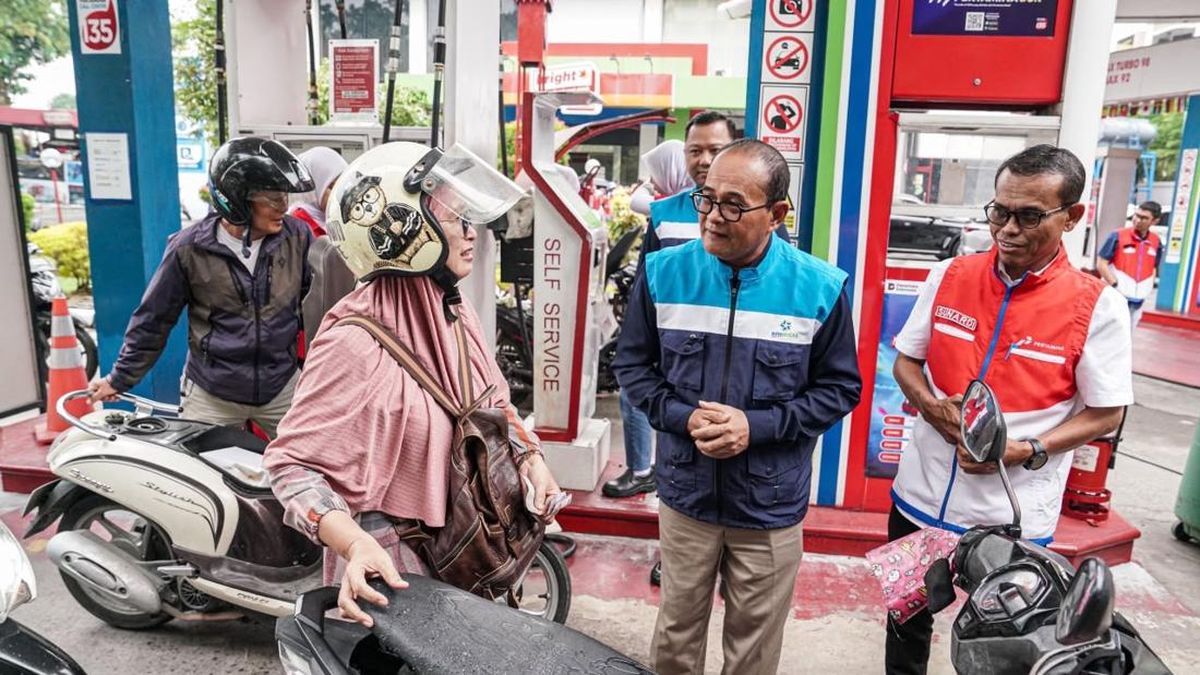
The tangible improvements in fuel distribution were immediately felt by the public, whose daily lives had been directly impacted by the earlier queues. The relief expressed by everyday citizens provided compelling evidence of the success of the joint BPH Migas and Pertamina initiative. Samsuri, a 60-year-old online motorcycle taxi driver in Medan, offered a heartfelt testimony. For individuals like Samsuri, whose livelihood depends entirely on consistent access to fuel, the prior disruptions had been a source of significant stress and economic hardship. "To the public, a few days ago I urged them to be patient because there were difficulties. Now it’s stable and smooth. I feel it directly," Samsuri recounted, his words underscoring the stark contrast between the recent past and the current improved situation. His experience reflects that of countless other drivers and small business owners who rely on fuel for their operations.
Echoing Samsuri’s sentiments was Hasbi, a 23-year-old truck driver, who also noted a significant reduction in waiting times for fuel. For long-haul truckers, delays at SPBUs translate directly into lost income and disrupted delivery schedules, impacting broader supply chains. "Thank you to the government. Fuel in North Sumatra is now smooth," Hasbi stated, acknowledging the effectiveness of the measures taken. These personal accounts from the front lines of North Sumatra’s economy serve as powerful indicators that the concentrated efforts to normalize fuel distribution have successfully alleviated the immediate crisis, restoring a sense of normalcy and efficiency to critical transportation sectors. The positive public reception highlights the importance of effective governance and corporate responsibility in addressing essential public needs.
Broader Implications for Regional Energy Security and Future Outlook
The successful normalization of fuel distribution in North Sumatra carries broader implications for regional energy security and economic stability. North Sumatra, with its diverse economy encompassing agriculture, manufacturing, trade, and services, is heavily reliant on an uninterrupted energy supply. Fuel is the lifeblood of its transportation networks, facilitating the movement of goods, people, and raw materials. Disruptions, even temporary ones, can lead to cascading economic effects, including increased operational costs for businesses, potential delays in supply chains, and a downturn in consumer spending due to reduced mobility. The timely intervention by BPH Migas and Pertamina not only addressed an immediate crisis but also reaffirmed the government’s commitment to safeguarding the province’s economic continuity and social welfare.
Looking ahead, the experience in North Sumatra provides valuable lessons for enhancing future fuel distribution resilience. The recommendations from BPH Migas Committee Member Fathul Nugroho, particularly regarding the implementation of early warning systems and comprehensive fleet monitoring, are critical for proactive management. Investing in advanced logistics technology, such as real-time inventory management and predictive analytics for demand forecasting, can significantly reduce the likelihood of similar bottlenecks. Furthermore, fostering closer coordination between regulators, distributors, and local governments can create a more robust framework for addressing potential challenges. While the immediate crisis has been resolved, the continuous monitoring and commitment to improving infrastructure and operational protocols will be essential to ensure that North Sumatra, and indeed other regions across Indonesia, maintain a stable and efficient fuel supply, underpinning sustained economic growth and public confidence. The incident underscores the dynamic nature of energy logistics and the constant need for vigilance and innovation in managing a critical national resource.
Related posts: