Robert Pattinson Revels in Villainy: Antinous’s Complex Charm in Christopher Nolan’s ‘The Odyssey’

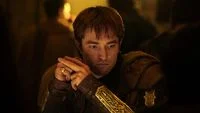
Robert Pattinson has spoken candidly about his experience portraying Antinous, the formidable antagonist in Christopher Nolan’s highly anticipated epic, The Odyssey, revealing a deep satisfaction derived from subverting audience expectations. The actor, known for his versatile performances across blockbuster franchises and independent cinema, detailed his approach to embodying a character whose ambition to usurp Odysseus and claim Penelope’s affection fuels the narrative’s central conflict. Pattinson’s philosophy, as he shared in recent interviews, centers on the strategic art of lowering preconceptions before delivering a performance that transcends them, a method he found particularly rewarding in the role of Antinous.
"I love it. I love lowering people’s expectations. That’s always been my favorite thing, it’s always been the best place for me," Pattinson stated, as reported by People on July 10th. He elaborated on this personal mantra: "Don’t promise too much upfront, but deliver far better results – that’s my motto." This approach suggests a deliberate calibration of his performance, aiming to surprise and captivate viewers by defying their initial judgments of the character.
The Nuances of Antinous: Beyond Pure Villainy
While Antinous’s actions in The Odyssey are undeniably driven by ruthlessness and political maneuvering, Pattinson offers a more nuanced perspective on his character, one that borders on the playfully self-aware. Far from viewing Antinous as a one-dimensional, terrifying figure of pure evil, Pattinson suggests a more complex, even relatable, internal dynamic at play.
"It’s actually funny. I thought Antinous wasn’t that bad," Pattinson confessed to TODAY, admitting a slight apprehension about how his portrayal might be perceived by audiences. "I’m a little worried now. Maybe if I watch it with an audience, I’ll be like, ‘He’s terrifying.’" However, his personal viewing experience offered a different interpretation: "But because I watched it (alone), I was thinking, ‘He’s just a regular guy.’" This personal reflection highlights the subjective nature of villainy and the potential for a character’s motivations, however misguided, to resonate on a human level.
The Glamour of the Antagonist: Costume and Character
Beyond the psychological dissection of his character, Pattinson also delved into the sartorial choices that define Antinous, emphasizing a deliberate infusion of glamour and privilege into his persona. He collaborated closely with the film’s costume department to ensure that every garment, down to the undergarments, projected an aura of wealth and high social standing.
"Not long after reading the script, I was like, ‘I want to have cheetah print underwear.’ I think Antinous is the type of guy who’s like that. He has a certain sensuality about him, ‘I just like gratification.’" Pattinson elaborated with a laugh, explaining his rationale: "And because of that, I thought he must want to have the most luxurious underwear he can get." This detail, while seemingly minor, underscores Pattinson’s commitment to fully inhabiting the character, finding even the most intimate aspects of his life to be a reflection of his opulent and self-indulgent nature. This meticulous attention to detail, extending to such personal items, is a testament to his dedication to creating a fully realized and memorable antagonist.
A Double Dose of Villainy: ‘The Odyssey’ and ‘Dune: Part Three’
The role of Antinous in The Odyssey marks a significant moment for Pattinson, as it is not his sole foray into portraying antagonists in recent years. Fans will also witness him embodying a villainous role in the upcoming Dune: Part Three. In this highly anticipated sequel, Pattinson is set to play Scytale, a shape-shifting character poised to play a pivotal role in the schemes to overthrow Paul Atreides, portrayed by Timothée Chalamet, from his newly ascended position as emperor of the known universe.
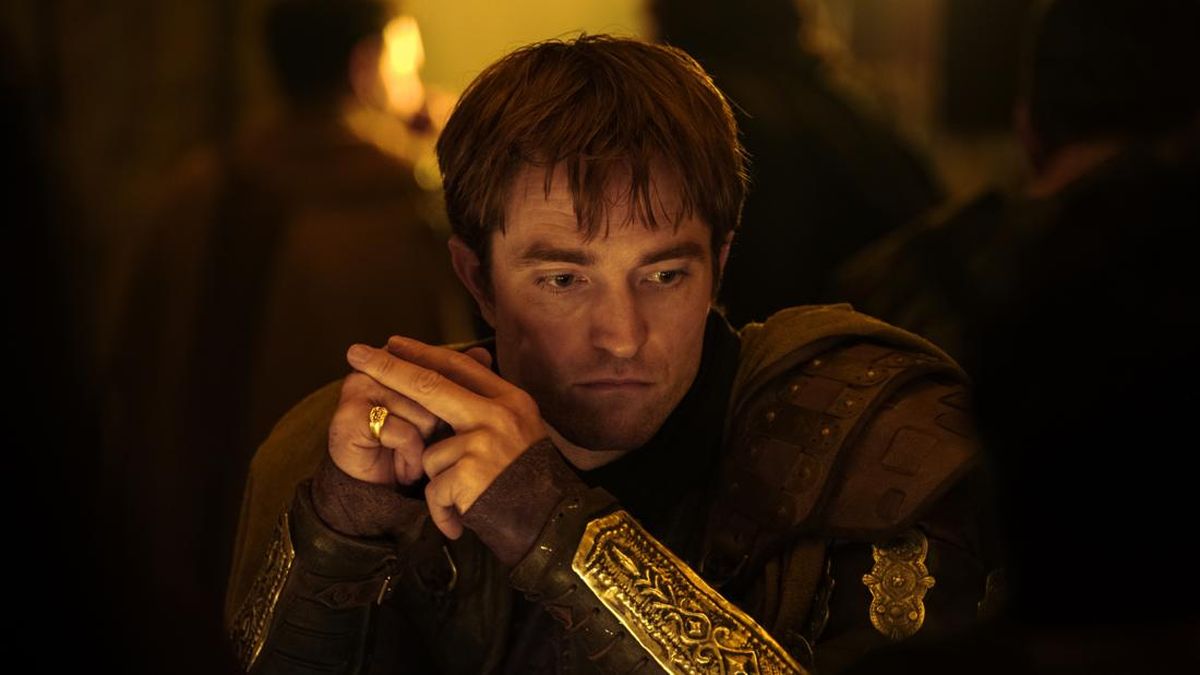
The dual casting as antagonists in major productions like The Odyssey and Dune: Part Three signals a potential shift or at least a significant exploration of darker, more complex characters within Pattinson’s filmography. This strategic choice by filmmakers to cast him in such roles suggests a growing recognition of his ability to imbue villainous characters with depth, charisma, and a compelling psychological edge that transcends traditional archetypes.
Contextualizing ‘The Odyssey’: A Modern Interpretation of an Ancient Epic
Christopher Nolan’s The Odyssey is not merely a retelling of Homer’s ancient epic but a contemporary reimagining that seeks to explore timeless themes of heroism, temptation, and the arduous journey home through a modern lens. The original Odyssey, believed to have been composed in the 8th century BCE, chronicles the ten-year voyage of the Greek hero Odysseus as he struggles to return to his kingdom of Ithaca after the Trojan War. Along the way, he encounters mythical creatures, divine interventions, and perilous trials that test his resilience, wit, and leadership.
Nolan’s adaptation, by casting a prominent actor like Robert Pattinson as Antinous, suggests an intent to delve into the psychological intricacies of the epic’s antagonists. Antinous, in Homer’s original, is a leading suitor for Penelope, Odysseus’s wife, and is often depicted as arrogant and insolent. By focusing on his ambition and his pursuit of Penelope, Nolan’s The Odyssey appears poised to explore themes of power, desire, and the corruption that can arise from unchecked ambition, particularly within a society grappling with the prolonged absence of its rightful ruler. The film’s release, slated for July 18, 2026, follows a string of critically acclaimed and commercially successful projects for Nolan, further building anticipation for his unique take on this foundational narrative.
The Strategic Landscape of Character Interpretation
Pattinson’s assertion that he enjoys "lowering people’s expectations" is a strategic approach that can be observed in his career trajectory. Following his immense global fame as Edward Cullen in the Twilight saga, Pattinson actively sought out roles that challenged this image, often in independent films that explored darker, more complex characters. His performances in films like Good Time (2017), The Lighthouse (2019), and Tenet (2020) demonstrated a remarkable range and a willingness to experiment with unconventional characters and cinematic styles.
This deliberate cultivation of an image that defies easy categorization allows him to approach roles like Antinous with a degree of freedom. By not being rigidly defined by any single persona, he can surprise audiences and critics alike, fostering an environment where his interpretations of characters are less pre-judged and more open to critical appreciation of his craft. His success in this regard has not only revitalized his career but also cemented his reputation as one of the most intriguing and versatile actors of his generation.
Broader Implications: The Evolving Role of the Antagonist
The casting of A-list actors like Robert Pattinson in prominent villainous roles, as seen in The Odyssey and Dune: Part Three, reflects a broader trend in contemporary cinema. Audiences are increasingly drawn to complex antagonists whose motivations, though often morally compromised, are presented with a degree of depth and psychological realism. This trend allows filmmakers to explore more nuanced ethical dilemmas and to challenge conventional notions of good versus evil.
For The Odyssey, this approach suggests that Nolan is not interested in a simplistic portrayal of Odysseus’s triumphant return. Instead, the focus on Antinous and his machinations indicates a potential exploration of the societal vacuum left by Odysseus’s absence and the opportunistic power plays that emerge in its wake. The success of such films often hinges on the compelling nature of their antagonists, and Pattinson’s proven ability to deliver captivating performances in these types of roles bodes well for the film’s reception. The strategic casting and the actor’s insightful commentary on his character suggest that The Odyssey aims to be more than just an action-adventure epic; it is poised to be a nuanced exploration of ambition, desire, and the enduring allure of flawed characters.