Iran’s Currency Crisis Deepens Amid Geopolitical Tensions, Sanctions, and a Historic Redenomination Effort

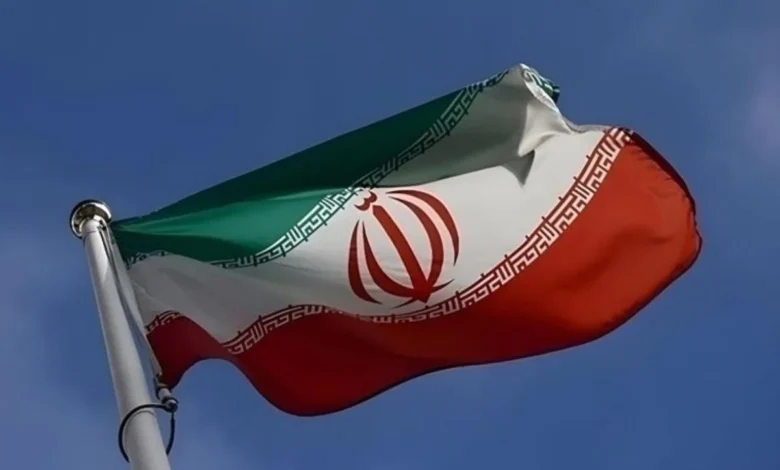
Jakarta (ANTARA) – The Iranian currency, the rial, has been a focal point of global economic scrutiny, particularly as geopolitical tensions escalate and international economic policies shift. The re-imposition of stringent sanctions by the United States under former President Donald Trump, including tariffs of up to 25 percent on countries engaging in business with Iran, has profoundly impacted the nation’s financial landscape. This aggressive stance has triggered a cascade of reactions, primarily affecting Iran’s economy and precipitating a significant depreciation of its national currency. Recent reports indicated the Iranian rial plummeted to unprecedented lows when converted against the euro, a stark illustration of the severe economic pressure exerted by prolonged sanctions and rampant inflation.
Adding a unique layer to this complex financial narrative is a distinctive phenomenon observed within Iran itself. Visitors exploring traditional bazaars or modern shopping centers will quickly discover that the term "rial" is conspicuously absent from daily transactional conversations. Instead, local Iranians predominantly use "toman" when quoting prices for goods and services. This informal adoption of "toman" stems directly from the nation’s hyperinflationary environment, serving as a practical simplification to manage and articulate increasingly large numerical values in everyday commerce. The discrepancy between the official currency and the commonly used term often bewilders tourists and international economic observers alike, prompting deeper questions about Iran’s true monetary system and the fundamental differences between the rial and the toman.
The Historical Context of Sanctions and Economic Strain
The economic challenges currently facing Iran are deeply rooted in a protracted history of geopolitical friction, particularly with the United States. Following the 1979 Islamic Revolution, relations between the two countries deteriorated, leading to intermittent sanctions. However, the most severe economic pressures emerged in the early 21st century, primarily linked to Iran’s nuclear program. International sanctions, spearheaded by the United Nations, the U.S., and the European Union, aimed to curtail Tehran’s nuclear ambitions by targeting its oil exports, banking sector, and access to international financial systems.
A brief reprieve came with the signing of the Joint Comprehensive Plan of Action (JCPOA), commonly known as the Iran nuclear deal, in 2015. This landmark agreement saw Iran agree to significant limitations on its nuclear program in exchange for the lifting of many international sanctions. The initial period post-JCPOA offered a glimmer of hope for Iran’s economy, with a modest increase in foreign investment and oil revenues. However, this period of economic normalization was short-lived.
In May 2018, the Trump administration unilaterally withdrew the United States from the JCPOA, deeming it an inadequate agreement. This decision marked the beginning of a "maximum pressure" campaign, which involved the re-imposition and expansion of U.S. sanctions. These sanctions were unprecedented in their scope, targeting not only Iran’s oil sales—a critical source of revenue—but also its central bank, shipping industry, petrochemicals, metals, and virtually any entity conducting significant transactions with Iran. The U.S. also threatened secondary sanctions against foreign entities that continued to do business with Tehran, effectively isolating Iran from the global financial system.
The Devastating Impact of "Maximum Pressure"
The "maximum pressure" campaign had an immediate and devastating effect on the Iranian economy. Oil exports, which had recovered somewhat after the JCPOA, plummeted dramatically. From over 2.5 million barrels per day before sanctions, exports reportedly fell to as low as a few hundred thousand barrels per day, depriving the government of vital hard currency earnings. This drastic reduction in foreign exchange reserves significantly hampered Iran’s ability to import essential goods, raw materials, and machinery, leading to widespread supply chain disruptions and increased import costs.
Inflation, already a persistent issue in Iran, surged to alarming levels. While specific figures can vary, the International Monetary Fund (IMF) reported Iran’s annual inflation rate reaching over 40% in some periods following the re-imposition of sanctions, with food price inflation often even higher. The rial’s value against major international currencies spiraled downwards. Before the JCPOA withdrawal, the rial traded at approximately 35,000 to the U.S. dollar in the unofficial market. By late 2018 and early 2019, it had fallen past 100,000, and by 2020-2021, it was frequently fluctuating between 250,000 and 300,000 rials per dollar on the open market, and even higher at times, reaching well over 500,000 rials per dollar in early 2023 before some recovery. This dramatic devaluation eroded the purchasing power of ordinary Iranians, leading to a sharp decline in living standards, increased poverty, and social unrest. Businesses struggled with uncertainty, rising input costs, and difficulty accessing international markets, resulting in bankruptcies and job losses.
Rial: The Official Currency of Iran
Legally and administratively, the Iranian rial (with the international code IRR) remains the official currency of the Islamic Republic of Iran. All formal financial activities, government documents, banking transactions, and prices displayed in modern retail outlets are denominated in rials. The Central Bank of Iran (CBI) is the sole authority responsible for issuing rial banknotes and coins, and all official economic statistics are reported using this unit. For any international transaction or formal financial reporting, the rial is the recognized legal tender.
The Toman: An Informal Reality in Daily Transactions
Despite the rial’s official status, a striking divergence exists in everyday Iranian life. In the bustling bazaars, local grocery stores, and even when hailing a taxi, the term "toman" dominates transactional conversations. The informal adoption of "toman" is a direct response to the staggering inflation that has plagued Iran for decades, particularly exacerbated by recent sanctions. As the rial’s value plummeted, prices for goods and services soared, requiring an ever-increasing number of zeros to express values. For instance, an item that once cost 1,000 rials might now cost 100,000 rials or even 1,000,000 rials. Such large numbers become cumbersome to pronounce, calculate, and remember in daily exchanges.
To simplify these unwieldy figures, Iranians informally adopted the toman. The basic conversion rule is straightforward: one toman is equivalent to 10 rials. This means that when a price is quoted in toman, one simply removes a zero to get the rial value, or, more commonly, adds a zero to the toman value to arrive at the rial equivalent if the original definition of 1 toman = 10 rials is considered. However, due to historical changes and the subsequent redenominaton, the more practical, modern understanding in the informal market has been that one toman equals 10,000 rials (the old rials before the redenominaton initiative). This effectively means that people drop four zeros from the official rial price in their minds.
For example, if a street vendor quotes a price of "50 toman" for an item, a local understands this to mean 500,000 rials (50 x 10,000). This practical simplification significantly streamlines communication and mental arithmetic in a high-inflation environment. However, this dual currency system has historically been a source of considerable confusion for foreign visitors and international businesspeople unfamiliar with the local practice, leading to potential misunderstandings or even overpayment.
The Official Redenomination: Aligning Reality with Legality
Recognizing the pervasive informal use of the toman and the persistent confusion it caused, coupled with the administrative inefficiencies of dealing with excessively large numbers, the Iranian government embarked on a comprehensive redenominaton policy. This initiative, spearheaded by the Central Bank of Iran (CBI), aims to formally bridge the gap between the official currency and the public’s transactional habits.
The journey towards redenominaton began officially in 2020, with the Iranian parliament approving a bill to change the national currency from the rial to the toman. This move was not merely a cosmetic change but a strategic attempt to modernize the monetary system and restore public confidence. The core of the policy involves slashing four zeros from the national currency. Under this new scheme, 10,000 old rials will be officially replaced by 1 new toman.
The implementation of this redenominaton is planned to be a gradual and phased process, extending from 2025 to 2026. During this transitional period, both the old rial banknotes and the new toman banknotes will circulate concurrently, allowing the public and businesses sufficient time to adjust to the new denominations. New banknotes are expected to feature smaller nominal values, often with faint outlines or shadows of the removed zeros, serving as visual cues to aid the public in the transition.
Furthermore, the redenominaton introduces a new sub-unit: the qiran. Under the new system, one toman will be divided into 100 qirans, similar to how many currencies are divided into 100 cents or pence. This introduction of a smaller denomination aims to facilitate transactions for lower-value goods and services, ensuring the currency system remains practical for all levels of economic activity.
The rationale behind this ambitious redenominaton is multifaceted:
- Simplification: To make daily transactions, accounting, and financial reporting easier by reducing the number of zeros.
- Efficiency: To reduce the cost of printing and handling large denomination banknotes.
- Public Acceptance: To align the official currency with the term already widely used by the public, thereby reducing confusion.
- Economic Psychology: To potentially foster a perception of greater currency stability and strength, although underlying economic fundamentals are paramount.
Beyond Sanctions: Other Factors Contributing to Currency Weakness
While U.S. sanctions are undeniably the primary driver of Iran’s recent economic woes and currency depreciation, several other internal and external factors have historically contributed to the rial’s instability:
- Internal Economic Policies and Governance: Decades of economic mismanagement, including large budget deficits, subsidies, and state intervention in various sectors, have often led to inflationary pressures. Issues such as corruption, inefficiencies in state-owned enterprises, and a challenging business environment can deter domestic and foreign investment.
- Oil Price Volatility: As a major oil exporter, Iran’s economy is heavily reliant on oil revenues. Fluctuations in global oil prices, even when sanctions permit exports, can significantly impact government budgets and foreign exchange earnings, creating instability.
- Regional Geopolitical Spending: Iran’s significant regional security commitments and military spending can divert resources away from productive economic investments, contributing to fiscal strain.
- Climate Change and Droughts: Iran is prone to severe droughts, which impact its agricultural sector, leading to food shortages, increased import needs, and inflationary pressures on food prices.
- Brain Drain: Economic hardship and limited opportunities have led to a significant outflow of educated professionals, further hindering the nation’s human capital development and innovation capacity.
Broader Implications and Future Outlook
The redenominaton of the Iranian currency, while a necessary technical adjustment, is not a panacea for the nation’s deep-seated economic problems. For the redenominaton to truly succeed in fostering long-term stability and confidence, it must be accompanied by robust economic reforms and, crucially, a resolution to the ongoing geopolitical tensions that drive the sanctions regime.
The implications of Iran’s currency crisis and its redenominaton efforts are far-reaching:
- For Iranian Citizens: The immediate impact of redenominaton will primarily be psychological and practical. While it simplifies transactions, it does not inherently increase purchasing power or resolve inflation. Citizens will continue to grapple with high prices and economic uncertainty until fundamental economic issues are addressed.
- For Businesses: Domestic businesses will face the challenge of updating their accounting systems, price lists, and payment infrastructure. International businesses, already wary due to sanctions, might find the currency change an additional layer of complexity, although the official alignment of toman with daily use could eventually simplify interactions.
- For International Relations: The currency’s weakness and the redenominaton underscore the severe impact of the "maximum pressure" campaign. While Iran’s government continues to call for the lifting of sanctions, the U.S. and its allies maintain pressure, linking sanctions relief to changes in Iran’s nuclear and regional policies. The economic hardship could fuel internal dissent or push Iran towards further isolation and unconventional trade mechanisms.
- For Tourism: The official adoption of the toman is expected to reduce confusion for tourists who previously struggled with the rial-toman dichotomy. However, the broader economic instability and travel restrictions related to sanctions might continue to deter a significant influx of international visitors.
The Iranian Central Bank and government face a formidable task in managing this transition amidst ongoing economic pressure. While the redenominaton is a step towards streamlining the domestic financial system and aligning it with public practice, its ultimate success hinges on the broader trajectory of Iran’s economy and its ability to navigate the complex geopolitical landscape that has so profoundly shaped its financial destiny. The world watches closely as Iran endeavors to bring its currency system into line with its economic reality, a reality heavily influenced by both internal challenges and external pressures.
Pewarta: Sean Anggiatheda Sitorus
Editor: Suryanto
Copyright © ANTARA 2026
Dilarang keras mengambil konten, melakukan crawling atau pengindeksan otomatis untuk AI di situs web ini tanpa izin tertulis dari Kantor Berita ANTARA.
Related posts: