Indonesia’s Manufacturing Sector Maintains Robust Expansion in Q2 2026, Poised for Further Growth Amidst Strategic Economic Initiatives

Jakarta, CNN Indonesia – Bank Indonesia (BI) has affirmed the sustained robust performance of Indonesia’s national manufacturing industry throughout the second quarter of 2026, marking a continued phase of expansion driven by resilient domestic demand and strategic industrial policies. This positive trajectory is vividly illustrated by the Prompt Manufacturing Index Bank Indonesia (PMI-BI), which registered a healthy 51.43, comfortably above the critical 50-point threshold that delineates expansion from contraction. The central bank’s latest report, released by Executive Director and Head of BI’s Communications Department, Ramdan Denny Prakoso, on Friday, July 17, underscored the sector’s pivotal role in the nation’s economic resilience and its promising outlook for the remainder of the year.
The consistently positive PMI-BI reading for Q2 2026 reflects a broad-based strengthening across key operational metrics within the manufacturing landscape. Analysis of the index’s constituent components reveals that the Volume of Production, Volume of Finished Goods Inventory, and Volume of Total Orders all remained firmly in the expansionary territory. These three pillars collectively indicate a vibrant manufacturing environment where producers are increasing output to meet growing demand, managing their inventories effectively, and securing a healthy pipeline of future orders. This harmonious expansion across crucial operational facets suggests a well-functioning supply chain and a confident business sentiment among industrial players. Ramdan Denny Prakoso emphasized, "The performance of the manufacturing industry during the second quarter of 2026 has remained robust and firmly within the expansionary phase, reflecting underlying strength in demand and production capabilities."
Deep Dive into Q2 2026 Sectoral Performance
A granular examination of the subsectors within Indonesia’s diverse manufacturing landscape reveals varying degrees of expansion, with several key industries demonstrating exceptional dynamism. Leading the charge in the second quarter of 2026 was the Machinery and Equipment Industry, showcasing significant growth. This robust performance is indicative of increased capital expenditure by businesses across various sectors, signaling broader economic investment and modernization efforts. Following closely were the Food and Beverage Industry, the Basic Metal Industry, and the Non-Metallic Mineral Products Industry, all of which contributed significantly to the overall expansion.
The Food and Beverage sector’s sustained growth is a perennial indicator of strong domestic consumption, benefiting from Indonesia’s large and growing population. The Basic Metal Industry’s expansion, on the other hand, highlights the positive impact of the government’s downstreaming initiatives, particularly in mineral processing, which aims to add value to raw commodities before export. The Non-Metallic Mineral Products Industry, encompassing construction materials like cement and ceramics, typically mirrors activity in the infrastructure and property sectors, suggesting continued investment in these areas. This diversified growth across multiple subsectors underscores the broad-based nature of the manufacturing revival, making it more resilient to potential shocks in any single industry.
Optimistic Projections for Q3 2026
Looking ahead, Bank Indonesia maintains a decidedly optimistic outlook for the manufacturing sector, projecting an even stronger performance in the third quarter of 2026. The PMI-BI is anticipated to climb further to 52.32, reinforcing the expectation of sustained and accelerated expansion. This upward trend is expected to be propelled by the same fundamental drivers that characterized Q2: an increase in the Volume of Production, a healthy management of the Volume of Finished Goods Inventory, and a continuous rise in the Volume of Total Orders.
The central bank’s projections are rooted in the current momentum and anticipated stability in both domestic and global economic conditions. As Ramdan Denny Prakoso reiterated, "For the third quarter of 2026, the performance of the manufacturing industry is projected to improve further and remain in the expansionary phase." This forward-looking assessment provides crucial guidance for businesses in their strategic planning and investment decisions.
The anticipated sectoral leadership for Q3 2026 largely mirrors the previous quarter, with some notable shifts. The Machinery and Equipment Industry is once again projected to record the highest index, underscoring continued capital investment and industrial upgrading. Interestingly, the Tobacco Processing Industry is expected to join the ranks of top performers, reflecting stable demand for its products. The Basic Metal Industry is also projected to maintain its strong performance, consistent with ongoing downstreaming efforts. Finally, the Transportation Equipment Industry is slated for significant growth, likely buoyed by domestic demand for vehicles and potentially expanding export opportunities. The inclusion of the Tobacco Processing and Transportation Equipment industries among the top projectors for Q3 indicates a broadening of the growth base beyond traditionally strong sectors.
The Significance of the Prompt Manufacturing Index Bank Indonesia (PMI-BI)
The PMI-BI serves as a vital barometer for assessing the health and future prospects of Indonesia’s manufacturing sector. Developed and compiled by Bank Indonesia, it is derived from comprehensive surveys conducted among manufacturing industry players across the archipelago. The index is a diffusion index, meaning it measures the direction of change rather than the magnitude, providing a quick and effective snapshot of business conditions. A reading above 50 signifies an overall expansion in industrial activity, indicating growth in output, orders, and employment. Conversely, a reading below 50 suggests contraction, signaling a downturn in the sector.
Its utility lies in its forward-looking nature and its ability to capture real-time sentiments and operational changes within the industry. Policymakers, including Bank Indonesia and the Ministry of Industry, rely on the PMI-BI to gauge economic momentum, formulate appropriate monetary and fiscal policies, and identify emerging trends or potential headwinds. For businesses, the index offers critical insights into the broader industrial environment, aiding in strategic planning, inventory management, and investment decisions. By tracking key components like production volume, inventory levels, and new orders, the PMI-BI provides a holistic view of the manufacturing ecosystem, allowing for timely interventions and adjustments. Historically, Indonesia’s PMI has shown resilience, particularly in its recovery post-pandemic, often outperforming regional peers in certain periods, underscoring the structural strengths of its domestic market and industrial base.
Broader Economic Context and Government Initiatives
The sustained expansion in Indonesia’s manufacturing sector is not an isolated phenomenon but is deeply intertwined with the broader national economic context and deliberate government strategies. Manufacturing is a cornerstone of the Indonesian economy, consistently contributing a significant portion to the Gross Domestic Product (GDP), typically accounting for around 20-22%. In Q2 2026, the sector’s contribution is estimated to be around 20.5%, solidifying its position as a key growth engine. Beyond GDP, the sector is a major employer, providing livelihoods for approximately 18 million Indonesians, making its health directly impactful on national employment figures and social welfare.
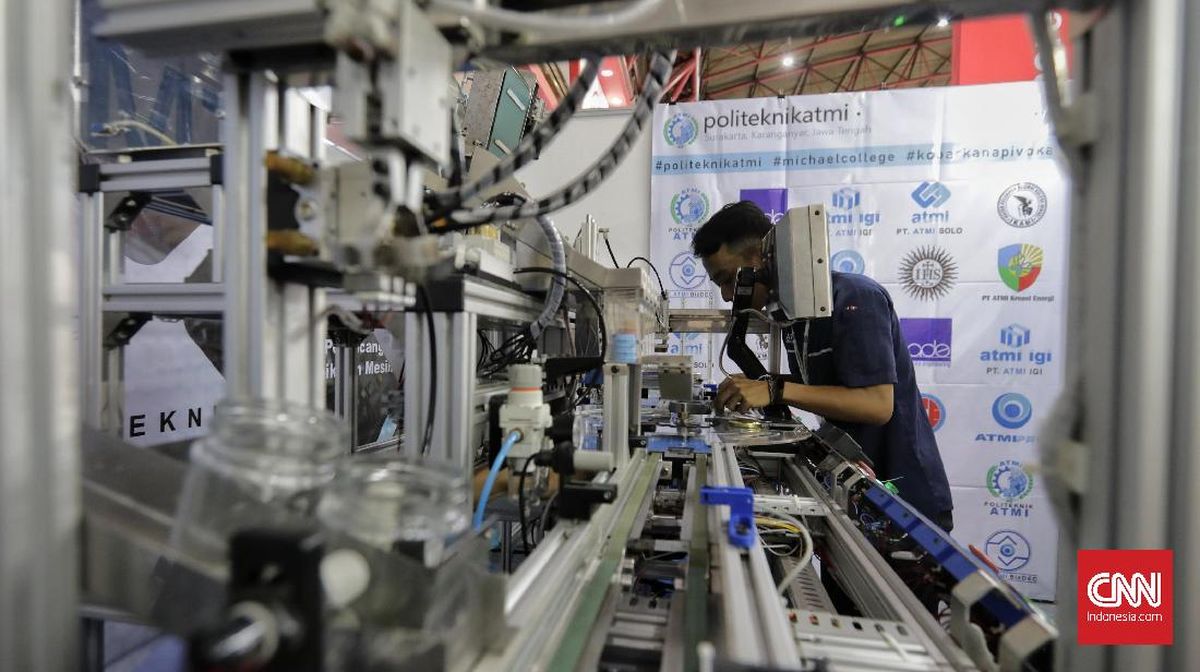
The government’s long-term vision, encapsulated in the "Making Indonesia 4.0" roadmap launched in 2018, has been instrumental in fostering an environment conducive to industrial growth and technological adoption. This initiative targets five priority sectors – Food and Beverage, Automotive, Electronics, Chemicals, and Textiles – aiming to transform them into globally competitive, technologically advanced industries. The positive PMI-BI readings, particularly in the Machinery and Equipment and Transportation Equipment sectors, suggest that investments in digitalization, automation, and advanced manufacturing techniques are beginning to bear fruit.
Furthermore, the strategic downstreaming policy, particularly evident in the Basic Metal Industry, has been a game-changer. By mandating the domestic processing of raw materials like nickel, bauxite, and copper, Indonesia aims to move up the value chain, attracting significant foreign and domestic investment into smelting and further processing facilities. This policy not only boosts industrial output but also creates higher-value jobs and enhances the country’s export revenue. The sustained performance of the Basic Metal Industry directly reflects the success and ongoing expansion of these downstreaming efforts. The government has also been active in creating a favorable investment climate through various incentives, including tax holidays, tax allowances, and simplified licensing procedures, which have undoubtedly encouraged both local and international players to commit capital to the manufacturing sector.
Industry Perspectives and Emerging Challenges
While the overall sentiment is positive, industry associations and manufacturers are keenly aware of the evolving landscape and persistent challenges. Representatives from organizations such as the Indonesian Employers Association (Apindo) and the Indonesian Chamber of Commerce and Industry (Kadin) have largely welcomed the BI report, acknowledging the resilience of the sector. However, they also frequently highlight several key areas requiring continuous attention.
One significant challenge remains the volatility of raw material prices in the global market. Manufacturers, particularly those reliant on imported inputs, are susceptible to fluctuations caused by geopolitical tensions, supply chain disruptions, and global commodity market dynamics. Coupled with this are logistics costs, which can impact competitiveness, especially for an archipelagic nation like Indonesia. Efforts to improve port efficiency, road infrastructure, and inter-island connectivity are ongoing but require sustained investment.
The availability of skilled labor, particularly in an era of Industry 4.0, is another critical concern. While the government has initiated vocational training programs, the pace of technological change often outstrips the supply of adequately trained personnel. This gap can hinder the adoption of advanced manufacturing techniques and limit productivity gains. Furthermore, energy costs, while relatively stable, remain a significant operational expense for energy-intensive industries. Balancing industrial growth with environmental sustainability and increasingly stringent regulations also presents a complex challenge for manufacturers. Despite these hurdles, the general consensus among industry players is one of cautious optimism, with many adapting by investing in efficiency improvements, diversifying supply chains, and exploring new markets.
Global Economic Headwinds and Opportunities
Indonesia’s manufacturing sector operates within an interconnected global economy, making it susceptible to external forces. Global inflation, rising interest rates in major economies, and the specter of a global economic slowdown pose potential headwinds. A weakening global demand could dampen export orders for Indonesian manufactured goods, particularly for sectors heavily reliant on international markets. Geopolitical tensions, such as ongoing conflicts or trade disputes, could further disrupt supply chains, increase shipping costs, and create uncertainty.
However, these global shifts also present unique opportunities. The increasing trend of supply chain diversification away from traditional manufacturing hubs like China, often referred to as "China+1" strategies, could redirect foreign direct investment and manufacturing activities towards countries like Indonesia. Indonesia’s large domestic market, abundant natural resources, and strategic geographic location make it an attractive alternative. Furthermore, growing global demand for specific commodities and value-added products, especially those linked to the green economy or digital transformation, could open new export avenues for Indonesian manufacturers. The government’s focus on electric vehicle (EV) battery production, leveraging Indonesia’s vast nickel reserves, is a prime example of capitalizing on such global opportunities.
Implications for Policy and Future Outlook
The positive trajectory of the manufacturing PMI-BI holds significant implications for both monetary and fiscal policymakers. For Bank Indonesia, the sustained expansion in manufacturing provides a strong foundation for overall economic growth, potentially influencing decisions regarding interest rates and liquidity management. A healthy manufacturing sector can help absorb labor, stabilize prices through increased supply, and contribute to a robust trade balance. BI will continue to monitor the sector closely, looking for early signs of overheating or deceleration to adjust its policy stance accordingly.
For the Ministry of Industry and the Ministry of Finance, the report validates existing industrial policies and highlights areas for continued focus. The success of downstreaming and the "Making Indonesia 4.0" initiative will likely prompt further investment in these strategic areas. Fiscal policies, such as targeted tax incentives for R&D, green manufacturing, or export-oriented industries, could be reinforced. Continued investment in infrastructure, human capital development, and fostering an innovation ecosystem will be crucial to maintain long-term competitiveness.
Looking ahead, the long-term outlook for Indonesia’s manufacturing sector remains largely positive, underpinned by its demographic dividend, growing middle class, and abundant natural resources. However, achieving sustainable growth will necessitate addressing structural issues such as productivity gaps, infrastructure bottlenecks, and the need for greater technological adoption. The ability of the sector to adapt to global economic shifts, embrace sustainability practices, and integrate advanced technologies will determine its resilience and competitive edge in the coming decades. Potential risks that could derail this positive trend include a sharper-than-expected global economic downturn, significant increases in energy or raw material prices, or a slowdown in domestic policy reforms. Nevertheless, the current data from Bank Indonesia paints a picture of a sector that is not only expanding but also positioning itself for continued strength.
In conclusion, Indonesia’s manufacturing sector is demonstrating commendable resilience and growth, reflected in its sustained expansionary phase through Q2 2026 and the optimistic projections for Q3. This robust performance, supported by strategic government initiatives and strong domestic demand, positions the sector as a critical pillar for the nation’s economic prosperity. While global uncertainties and domestic challenges persist, the proactive measures by policymakers and the adaptive capacity of industrial players suggest a promising future for manufacturing in Indonesia.
Related posts: