Spain Cancels Final World Cup Training Session Amid Severe New Jersey Storm Ahead of Argentina Final Showdown

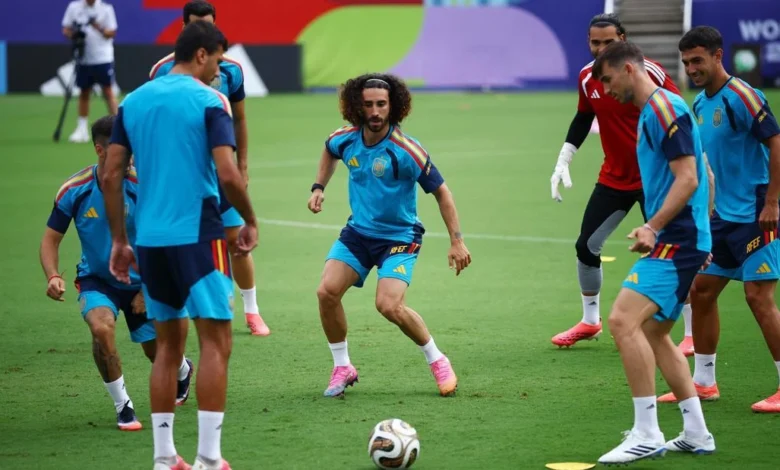
The Spanish national football team was forced to cancel its crucial final training session on Saturday, July 18, 2026, ahead of the highly anticipated FIFA World Cup 2026 final against Argentina. The decision, made at the Melanie Lane Training Ground in New Jersey, came as severe storm activity, including heavy rainfall and lightning, swept across the New York metropolitan area, underscoring the paramount importance of safety protocols in major international sporting events. This unforeseen disruption adds an intriguing layer of narrative to the build-up for Monday’s final at MetLife Stadium.
The Unforeseen Obstacle: Weather Disrupts Crucial Preparations
Head coach Luis de la Fuente’s squad was scheduled to undergo their last full training session, a critical opportunity for final tactical adjustments, set-piece practice, and mental preparation before facing reigning champions Argentina. However, the weather had other plans. Beginning in the late morning and intensifying into the afternoon, a powerful storm system delivered torrential downpours and significant electrical activity across parts of New Jersey and New York. This system, characteristic of mid-summer convective storms in the region, brought with it not just heavy rain but also the more dangerous element of lightning, which directly triggered the established safety protocols.
The team initially arrived at the Melanie Lane facility, a state-of-the-art training complex often utilized by professional sports teams and international squads for its superior amenities. As the weather deteriorated rapidly, threatening the safety of players and staff on the open pitch, Spanish officials, in conjunction with local authorities and FIFA representatives, made the initial call to suspend outdoor activities. The players were directed indoors, where they commenced a session of warm-up exercises and light conditioning, hoping for a break in the weather that would allow them to take to the pitch.
After an approximate 40-minute waiting period, during which meteorological updates were closely monitored, the decision was ultimately made to cancel the outdoor training entirely. The persistence of lightning strikes within the specified safety radius left no alternative. This cancellation marks a significant deviation from the meticulously planned final preparations for a World Cup final, a match often considered the pinnacle of a footballer’s career.
Adherence to Stringent Safety Protocols
The decision to cancel was not arbitrary but a direct consequence of the stringent safety protocols in place for outdoor sporting events in the United States, especially concerning lightning. The Royal Spanish Football Federation (RFEF) issued a statement confirming the cancellation, which read: "The training session of the Spanish national team on the pitch at the Melanie Lane Training Ground in New Jersey has been suspended in accordance with storm safety protocols in the United States. The players are currently undergoing an indoor warm-up session."
These protocols are designed to protect athletes, staff, and spectators from the inherent dangers of electrical storms. Specifically, US storm safety guidelines mandate that outdoor sporting activities must be suspended if lightning or electrical activity is detected within an eight-mile (approximately 12 km) radius of the event location. Furthermore, activities can only resume after a continuous period of at least 30 minutes without any detected lightning strikes within that safety perimeter. Given the sustained nature of the storm and the continuous threat of lightning, adhering to these rules became non-negotiable. The safety of the players and coaching staff was, understandably, the paramount concern.
Argentina’s Preparations: A Delayed but Completed Session
In contrast to their Spanish counterparts, the Argentine national team, while also affected by the same weather system, managed to complete their final training session, albeit with a delay. Lionel Messi and his teammates faced a similar suspension of outdoor activities, resulting in a 45-minute delay before they were eventually able to take to the pitch. This difference in outcome could be attributed to a slight geographical variation in the storm’s immediate impact at their respective training facility, or perhaps a temporary lull in lightning activity that allowed them to proceed within the safety window.
The fact that Argentina was able to complete their full outdoor session, even if delayed, while Spain was not, introduces a subtle dynamic into the psychological build-up for the final. While both teams faced disruption, the ability of one to complete its final on-pitch preparations could be perceived, however minimally, as an advantage, allowing for a more thorough tactical run-through and a sense of routine completion.
The Stakes of the 2026 FIFA World Cup Final
The 2026 FIFA World Cup represents a monumental chapter in the tournament’s history. Co-hosted by the United States, Canada, and Mexico, this edition is the first to feature an expanded 48-team format, culminating in a month-long global football spectacle. The final, set to take place at the iconic MetLife Stadium in East Rutherford, New Jersey, is expected to draw a capacity crowd of over 82,500 spectators, in addition to billions watching worldwide.
MetLife Stadium itself is a colossus of modern sports architecture, renowned for hosting major events including Super Bowls, the Copa América Centenario final in 2016, and numerous international football matches. Its selection as the venue for the World Cup final underscores its status as a premier global sporting arena, equipped with state-of-the-art facilities, though even such advanced infrastructure cannot control the weather.
Spain’s journey to the final has been marked by a blend of their traditional possession-based football and a newfound directness, showcasing a squad brimming with youthful talent and experienced leaders. Under Luis de la Fuente, they have demonstrated tactical flexibility and a formidable attacking threat, dispatching several strong contenders on their path to the showpiece event.
Argentina, on the other hand, arrived as the defending champions, carrying the weight of expectation and the enduring magic of Lionel Messi, who, at 39, is playing in what is widely anticipated to be his final World Cup. Their campaign has been characterized by resilience, tactical discipline, and moments of individual brilliance, overcoming challenges with a blend of defensive solidity and explosive attacking play. The prospect of Messi potentially lifting the trophy for a second consecutive time, or Spain claiming their second World Cup title, makes this final a truly historic encounter.
Implications for La Roja: Tactical, Physical, and Psychological
The cancellation of the final training session carries several potential implications for the Spanish squad:
- Tactical Disruption: The final training session is typically used for precise tactical refinements, practicing specific defensive shapes against a simulated opponent, running through set-piece routines, and fine-tuning offensive patterns. Missing this opportunity means the team will have to rely more heavily on theoretical walkthroughs and prior training sessions, potentially leaving some last-minute adjustments unpracticed on the pitch.
- Physical Acclimatization: While players engaged in indoor warm-ups, the lack of full-pitch activity means they missed out on a final session to physically acclimate to the specific grass, dimensions, and ambient conditions of an outdoor pitch. Although MetLife Stadium itself is a short distance away, the subtle differences in surface and environment are often considered important for peak performance.
- Psychological Impact: A routine disruption can have a subtle psychological effect. Players thrive on routine and certainty, especially before a high-stakes event like a World Cup final. The frustration of being unable to complete their final preparations as planned could lead to a minor sense of unease or a break in mental flow. Conversely, a resilient team might use this adversity as a unifying factor, galvanizing their resolve. Luis de la Fuente’s management of team morale in the hours leading up to the match will be critical.
- Coaching Adaptations: Coach de la Fuente will need to adapt his final pre-match instructions, potentially relying more on video analysis and whiteboard sessions to convey any last-minute tactical nuances that would have otherwise been practiced on the field.
Broader Context: Weather’s Growing Influence on Major Events
This incident serves as a stark reminder of the increasing influence of unpredictable weather patterns on major global sporting events. From extreme heat impacting the Tokyo Olympics to heavy rainfall disrupting Wimbledon or even past World Cup matches, climate variability presents growing logistical and safety challenges for organizers. FIFA and local organizing committees invest heavily in contingency planning, but some natural phenomena remain beyond control. The strict adherence to safety protocols, as demonstrated in New Jersey, highlights a proactive approach to player welfare, even if it comes at the cost of ideal preparation conditions. This incident will undoubtedly be reviewed as part of the broader operational planning for future large-scale events, emphasizing the need for robust and adaptable schedules.
Anticipation Builds for the Grand Finale
Despite the unusual pre-match circumstances for Spain, the excitement and anticipation for the 2026 FIFA World Cup final remain palpable. The stage is set for a historic clash between two footballing giants, each with a rich history and a burning desire to lift the coveted trophy. The MetLife Stadium will be a cauldron of passion and drama on Monday, July 20, 2026, at 01:00 AM WIB (Western Indonesia Time), as Spain and Argentina battle for global supremacy. The weather may have disrupted a training session, but it cannot diminish the grandeur or the significance of this ultimate footballing showdown.
Related posts: