Indonesia Accelerates Crucial Bocimi Toll Road Section 3 Amidst Safety Concerns and Post-Rainfall Evaluation

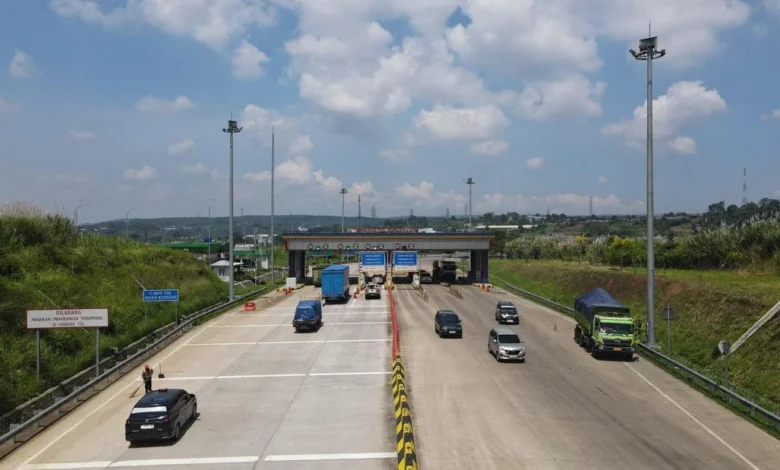
The Ministry of Public Works (Kementerian Pekerjaan Umum, PU) has initiated a comprehensive evaluation of the Bogor-Ciawi-Sukabumi (Bocimi) Toll Road at kilometer (km) 72 following significant rainfall in May 2026. This critical assessment, aimed at reinforcing structural integrity and user safety, was disclosed by the Head of the Toll Road Regulatory Agency (Badan Pengatur Jalan Tol, BPJT), Wilan Oktavian, during a Specific Working Visit by Commission V of the House of Representatives (DPR RI) to the Ciawi-Sukabumi Toll Road Section 3 on Friday, June 12, 2026. Simultaneously, the development of Tol Ciawi-Sukabumi Section 3, connecting Cibadak to West Sukabumi, is being significantly expedited, with construction progress currently at 81.49% and an ambitious target for completion in 2027.
The Bocimi Toll Road project represents a vital artery in Indonesia’s national infrastructure development strategy, designed to alleviate chronic traffic congestion on existing routes and unlock the economic potential of the Sukabumi region. Its construction traverses challenging mountainous terrain, making robust engineering and continuous safety monitoring paramount. The incident at Km 72 in May underscores the inherent vulnerabilities of infrastructure projects in areas prone to heavy precipitation and geological instability, common characteristics of Indonesia’s tropical climate and diverse topography. This event prompted an immediate and thorough review by the authorities, demonstrating a proactive stance towards public safety and the long-term resilience of the nation’s infrastructure assets.
Background and Significance of the Bocimi Toll Road
The Ciawi-Sukabumi Toll Road, spanning a total length of 53.15 kilometers, is a crucial component of the Trans-Java Toll Road network extension, aiming to connect the Greater Jakarta area with the economically burgeoning and scenically rich Sukabumi regency. Historically, the journey from Jakarta or Bogor to Sukabumi could take anywhere from 3 to 6 hours, often extending beyond that during peak seasons or holidays due to severe congestion on the narrow, winding arterial roads. This connectivity bottleneck has long hampered the region’s ability to fully capitalize on its industrial and tourism potential.
The project has been divided into four sections:
- Section 1: Ciawi-Cigombong (15.35 km)
- Section 2: Cigombong-Cibadak (11.9 km)
- Section 3: Cibadak-West Sukabumi (13.7 km)
- Section 4: West Sukabumi-Sukabumi (13.05 km)
Sections 1 and 2, totaling 26.40 km, are already operational, significantly reducing travel times for commuters and goods transport between Ciawi and Cibadak. The completion of Section 3, and subsequently Section 4, is expected to revolutionize accessibility to Sukabumi, transforming it from a relatively isolated regional center into a more integrated part of West Java’s economic landscape. The toll road is not merely a transportation route; it is envisioned as a catalyst for regional growth, attracting investments, stimulating local industries, and boosting the tourism sector.
The May 2026 Rainfall Incident and Subsequent Evaluation
The heavy rainfall in May 2026, a recurring meteorological phenomenon in Indonesia, particularly during the wet season, led to localized instability near Km 72 of the Bocimi Toll Road. While the exact nature of the incident (e.g., minor landslide, erosion, drainage system failure) was not detailed in the immediate reports, the fact that it triggered an urgent evaluation by the Ministry of Public Works and BPJT underscores its significance. Such events can compromise slope stability, undermine road foundations, and pose direct risks to motorists.
BPJT Head Wilan Oktavian emphasized the critical importance of slope security in the construction of Tol Ciawi-Sukabumi Section 3. "Pengamanan lereng menjadi aspek yang sangat penting dan krusial dalam pembangunan Jalan Tol Ciawi-Sukabumi Seksi 3," he stated in a written communication issued on Tuesday, June 16, 2026. This highlights the recognition that while speed of construction is important, it must not come at the expense of engineering robustness, especially in geologically challenging environments. The evaluation at Km 72 serves as a stark reminder of the continuous need for vigilance and adherence to stringent technical standards throughout the project lifecycle, from design and construction to operation and maintenance. The comprehensive evaluation involves a thorough assessment of all embankment and excavation sites to ensure that slope inclinations meet the prescribed technical standards, thereby enhancing safety and comfort for road users.
Congressional Oversight and Calls for Active Supervision
The visit by Commission V DPR RI on Friday, June 12, 2026, was a testament to the legislative body’s commitment to overseeing critical national infrastructure projects. Commission V, which covers infrastructure, transportation, public works, and housing, plays a vital role in ensuring accountability and transparency in government spending and project execution.
Ridwan Bae, the Chairman of the Specific Working Visit delegation and Vice Chairman of Commission V DPR RI, echoed the sentiment of prioritizing safety and quality. He explicitly called for more active government supervision over the construction of Tol Ciawi-Sukabumi Section 3. "Kami meminta pemerintah melakukan pengawasan yang aktif agar dapat menjadi contoh bagi jalan tol lainnya. Pekerjaan harus diyakini betul bahwa sudah kuat agar ketika sudah beroperasi dengan baik dan aman," Ridwan stated. This directive underscores the legislature’s concern for the long-term durability and safety of the toll road, advocating for a supervisory model that can serve as a benchmark for future infrastructure endeavors across the archipelago. The emphasis is on proactive monitoring rather than reactive responses, aiming to prevent potential issues before they escalate.
Technical Aspects of Slope Security and Geotechnical Engineering
The terrain traversed by the Bocimi Toll Road, particularly Section 3, is characterized by undulating hills and steep slopes, presenting significant geotechnical challenges. Slope stability is a paramount concern in such environments, where heavy rainfall can saturate soil, increase pore water pressure, and trigger landslides or erosions. To counter these risks, advanced geotechnical engineering solutions are crucial.
The "pengamanan lereng" (slope security) mentioned by Wilan Oktavian involves a multi-faceted approach:
- Geological and Geotechnical Surveys: Prior to construction, extensive surveys are conducted to map soil types, rock formations, groundwater levels, and potential fault lines. This data informs the design of stable slopes.
- Slope Design and Grading: Engineers carefully design the inclination of cut (excavation) and fill (embankment) slopes. Steeper slopes require more robust stabilization. The "kemiringan lereng sesuai standar teknis" (slope inclination according to technical standards) refers to these carefully calculated angles, often determined by soil mechanics principles and local geological conditions.
- Reinforcement Techniques:
- Retaining Walls: Concrete or gabion walls are constructed to hold back soil masses on steep slopes.
- Soil Nailing/Anchoring: Steel bars or cables are drilled into the ground and grouted to stabilize soil and rock masses.
- Geotextiles and Geogrids: Synthetic fabrics are used to reinforce soil, prevent erosion, and distribute loads, often embedded within embankments.
- Terracing: Creating a series of steps on a slope to reduce its overall gradient and control water flow.
- Drainage Systems: Effective water management is critical. This includes surface drainage (ditches, channels) to divert runoff away from slopes and subsurface drainage (French drains, weep holes) to relieve pore water pressure within the soil.
- Bioengineering: Using vegetation (grasses, shrubs, trees) to stabilize slopes, especially in the long term, by binding soil with root systems and reducing surface erosion.
- Monitoring Systems: Installation of inclinometers, extensometers, and piezometers to continuously monitor ground movement and water pressure, providing early warnings of potential instability.
The collaboration between BPJT and PT TransJabar Toll, the Toll Road Business Entity (BUJT), in enhancing slope security is critical. This partnership ensures that design specifications are robust, construction practices adhere to the highest standards, and ongoing maintenance programs are effectively implemented. The need for "penambahan lahan yang cukup luas" (additional substantial land acquisition) for slope reinforcement indicates that the initial design or unforeseen geological challenges necessitate expanding the project footprint to ensure adequate safety margins. This process, involving land acquisition, is often complex and time-consuming but is deemed essential for the long-term integrity of the infrastructure. Wilan confirmed that the "penetapan lokasi sudah keluar dan saat ini dalam proses pembebasan lahan" (location designation has been issued and is currently in the land acquisition process), signifying progress on this crucial front.
Acceleration of Section 3 and Future Outlook
The decision to accelerate the construction of Tol Ciawi-Sukabumi Section 3, from Cibadak to West Sukabumi, reflects the government’s commitment to completing this vital link expeditiously. With construction currently at 81.49% and targeting completion in 2027, the remaining work involves significant earthworks, bridge construction, paving, and the finalization of safety features. The acceleration is a strategic move to unlock the benefits of the toll road sooner, providing relief to congested conventional roads and stimulating regional economic activities.
Once completed, the entire 53.15 km Bocimi Toll Road will drastically reduce travel time between Ciawi/Bogor and Sukabumi, potentially cutting the journey to less than an hour under optimal conditions. This significant time saving has profound implications:
-
Economic Development:
- Logistics and Industry: Reduced transportation costs and times will make Sukabumi a more attractive location for manufacturing, agriculture, and other industries. It will facilitate the efficient movement of raw materials and finished goods, bolstering the local economy and potentially creating new employment opportunities. The region already hosts several industrial parks and agricultural production centers that stand to benefit immensely.
- Investment: Improved connectivity typically correlates with increased foreign and domestic investment, as businesses seek areas with efficient infrastructure.
- Trade: Enhanced connectivity will facilitate inter-regional trade and integrate Sukabumi more closely into the broader West Java and national supply chains.
-
Tourism Growth:
- Sukabumi boasts diverse natural attractions, including the UNESCO Global Geopark Ciletuh-Palabuhanratu, pristine beaches, waterfalls, and lush landscapes. Historically, difficult access has limited its tourism potential compared to other West Java destinations.
- The toll road will make these destinations easily accessible to weekend travelers and holidaymakers from Greater Jakarta, potentially leading to a surge in visitor numbers. This, in turn, will spur the growth of the hospitality sector (hotels, resorts, restaurants), local craft industries, and related service providers.
- It will also support the government’s broader strategy to develop regional tourism hubs beyond Bali.
-
Social Impact:
- Improved Accessibility: Local communities will experience improved access to markets, healthcare facilities, and educational institutions in larger urban centers.
- Reduced Congestion and Pollution: Diverting traffic from existing roads will reduce congestion in towns and villages, improving local quality of life and potentially reducing vehicle emissions.
- New Urban Development: The toll road could foster the growth of new economic corridors and urban centers along its route, leading to balanced regional development.
The completion of Section 3 and the subsequent Section 4 will mark a significant milestone for Indonesian infrastructure. However, the ongoing challenges of land acquisition, maintaining construction quality, and ensuring long-term structural integrity in a dynamic natural environment require sustained commitment from all stakeholders. The active supervision advocated by the DPR RI, coupled with the rigorous evaluations undertaken by BPJT, are crucial for ensuring that the Bocimi Toll Road not only meets its operational targets but also stands as a testament to safe, resilient, and high-quality infrastructure development. The lessons learned from the Km 72 incident and the continuous focus on slope stability will undoubtedly inform future projects, contributing to a safer and more efficient national transportation network.
Related posts: