UTBK Participant Survey at Universitas Indonesia: Monitoring Laboratory Conditions and Verifying Campus Facilities

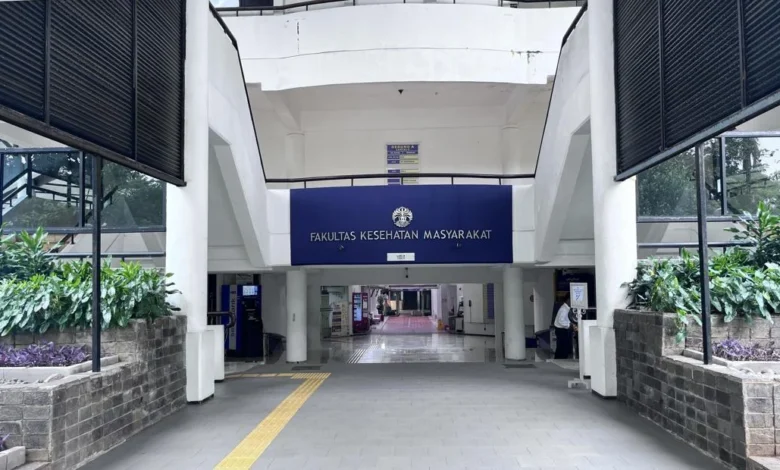
The atmosphere at the Universitas Indonesia (UI) campus in Depok has transformed into a hive of activity as thousands of prospective college students descend upon the grounds ahead of the 2026 Computer-Based Writing Examination for the National Selection Based on Test (UTBK-SNBT). From the preceding weekend through to the eve of the examination, candidates have been observed conducting meticulous site surveys to ensure their readiness for what is arguably the most significant academic hurdle of their lives. Among these hopefuls is Nadhira Syazani, a dedicated participant who has been assigned to the Faculty of Public Health (FKM) building, specifically within Laboratory A3. Known affectionately as Nassya, she made the strategic decision to visit the campus early, treating the survey as a reconnaissance mission to map out her "battlefield" and eliminate any potential for technical glitches or logistical delays on the day of the test.
Nassya’s proactive approach highlights a growing trend among UTBK participants who view physical preparation as being just as critical as academic mastery. Upon arriving at the UI Depok campus, Nassya noted that her assigned location was relatively easy to find due to its strategic proximity to the Universitas Indonesia Hospital (RSUI) and its accessibility from the Pondok Cina entry point. Although strict sterilization protocols prevented her from entering the actual examination room, she was able to observe the laboratory environment from the exterior. She remarked that while the computing equipment appeared modern and well-maintained, the internal lighting seemed somewhat dim—a minor detail that she has already integrated into her mental preparation. For Nassya, the primary benefit of the survey was the psychological peace of mind that comes with knowing the exact physical coordinates of her testing station.
The Strategic Importance of Pre-Examination Surveys
For many candidates like Nassya, the pre-exam survey is a multifaceted endeavor that extends far beyond merely locating a room number. It involves a comprehensive assessment of the surrounding infrastructure to ensure maximum comfort and efficiency during the high-pressure examination window. During her visit on Monday, April 20, 2026, Nassya meticulously documented the locations of essential support facilities. She identified a prayer room (musala) situated directly adjacent to Laboratory A3, which she plans to use for her dawn prayers. Furthermore, she mapped out the locations of restrooms on the first and second floors, identified the nearest student cafeteria for post-exam refueling, and scouted the parking areas to streamline her arrival and departure.
This level of detail is a response to the notorious logistical challenges associated with the UTBK. With thousands of students arriving simultaneously, even a minor confusion regarding the location of a restroom or a prayer hall can lead to unnecessary stress. Nassya emphasized that she did not want to be "the person who arrives late and looks lost" because they failed to do their homework. By identifying the "essential" points of interest, she has effectively minimized the variables that could go wrong on the day of the exam. This tactical foresight is particularly relevant given the scale of the UTBK-SNBT, which serves as the primary gateway to Indonesia’s top-tier state universities.
Logistics and the "Anti-Traffic" Strategy
One of the most daunting challenges for participants at the UI Depok testing center is the local traffic infrastructure. The Margonda Raya and Juanda corridors are infamous for their congestion, particularly during the morning rush hour on weekdays. Nassya, whose residence is a considerable distance from the Depok campus, has developed a rigorous travel plan to mitigate the risk of being caught in traffic. Since her examination is scheduled for a Wednesday—a peak workday—she intends to depart from her home before the break of dawn.
Her strategy involves arriving at the UI campus well before the subuh (dawn) prayer. By doing so, she avoids the gridlock that typically begins to form at 6:00 AM. She plans to perform her morning prayers at either the UI Grand Mosque or the smaller musala she located during her survey near the FKM building. This "buffer time" not only serves as a safeguard against transportation delays but also provides her with a quiet window of time to settle her nerves and perform a final mental review of her materials. The presence of her mother during the survey underscores the communal and familial nature of the UTBK experience in Indonesia, where parents often play an active role in supporting their children’s academic ambitions through logistical and emotional assistance.
Academic Targets and the Competitive Landscape of SNBT 2026
Nassya’s academic aspirations are as precise as her logistical planning. Her primary goal is to secure a seat in the Medical Technology program at the Sepuluh Nopember Institute of Technology (ITS) in Surabaya. Despite her examination being held at UI, her sights are set on this specialized field, which represents the intersection of engineering and healthcare—a sector seeing rapid growth and high demand in the national economy. Her secondary choices remain within the Universitas Indonesia system, demonstrating a clear preference for the country’s most prestigious institutions.
To achieve her dream of "one shot, one kill"—a colloquial term among students for passing the selection on the first attempt—Nassya has set a target score of 700. In the context of the UTBK-SNBT, a score of 700 is considered highly competitive, often placing a candidate in the top percentile of test-takers nationwide. Such a score is typically required for entry into high-demand programs like Medicine, Engineering, and Medical Technology. Beyond the numbers, Nassya expressed hope that the examination environment would be conducive to success, wishing for a room temperature that is not excessively cold and for invigilators who are supportive and professional.
Context: The Scale of UTBK-SNBT at Universitas Indonesia
As one of the primary "Pusat UTBK" (UTBK Centers) in Indonesia, Universitas Indonesia carries a massive responsibility in hosting the annual examination. The 2026 cycle is expected to see a record number of participants nationwide, following trends of increasing high school graduation rates and a growing emphasis on higher education. UI typically hosts tens of thousands of participants across multiple sessions and locations, including its campuses in Depok and Salemba.
The university’s preparation involves more than just providing rooms and computers. It requires a coordinated effort between the Information Technology Directorate, campus security, and various faculty administrations. For the 2026 exams, UI has reportedly upgraded its server capacities and internet bandwidth to prevent the technical lag that has occasionally plagued online examinations in the past. Furthermore, the university coordinates with local authorities, including the Depok Police and the Transportation Agency, to manage the influx of vehicles that can paralyze the city’s main arteries during the exam period.
Psychological and Sociological Implications of the Survey Ritual
The phenomenon of the "location survey" has become a rite of passage for Indonesian students. From a psychological perspective, this ritual serves as a coping mechanism for the intense anxiety associated with the SNBT. By familiarizing themselves with the physical space, students reduce the "fear of the unknown," allowing their brains to focus entirely on the cognitive demands of the test rather than environmental stressors.
Sociologically, the presence of parents and family members during these surveys, as seen with Nassya and her mother, highlights the collective investment in education within Indonesian society. The UTBK is not seen merely as an individual test but as a family milestone. The effort to travel long distances, wake up before dawn, and meticulously map out a campus reflects the high stakes placed on state university admission, which is often viewed as a guaranteed path to social mobility and professional success.
Final Preparations and the Road Ahead
As the first wave of the 2026 UTBK-SNBT commences, the stories of participants like Nassya provide a glimpse into the dedication required to navigate the modern Indonesian education system. The transition from the old paper-based tests to the current computer-based format has shifted the nature of preparation, making technical and environmental familiarity just as vital as subject knowledge.
Following the completion of the examination, participants will face a period of anticipation as the Ministry of Education, Culture, Research, and Technology processes the results. For Nassya and thousands of others, the coming weeks will be defined by hope and the expectation that their meticulous planning—from checking the lighting in a lab to calculating the exact timing of a dawn prayer—will pay off in the form of an acceptance letter from their dream university. The 2026 UTBK stands as a testament to the resilience and strategic thinking of Indonesia’s youth, who continue to push the boundaries of excellence in an increasingly competitive academic landscape.