Former National Guard Member Kills Eight Children and Injures Two Adults in Deadly Shreveport Mass Shooting Before Being Fatally Shot by Police

The city of Shreveport, Louisiana, has been plunged into a state of profound mourning and disbelief following a horrific domestic mass shooting that claimed the lives of eight children on Sunday, April 19. The incident, which authorities have characterized as the most lethal mass shooting in the United States since the beginning of 2024, unfolded across three separate residences in the Cedar Grove neighborhood. The suspect, identified as 31-year-old Shamar Elkins, was a former member of the Louisiana Army National Guard. According to the Shreveport Police Department and the Caddo Parish Coroner’s Office, Elkins systematically targeted his own family members, killing seven of his biological children and one niece, while leaving his wife and another woman in critical condition. The rampage ended only after a high-speed police pursuit and a final confrontation that resulted in the suspect being fatally shot by law enforcement officers.
A Family Decimated: The Victims of the Shreveport Massacre
The scale of the tragedy is underscored by the ages and relationships of those lost. The Caddo Parish Coroner’s Office released the identities of the eight deceased children, a list that has left the local community and the nation reeling. The victims included three boys and five girls, ranging in age from just 3 to 11 years old. They have been identified as Jayla Elkins, 3; Shayla Elkins, 5; Kayla Pugh, 6; Layla Pugh, 7; Markaydon Pugh, 10; Sariahh Snow, 11; Khedarrion Snow, 6; and Braylon Snow, 5. Seven of these children were the biological offspring of Shamar Elkins, while the eighth was a cousin living within the family circle.
In addition to the fatalities, the shooting left two adult women with life-threatening injuries. The first victim targeted was Elkins’ wife, the mother of his children, who was shot at the initial location. Despite her grave injuries, she survived the initial assault but remains in very serious condition. Elkins then proceeded to a nearby residence where he shot eight children and another woman. That second woman, identified as the mother of the eighth child killed, is also battling for her life in a local trauma center. A 13-year-old boy managed to survive the massacre by leaping from a roof to escape the gunfire; while he sustained multiple bone fractures from the fall, medical officials expect him to make a full recovery.
Chronology of the Violence: A Sunday Morning Nightmare
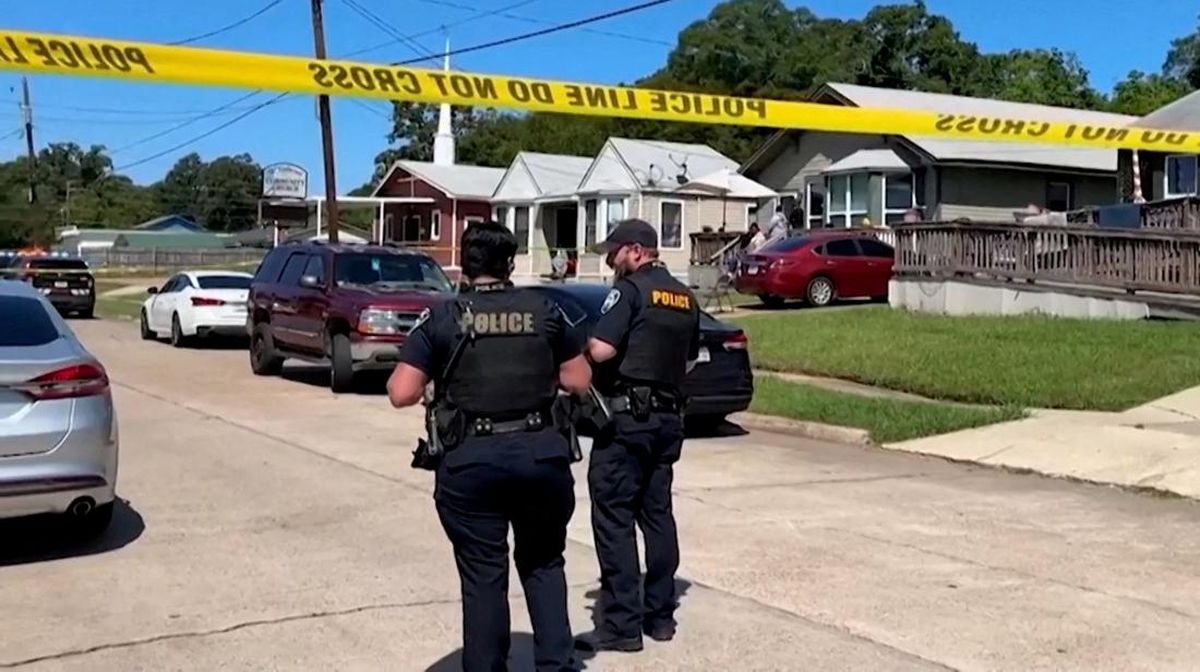
The violence began shortly before 6:00 a.m. on Sunday in the Cedar Grove area, a residential district in Shreveport. Police first received reports of shots fired at approximately 6:02 a.m. on West 79th Street. Upon arrival, officers discovered a scene of absolute devastation. Corporal Chris Bordelon of the Shreveport Police Department described the area as a "vast and complex crime scene," spanning multiple houses.
Evidence suggests that Elkins began his assault at his own home before moving to two other nearby locations on West 79th Street and Harrison Street. Surveillance footage obtained from a neighbor’s security camera captured chilling images of the suspect fleeing one of the homes toward a local tire shop. Liza Demming, a resident living just two doors down from one of the shooting sites, told reporters she witnessed Elkins running out of the house. She recalled seeing him with the children just days prior, noting that nothing seemed out of the ordinary at the time. The horror of the situation became apparent to the neighborhood when Demming later saw the body of a small child, covered in a cloth, positioned on the roof of a house—a grim testament to the desperate attempts made by the victims to escape.
State Representative Tammy Phelps, who attended a Sunday afternoon press briefing, revealed that several children had attempted to flee through back doors and windows as the suspect moved through the homes. The 13-year-old survivor’s leap from the roof was a harrowing example of the life-or-death choices faced by the victims during the minutes-long rampage.
The Suspect’s Background and Prior Red Flags
Shamar Elkins, the man responsible for the carnage, had a history that included both military service and previous brushes with the law involving firearms. According to records from the U.S. Army, Elkins served in the Louisiana Army National Guard for seven years, ending his service in August 2020. During his tenure, he held the rank of specialist but was never deployed to a combat zone. While his military record did not immediately suggest a propensity for mass violence, his civilian criminal record contained a significant warning sign.
In 2019, Elkins was arrested following a violent altercation involving a firearm. Reports indicate that Elkins was in a vehicle when another individual allegedly brandished a weapon at him. Elkins responded by firing five rounds at the vehicle while in close proximity to a local school. Despite the severity of that incident, he remained in the community and maintained access to firearms.
Police have officially stated that the motive for Sunday’s shooting was "domestic in nature," though they have not yet elaborated on the specific grievances or psychological triggers that led Elkins to target his children and wife. The phenomenon of "familicide"—a type of murder-suicide or multi-victim homicide where a perpetrator kills family members—is often linked by criminologists to issues of domestic control, financial stress, or severe untreated mental health crises.
Law Enforcement Response and the Final Pursuit
The apprehension of Shamar Elkins involved a multi-agency effort that began immediately after the first 911 calls. Following the shootings at the three residences, Elkins fled the scene and successfully carjacked a vehicle at gunpoint. This triggered a high-stakes pursuit through the streets of Shreveport.
The chase concluded when police intercepted the stolen vehicle. During the confrontation, Elkins reportedly refused to surrender and engaged with the officers. Fearing for public safety and their own lives, Shreveport police officers discharged their weapons, fatally wounding the suspect. He was pronounced dead at the scene. "This was a fast-moving, high-threat situation," Cpl. Bordelon stated. "The suspect had already demonstrated a total disregard for human life, and our priority was to stop him before any more innocent people were hurt."
Official Reactions and Community Mourning
The impact of the shooting has resonated far beyond the borders of the Cedar Grove neighborhood. Shreveport Mayor Tom Arceneaux expressed the collective grief of the city during a press conference. "This shakes the entire city to its core. It affects all of us. When you lose eight children in a single morning, there are no words that can adequately describe that pain," Arceneaux said. He called for a city-wide day of prayer and urged residents to support the surviving family members and the first responders who had to witness the horrific scenes.
City Councilman Grayson Boucher pointed out a disturbing trend in the city’s crime data, noting that more than 30 percent of homicides in Shreveport are domestic-related. "We have a domestic violence problem that we must address with more than just police presence. We need intervention, we need resources, and we need to look at why these incidents are escalating to such a lethal degree," Boucher remarked.
Broader Context: Mass Shootings in America 2024
The Shreveport massacre adds a grim chapter to the ongoing crisis of gun violence in the United States. According to the Gun Violence Archive (GVA), which defines a mass shooting as an incident in which four or more people are shot or killed, excluding the shooter, there have been at least 114 such incidents in the U.S. so far in 2024.
This specific event is particularly notable due to the high number of fatalities and the fact that the victims were almost entirely children. Statistically, domestic mass shootings—often referred to as "private" mass shootings—account for a significant portion of the nation’s gun violence but frequently receive less national media attention than public shootings in schools or shopping malls. However, the sheer scale of the Elkins case has forced a national conversation on the intersection of domestic abuse, veteran mental health, and firearm accessibility.
Analysis of Implications and Necessary Interventions
The Shreveport shooting highlights several critical areas for policy and social reform. First, the suspect’s prior 2019 firearm incident raises questions about "red flag" laws and the ability of the justice system to restrict firearm access for individuals with a history of reckless or violent behavior involving guns. Louisiana currently lacks a comprehensive "red flag" law (Extreme Risk Protection Order), which allows family members or law enforcement to petition a court to temporarily remove firearms from an individual deemed a danger to themselves or others.
Second, the case underscores the need for enhanced domestic violence intervention programs. With 30% of Shreveport’s murders stemming from domestic issues, local advocates are calling for increased funding for shelters, counseling, and early-warning systems that can identify escalating patterns of abuse before they turn lethal.
Finally, the suspect’s background as a veteran brings the issue of post-service support into focus. While most veterans transition to civilian life without incident, those who struggle with the transition require robust mental health resources. Whether Elkins was suffering from service-related trauma or other psychological stressors remains a subject of investigation, but the tragedy emphasizes the importance of accessible mental health care for all citizens, particularly those trained in the use of lethal force.
As Shreveport begins the long process of healing, the names of Jayla, Shayla, Kayla, Layla, Markaydon, Sariahh, Khedarrion, and Braylon serve as a heartbreaking reminder of the lives cut short by a single morning of unthinkable violence. The investigation remains ongoing as authorities work to provide answers to a community searching for meaning in the wake of an incomprehensible loss.
Related posts: