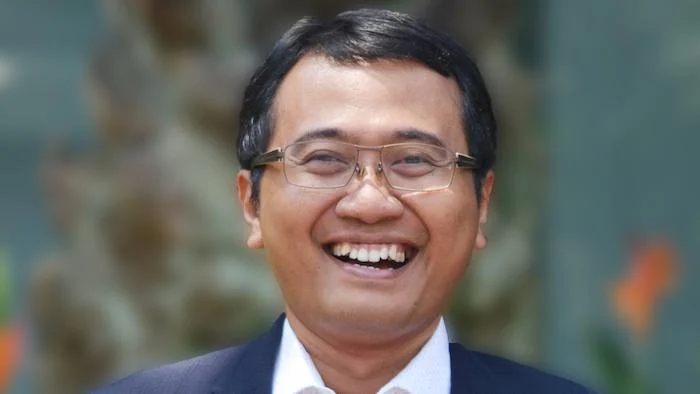
In a significant move to centralize and elevate the quality of national leadership training, President Prabowo Subianto officially inaugurated Professor Yos Sunitiyoso, Ph.D., as the Vice Governor of the University of the Republic of Indonesia (URI) at the State Palace in Jakarta on Wednesday, July 22, 2026. The appointment marks a pivotal step in the administration’s ambitious agenda to overhaul the country’s human resource development framework, specifically targeting the upper echelons of the civil service and state-owned enterprises. Professor Yos, a distinguished academic from the Bandung Institute of Technology (ITB), will serve alongside the newly appointed Governor of URI, Donny Ermawan Taufanto, who previously held the position of Vice Minister of Defense.
The University of the Republic of Indonesia, also referred to as the National Education Management Agency (Badan Pengelola Pendidikan Kebangsaan), represents a consolidation of various elite educational and training institutions under one strategic umbrella. During the post-inauguration press briefing, Governor Donny Ermawan Taufanto outlined a sweeping vision for the URI, noting that the institution will oversee three primary bodies. A cornerstone of this new structure is the integration of the National Institute of Public Administration (Lembaga Administrasi Negara or LAN). Under the new mandate, LAN will not only retain its traditional role of training Civil Servants (ASN) but will also expand its scope to include the preparation and professional development of employees for State-Owned Enterprises (BUMN).
A Strategic Vision for National Leadership
The establishment of the URI and the appointment of high-caliber professionals like Professor Yos Sunitiyoso underscore President Prabowo Subianto’s long-standing concern regarding the quality of Indonesia’s human capital. The President has frequently emphasized that for Indonesia to achieve its "Golden Indonesia 2045" vision, the nation requires a cadre of leaders who are not only technically proficient but also deeply imbued with nationalistic values and strategic foresight.
Governor Donny Ermawan Taufanto explained that this educational consolidation is a direct response to the need for a more synchronized approach to leadership grooming. "This is all related to the education, coaching, and preparation of human resources for the future, both for the government and for BUMN," Donny stated. He further noted that the transformation includes the development of the "Sekolah Unggul Garuda" (Garuda Excellence Schools) and the rollout of ten new University of the Republic of Indonesia campuses across the archipelago. This expansion is designed to ensure that elite-level training is accessible and standardized, creating a unified pipeline of talent for the nation’s most critical sectors.
Profile of Professor Yos Sunitiyoso: From Academic Excellence to National Service
Professor Yos Sunitiyoso brings a wealth of intellectual rigor and practical expertise to the URI leadership team. Prior to his appointment, he was recognized as a prominent figure at the School of Business and Management, Bandung Institute of Technology (SBM ITB), where he served as a Professor of Business Decision Modeling. His elevation to the rank of Professor in 2025 was a testament to his extensive contributions to the field of systemic decision-making and strategic negotiation.
An alumnus of the prestigious SMA Taruna Nusantara (Class of TN4), Professor Yos’s career has been defined by a commitment to academic excellence and international collaboration. His educational journey and research portfolio include:
- International Research: Between 2008 and 2009, he served as a postdoctoral researcher at the Transportation Research Group (TRG) at the University of Southampton, United Kingdom.
- Advanced Fellowships: In 2018, he was awarded the DIKTI-funded Fulbright Grant for Indonesian Lecturers, serving as a Visiting Scholar at the University of Washington, United States. His research there focused on developing soft system dynamics models to evaluate energy efficiency in building renovations.
- Scholarly Impact: With over 50 articles indexed in Scopus, his work spans critical sectors including transportation, energy, and systemic simulation.
- Institutional Leadership: From 2020 to 2022, he headed the Decision Making and Strategic Negotiation Interest Group at SBM ITB, where he received multiple awards for teaching, institutional development, and research innovation.
The SMA Taruna Nusantara Alumni Association expressed immense pride in his appointment, noting that his journey from the halls of their elite boarding school to the upper tiers of national governance serves as an inspiration for younger generations. In a statement released shortly after his 2025 professorship, the school remarked that his expertise would undoubtedly provide a "positive and wide-ranging impact on the progress of the nation and state."
The Integration of LAN and the BUMN Sector
One of the most consequential aspects of the URI’s formation is the structural shift involving the National Institute of Public Administration (LAN). Historically, LAN has been the primary gatekeeper for the training and certification of Indonesia’s millions of civil servants. By bringing LAN under the URI umbrella and expanding its mandate to include BUMN, the Prabowo administration is attempting to bridge the gap between bureaucratic efficiency and corporate productivity.
"Lembaga Administrasi Negara, which already exists, will be integrated, but its duties and functions will be added and strengthened," Governor Donny explained. The inclusion of BUMN personnel in this centralized training regime suggests a desire to harmonize the work culture of state companies with the strategic goals of the central government. Traditionally, BUMNs have operated their own internal "Corporate Universities." The new URI model aims to provide a standardized "National Leadership" curriculum that ensures directors and managers of state enterprises share a common ideological and strategic framework with government administrators.
Chronology of the URI’s Establishment
The road to the inauguration of the URI leadership has been marked by a series of legislative and administrative milestones aimed at centralizing human resource development:
- Early 2025: President Prabowo signals the need for a "National Education Management Agency" during a cabinet meeting, citing the need for a more disciplined and patriotic bureaucracy.
- June 2025: Professor Yos Sunitiyoso is inaugurated as a Professor at ITB, with his research on decision modeling gaining national attention for its applicability to public policy.
- Late 2025: The government begins the pilot phase of the "Sekolah Unggul Garuda," focusing on middle-school and high-school levels to create a feeder system for higher national education.
- Early 2026: Legislation is passed to transform LAN and integrate it into the URI framework, effectively creating the "Badan Pengelola Pendidikan Kebangsaan."
- July 22, 2026: The formal inauguration of Donny Ermawan Taufanto as Governor and Yos Sunitiyoso as Vice Governor at the State Palace.
Analysis: Implications for Indonesia’s Future
The appointment of Professor Yos Sunitiyoso and the activation of the URI represent a paradigm shift in how Indonesia manages its "Top 1%" of talent. By placing an expert in "Decision Modeling" in a leadership role, the administration is signaling a move toward data-driven governance and systemic efficiency. Professor Yos’s background in simulation and scenario planning will likely be utilized to modernize the curriculum of LAN and the new URI campuses, moving away from rote memorization toward complex problem-solving and strategic foresight.
Furthermore, the "Taruna Nusantara" connection between the President and many of his top appointees, including Professor Yos, highlights a preference for leaders who have undergone rigorous, discipline-based education. This suggests that the URI will likely adopt a semi-military or highly disciplined pedagogical approach, similar to the "cadet" culture found in elite institutions like West Point in the United States or the École Nationale d’Administration (ENA) in France.
For the BUMN sector, this transition may be met with both optimism and caution. While a standardized leadership curriculum could improve synergy between the government and state enterprises, there may be concerns regarding the autonomy of BUMN corporate universities. However, the administration’s goal appears to be the creation of a "Total Human Capital" strategy, where the lines between civil, military, and corporate leadership are blurred in favor of a unified "National Interest" focus.
As the URI begins its operations, the focus will now shift to how Professor Yos and Governor Donny implement the "ten new universities" plan. If successful, this network of institutions could become the engine of Indonesia’s bureaucratic modernization, ensuring that the leaders of 2045 are equipped to navigate an increasingly complex global landscape. The integration of LAN and the expansion into the BUMN sector are just the first steps in what appears to be a total reimagining of the Indonesian state apparatus.