BINUS SCHOOL Serpong Hosts Asia-Pacific Young Leaders Convention 2026 to Empower Youth through Global Sustainability and Collaborative Innovation

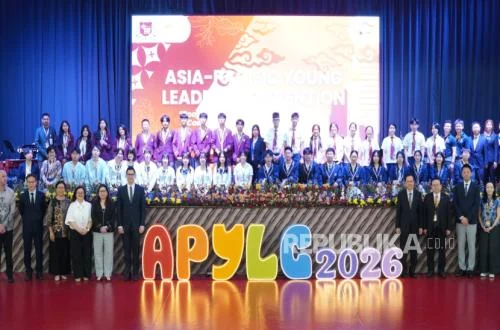
The 9th annual Asia-Pacific Young Leaders Convention (APYLC) 2026 officially commenced at BINUS SCHOOL Serpong, Tangerang, on April 20, 2026, marking a significant milestone in regional educational cooperation. Running through April 24, this prestigious international forum brings together high school student leaders from across the Asia-Pacific region to engage in high-level dialogue, collaborative problem-solving, and cross-cultural exchange. Under the central theme "Root for Change: Feeding Minds, Healing Communities, Empowering Futures," the convention serves as a strategic platform for the next generation of leaders to address the complex dynamics of the modern world through the lens of global sustainability.
This year’s convention is hosted by BINUS SCHOOL Education and features elite delegations from four prominent institutions: BINUS SCHOOL Education representing Indonesia, Kaichi High School from Japan, Nan Chiau High School from Singapore, and Changshu Lunhua Senior High School from China. The five-day event is designed to move beyond traditional academic discourse, challenging participants to develop actionable solutions for some of the most pressing issues facing the Asia-Pacific region today.
A Strategic Framework for Global Change: Integrating UN SDGs
The thematic foundation of APYLC 2026 is rooted in the United Nations Sustainable Development Goals (SDGs), specifically focusing on three pillars: SDG 2 (Zero Hunger), SDG 3 (Good Health and Well-being), and SDG 8 (Decent Work and Economic Growth). By anchoring the convention in these globally recognized targets, the organizers aim to provide students with a rigorous framework for analyzing socio-economic disparities and environmental challenges.
Sherrierose Garcia Gonzales, Director of BINUS SCHOOL Education, emphasized that the choice of theme reflects the necessity of a holistic approach to global challenges. "In an era of unprecedented volatility, we must equip our students with more than just knowledge; we must provide them with the empathy and analytical tools to navigate a complex landscape," Gonzales stated during the opening proceedings. She noted that the "Root for Change" concept encourages students to look beneath the surface of global crises to identify systemic causes, fostering solutions that are both innovative and sustainable over the long term.
The integration of SDG 2, Zero Hunger, is particularly relevant given the fluctuating food security levels in the Asia-Pacific region, driven by climate change and supply chain disruptions. Students are tasked with exploring sustainable agricultural practices and equitable food distribution systems. Meanwhile, the focus on SDG 3, Good Health and Well-being, addresses the rising importance of mental health and post-pandemic healthcare infrastructure. Finally, the inclusion of SDG 8, Decent Work and Economic Growth, prepares delegates to discuss the future of the labor market in the age of artificial intelligence and the expanding digital economy.
Chronology of the Convention: From Dialogue to Action
The APYLC 2026 itinerary is structured to facilitate a progression from theoretical understanding to collaborative output. The schedule began on April 20 with a grand opening ceremony, featuring keynote addresses from government officials and educational leaders.
Day two and three of the convention are dedicated to intensive workshops and "Leader Labs," where delegates from different countries are mixed into integrated teams. This structure is intentional, forcing students to navigate linguistic and cultural barriers while working toward a common goal. These sessions are moderated by academic experts and industry professionals who provide real-world context to the students’ proposals.
On the fourth day, the focus shifts to community engagement and field observations. Delegates are given the opportunity to witness local initiatives in Tangerang and the greater Jakarta area that align with the chosen SDGs. This experiential learning component is designed to ground the convention’s high-level discussions in the practical realities of community development.
The convention will culminate on April 24 with the "Global Solutions Gallery," where each student group will present their final projects to a panel of judges and peers. These projects are expected to outline specific, scalable interventions that could be implemented in their respective home countries or through regional cooperation.
Government Support and the Role of Creative Economy
The significance of APYLC 2026 was further highlighted by the attendance of Irene Umar, the Deputy Minister of Creative Economy for the Republic of Indonesia. Delivering the keynote address at the opening ceremony, Umar stressed that the future of the Asia-Pacific economy relies heavily on the "soft skills" of its youth, including creativity, collaboration, and emotional intelligence.
"APYLC is not merely a forum; it is a crucible for the leaders of tomorrow," Umar remarked. She argued that the challenges of the 21st century cannot be solved by any single nation in isolation. Instead, they require a deep-seated commitment to empathy and a willingness to understand the unique cultural contexts of neighbors. Umar’s presence underscores the Indonesian government’s recognition of international education as a vital component of its broader strategy to develop a "Golden Generation" by 2045.
By involving the Ministry of Creative Economy, the convention bridges the gap between education and industry. Umar highlighted that the "Empowering Futures" aspect of the theme aligns with Indonesia’s goals to foster an innovation-driven economy where young people are not just job seekers, but job creators who contribute to regional stability and prosperity.
Regional Context and Supporting Data
The Asia-Pacific region is home to over 60 percent of the world’s youth population, approximately 700 million people aged 15 to 24. According to data from the United Nations Economic and Social Commission for Asia and the Pacific (ESCAP), the region’s ability to achieve the 2030 Agenda for Sustainable Development depends largely on the mobilization of this demographic.
However, the region faces significant hurdles. Reports from the Food and Agriculture Organization (FAO) indicate that while the Asia-Pacific has made strides in poverty reduction, nearly 370 million people in the region still suffer from undernourishment, highlighting the urgency of SDG 2. Furthermore, the International Labour Organization (ILO) has noted that youth unemployment remains a persistent issue in several member nations, with the shift toward automation threatening traditional entry-level roles, making the discussions surrounding SDG 8 at APYLC 2026 particularly timely.
The participating schools—hailing from Indonesia, Japan, Singapore, and China—represent some of the most dynamic economies in the world. Japan and Singapore are often cited as leaders in technological innovation and healthcare (SDG 3), while China’s rapid economic transformation provides a massive case study for SDG 8. Indonesia, as the host and one of the world’s largest emerging markets, offers a unique perspective on balancing rapid growth with social equity.
Analysis of Implications: Fostering a New Diplomatic Paradigm
Educational analysts suggest that conventions like APYLC 2026 play a crucial role in "track two diplomacy"—non-official, informal interactions that build long-term relationships between future influential figures. By establishing these connections at the high school level, BINUS SCHOOL Serpong is helping to create a network of leaders who share a common language of sustainability and cooperation.
The impact of the convention extends beyond the individual students. For the participating institutions, APYLC serves as a benchmark for international curriculum standards. It encourages schools to move away from rote memorization and toward "competency-based learning," where students are evaluated on their ability to apply knowledge to real-world crises.
Furthermore, the emphasis on "Healing Communities" suggests a shift in educational philosophy. In a post-pandemic world, there is an increasing realization that economic metrics alone are insufficient measures of national success. The convention’s focus on well-being and community resilience reflects a growing global trend toward "well-being economics," where the health of the populace and the environment are prioritized alongside GDP growth.
Conclusion and Future Outlook
As APYLC 2026 continues through its five-day program, the expectations remain high for the 9th cohort of delegates. The convention at BINUS SCHOOL Serpong stands as a testament to the power of international education in fostering a sense of global citizenship. By tackling the SDGs head-on, these students are proving that they are not merely passive recipients of the future, but active architects of it.
The outcomes of this convention—the friendships formed, the solutions proposed, and the perspectives shifted—will likely resonate long after the closing ceremony on April 24. As these young leaders return to Japan, Singapore, China, and various parts of Indonesia, they carry with them the "Root for Change" mandate, prepared to implement sustainable practices in their own communities and continue the dialogue on a global stage. In the broader context of Asia-Pacific relations, APYLC 2026 reinforces the idea that while the region is diverse in culture and economy, its challenges are shared, and its solutions must be collaborative.