The Vital Role of Bailey Bridges in Disaster Recovery and National Infrastructure Resilience

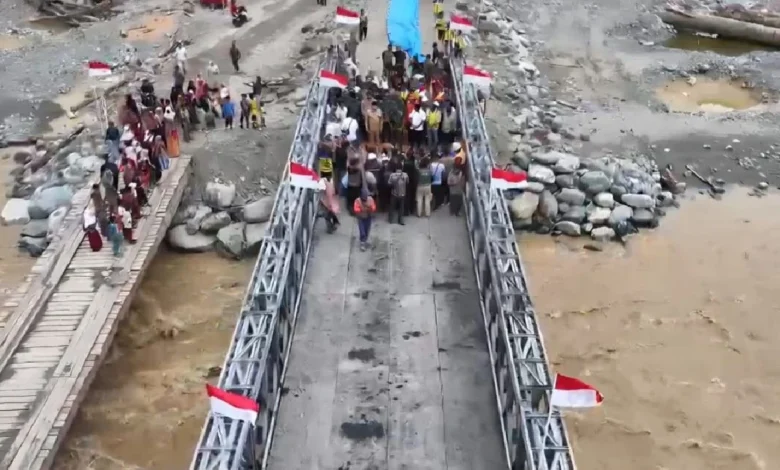
The occurrence of natural disasters in an archipelagic nation like Indonesia often brings with it a catastrophic side effect that extends far beyond the immediate impact of the event: the total severance of regional connectivity. When floods, landslides, or earthquakes strike, the primary casualties of the physical landscape are often the bridges and roads that serve as the lifeblood of local communities. The destruction of these critical nodes immediately halts the mobility of the population, ensuring that daily activities, from commerce to education, grind to a sudden and often prolonged standstill. Beyond the immediate inconvenience to residents, the obstruction of access creates a high-risk scenario for emergency services, as it significantly slows the distribution of humanitarian aid, limits the ability of victims to reach essential medical facilities, and paralyzes the local economy. In these critical windows of emergency, the necessity for a rapid, secure, and functional connecting path becomes paramount to the survival and eventual recovery of the affected region. It is within this context of urgency and engineering necessity that the Bailey bridge emerges as a definitive solution for disaster management and temporary infrastructure.
The Genesis and Historical Context of the Bailey Bridge
The Bailey bridge is a type of portable, pre-fabricated truss bridge, characterized by its high-quality lightweight steel components and its modular design. It was specifically engineered to be "moveable," allowing for rapid assembly and disassembly, which makes it the gold standard for emergency bridge solutions worldwide. The history of this engineering marvel dates back to 1940, during the height of World War II. It was developed by Sir Donald Bailey, a civil servant at the British War Office who had a penchant for model bridge building as a hobby.
Sir Donald Bailey’s design was born out of a military necessity. During the early stages of the war, the British military realized that existing bridge designs were either too heavy to be transported quickly or too weak to support the increasing weight of modern tanks. Bailey’s innovation was to create a bridge that could be assembled by hand, without the need for heavy cranes or specialized machinery, using standardized parts that could be easily transported in standard military trucks.
The production of the Bailey bridge began on a mass scale in July 1941. Its design was so successful that it became a cornerstone of Allied engineering efforts. Field Marshal Bernard Montgomery famously remarked that without the Bailey bridge, the Allied forces would not have won the war, as it allowed troops and heavy equipment to cross rivers and ravages across Europe and North Africa with unprecedented speed. The design consists of three primary components, with the structural integrity supported by vertical panels on the sides. These panels are typically three meters in length and 1.5 meters in height, with each cross-section weighing approximately 260 kilograms—a weight manageable by a small team of soldiers or laborers.
Technical Specifications and Modular Engineering
The engineering brilliance of the Bailey bridge lies in its simplicity and adaptability. The floor of the bridge is constructed from a series of transoms, which are roughly 5.8 meters (19 feet) wide. These transoms are placed transversely across the span of the bridge and are secured to the bottom chord of the side panels using specialized clamps. This creates the primary horizontal framework.
To provide longitudinal strength and a surface for the roadway, stringers—measuring approximately 3.0 meters (10 feet) in length—are placed atop the transoms. These stringers are interconnected to form a rigid rectangular structure. Finally, heavy timber planks or steel plates are laid over the stringers to serve as the traffic deck. This modularity allows the bridge to be reinforced by doubling or tripling the side panels (double-single, triple-double configurations), thereby increasing its load-bearing capacity to accommodate heavier vehicles, including armored tanks and heavy construction machinery.
The assembly process is unique in the world of civil engineering. Because the bridge is built on rollers on one side of a gap and "pushed" across to the other side using a launching nose, it can be installed without any support from the ground in the middle of the river or chasm. This is particularly vital in disaster zones where the ground may be unstable or the water level too high to install traditional piers.
Implementation in the Indonesian Landscape
In Indonesia, the deployment of Bailey bridges has become a standard operating procedure for the Ministry of Public Works and Housing (PUPR) and the Indonesian National Armed Forces (TNI). The country’s unique geography—characterized by mountainous terrain and a high frequency of hydrometeorological disasters—makes the Bailey bridge an indispensable tool for national resilience.
Recent instances in North Sumatra, West Sumatra, and Aceh have highlighted the critical nature of these structures. For example, in the aftermath of flash floods in West Sumatra, the destruction of permanent bridges left entire villages isolated. In response, the TNI, in collaboration with local residents, utilized the "gotong royong" (communal cooperation) spirit to rapidly assemble Bailey bridges, restoring access within days rather than the months or years it would take to build a permanent concrete structure.
Similarly, in Tapanuli Selatan, the installation of a Bailey bridge served as a vital link between villages that had been separated by a landslide. These projects are often high-speed operations; a standard Bailey bridge can be erected in as little as 24 to 72 hours, depending on the span and the available manpower. This speed is the difference between a community receiving food and medicine or facing a secondary humanitarian crisis due to isolation.
Socio-Economic Impact and Official Responses
Government officials and infrastructure experts have frequently pointed to the Bailey bridge as a "bridge of hope" for remote areas. The Ministry of Public Works often maintains a strategic stockpile of Bailey components in various regional hubs across the archipelago. This decentralized storage ensures that when a disaster occurs, the components do not have to be shipped from Jakarta, which could take weeks, but can instead be trucked to the site from a nearby province.
The economic implications of restoring access cannot be overstated. In rural Indonesia, the closure of a single bridge can increase the cost of logistics by 200% to 300% as trucks are forced to take long detours through difficult terrain. This leads to a spike in the price of basic commodities like rice, fuel, and cooking oil. By installing a Bailey bridge, the government effectively stabilizes the local economy, allowing farmers to bring their produce to market and ensuring that the supply chain for essential goods remains intact.
Furthermore, the TNI’s involvement in the assembly of these bridges serves a dual purpose. It acts as a training exercise for military engineers in rapid deployment and fosters a sense of security and presence among the civilian population. Official statements from military leadership often emphasize that the installation of a Bailey bridge is not just a technical task, but a humanitarian mission to restore the dignity and livelihoods of citizens affected by catastrophe.
Analysis of Future Challenges and Innovations
While the Bailey bridge is a proven technology, its use in modern-day Indonesia is evolving. There is an increasing focus on the "semi-permanent" use of these structures. In many remote areas, a Bailey bridge installed as a temporary measure may end up serving a community for several years while the government secures funding and conducts environmental assessments for a permanent replacement. This reality necessitates rigorous maintenance schedules to ensure that the steel components do not succumb to the high humidity and corrosive environments common in tropical regions.
Moreover, modern engineering is seeing the introduction of "Super Bailey" bridges—versions that use higher-strength alloys and galvanized coatings to extend their lifespan and increase their weight capacity. As Indonesia continues to develop its "3T" regions (frontier, outermost, and least developed), the Bailey bridge will likely play a role beyond disaster recovery, serving as a pioneering infrastructure tool that opens up new areas for development before permanent roads are established.
Conclusion
The Bailey bridge remains one of the most significant engineering contributions to civil and military society. Its design, which has remained largely unchanged for over 80 years, is a testament to the power of simple, functional innovation. In the context of Indonesia’s disaster management strategy, these bridges are more than just steel and wood; they are critical tools of governance and survival.
By providing a rapid response to the severance of regional access, the Bailey bridge mitigates the long-term socio-economic damage caused by natural disasters. It allows for the swift delivery of aid, the movement of people, and the continuation of economic life. As Indonesia faces the ongoing challenges of climate change and geological volatility, the continued investment in, and strategic deployment of, Bailey bridges will remain a cornerstone of the nation’s ability to recover, rebuild, and reconnect. The legacy of Sir Donald Bailey lives on in every Indonesian village that finds its way back to the map after a disaster, linked once again to the rest of the world by a sturdy, reliable frame of steel.