Government Clarifies 2026 National Research Budget Allocation for Higher Education Institutions to Reach Eight Trillion Rupiah Total


The Indonesian government has moved to clarify public and academic perceptions regarding the scale of national research funding allocated for higher education institutions for the 2026 fiscal year. Following a period of intense public discourse surrounding a perceived reduction in funding, the Ministry of Higher Education, Science, and Technology (Kemdiktisaintek) emphasized that the previously circulated figure of Rp1.7 trillion represents only a specific segment of the available budget, rather than the total national commitment. According to official statements, the comprehensive research budget accessible to universities and researchers this year actually totals approximately Rp8 trillion, derived from a diversified ecosystem of funding sources.
This clarification aims to stabilize expectations within the scientific community and ensure that the momentum of national innovation remains unhindered by budgetary misunderstandings. The Ministry noted that the earlier announcement, which sparked concern among academics and research institutions, referred specifically to nine competitive funding schemes under the state budget (APBN) that were the first to be opened for the current cycle. By providing a more granular breakdown of the financial landscape, the government seeks to demonstrate its continued commitment to the "Golden Indonesia 2045" vision, which relies heavily on high-quality human capital and robust scientific advancement.
Clarifying the Funding Framework
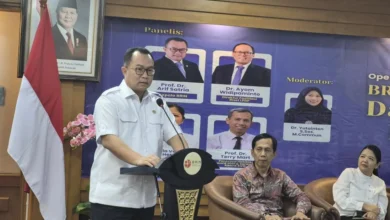
The Director General of Research and Development at Kemdiktisaintek, Fauzan Adziman, addressed the issue during a formal contract-signing ceremony for research funding programs held in Jakarta on Monday. He stated that the Rp1.7 trillion figure, which had been widely discussed following an announcement on April 9, 2026, was merely an initial phase of a much larger financial deployment. Adziman explained that the government’s research funding strategy is no longer centralized within a single silo but is distributed across various instruments to maximize reach and impact.
"If we combine the Research Endowment Fund and the Higher Education Endowment Fund with the direct research budget from the APBN, as well as the funds managed by the National Research and Innovation Agency (BRIN), the total amount reaches approximately Rp8 trillion," Adziman clarified. He further noted that the perception of a budget cut was based on an incomplete reading of the national research ecosystem. The government, he assured, has not decreased its investment in science; rather, it has restructured the delivery mechanisms to foster a more competitive and inclusive environment for scholars across the archipelago.
The Composition of the Rp8 Trillion Allocation
To understand the scale of the 2026 allocation, it is necessary to examine the constituent parts of the Rp8 trillion figure. The Ministry of Higher Education, Science, and Technology directly manages approximately Rp3.2 trillion from the state budget. This portion is primarily dedicated to fundamental research, competitive grants, and institutional development. Within this Rp3.2 trillion, the Rp1.7 trillion previously cited serves as the bedrock for nine specific programs that were prioritized for early release to ensure continuity in ongoing laboratory work and academic studies.
Beyond the direct APBN allocation, a significant portion of the funding is sourced from the Education Endowment Fund (LPDP), specifically the segments earmarked for research (Dana Abadi Penelitian). These endowment funds are designed to provide long-term sustainability for the Indonesian research community, shielding it from the fluctuations of annual budget cycles. Additionally, the National Research and Innovation Agency (BRIN) maintains its own substantial budget for collaborative projects, national priority research, and the operation of high-tech research facilities that are accessible to university faculty.
The government also indicated that several other funding streams are currently in the pipeline. These include specialized grants for the "hilirisasi" or downstreaming of research—the process of turning laboratory findings into commercial products or public policy. These programs are expected to be announced in stages throughout the remainder of the year, further augmenting the financial resources available to the academic sector.
Chronology of the Budget Discourse
The confusion regarding the research budget began in early April 2026, when the Ministry released the initial list of funded programs for the upcoming academic year. The announcement focused on nine key schemes, including fundamental research grants and doctoral dissertation support, which carried a collective price tag of Rp1.7 trillion. In an era of heightened digital transparency, this figure was quickly picked up by academic unions and social media commentators, leading to a narrative that the government was deprioritizing science in favor of other infrastructure projects.
By mid-April, several university rectors and research heads expressed concern that such a budget would be insufficient to sustain Indonesia’s growing number of postgraduate programs and research centers. The timeline of the clarification is as follows:
- April 9, 2026: Initial announcement of nine APBN-based research schemes totaling Rp1.7 trillion.
- April 15–20, 2026: Rising concerns from the academic community regarding the perceived "low" budget and potential impact on Indonesia’s Global Innovation Index ranking.
- May 2026: Internal Ministry reviews to coordinate data between LPDP, BRIN, and Kemdiktisaintek to provide a unified financial report.
- June 2026 (Current): Official clarification by Director General Fauzan Adziman, confirming the Rp8 trillion total and the signing of initial funding contracts.
A Surge in Participation and Proposal Volume
One of the most striking pieces of data released by the Ministry is the unprecedented volume of research proposals submitted for the 2026 cycle. Despite the initial budgetary concerns, the Indonesian academic community showed a high level of engagement. Total proposals received by the Ministry reached approximately 104,000 usulan (proposals) from various higher education institutions across the country.
This surge—a significant jump from previous years—is attributed to several factors. First, the government has simplified the digital application process, making it easier for researchers in remote regions to submit their work. Second, there has been a deliberate policy shift toward "democratizing" research funding. Historically, research grants were often concentrated in prestigious "Top-Tier" universities located primarily on the island of Java. The 2026 strategy, however, emphasizes equity and access, encouraging "peneliti muda" (young researchers) and regional universities to take a more active role.
"The goal is to ensure that the national research ecosystem is not an exclusive club," Adziman remarked. "By expanding access, we are seeing a much more diverse range of topics, from local indigenous knowledge in Eastern Indonesia to advanced biotechnology in our metropolitan centers."
Analysis of Implications: Quality vs. Quantity
While the Rp8 trillion figure is a positive sign for the scientific community, the massive influx of 104,000 proposals presents a unique set of challenges. Analysts suggest that the Ministry must now focus on the rigorousness of the peer-review process to ensure that the distribution of funds translates into high-impact publications and tangible innovations.
The focus on "hilirisasi" (downstreaming) is particularly critical. In previous years, a common criticism of Indonesian research was its tendency to end as "archived papers" rather than contributing to the economy. By earmarking portions of the Rp8 trillion specifically for priority downstreaming, the government is signaling a shift toward an "innovation-led economy." This approach aligns with the national strategy to escape the middle-income trap by fostering industries based on domestic technology and intellectual property.
Furthermore, the involvement of the LPDP Endowment Fund provides a layer of fiscal security. Unlike standard APBN funds, which must be spent within the fiscal year or returned to the treasury, endowment-based funding allows for multi-year research projects. This is essential for fields like medical research, environmental science, and deep-tech engineering, where breakthroughs rarely occur within a twelve-month window.
Institutional Reactions and Future Outlook
Initial reactions from university leaders to the clarification have been cautiously optimistic. Representatives from the Indonesian Professors’ Association (ADI) noted that while the Rp8 trillion figure is a relief, the efficiency of fund disbursement remains a perennial concern. The "administrative burden" of research—the complex reporting requirements often cited by Indonesian scholars—is an area where the Ministry has promised further reform.
The government’s commitment to regional equity is also being watched closely. If the 104,000 proposals are distributed fairly, it could lead to a revitalization of regional research hubs, potentially addressing local issues such as peatland management in Kalimantan or sustainable fisheries in Maluku through scientific lenses.
Looking ahead, the Ministry of Higher Education, Science, and Technology plans to host a series of regional workshops to assist researchers whose proposals were accepted in managing their grants effectively. The gradual rollout of the remaining funding schemes, particularly those focused on international collaboration and industry partnerships, is expected to continue through the third and fourth quarters of 2026.
As Indonesia navigates an increasingly competitive global landscape, the clarification of the Rp8 trillion research budget serves as a vital signal to both domestic stakeholders and international partners. It reaffirms that the nation’s path to development is paved with scientific inquiry and that the government views the academic community as a central pillar of national progress. The focus now shifts from the quantity of funding to the quality of the outcomes, as 104,000 potential projects begin the journey from hypothesis to reality.