National Farmers Exchange Rate Reaches 132.60 in October 2026 Driven by Horticulture Surge

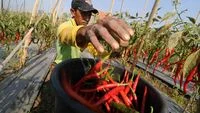
The economic pulse of Indonesia’s agricultural sector experienced a positive shift in October 2026, as official government data revealed a measurable improvement in the purchasing power and overall economic standing of the nation’s primary producers. According to the latest comprehensive report released by Statistics Indonesia, widely recognized by its Indonesian acronym BPS, the national Farmers Exchange Rate, or Nilai Tukar Petani (NTP), climbed to a level of 132.60 during the tenth month of the year. This figure represents a notable upward trajectory, marking a 1.13 percent increase compared to the revised baseline recorded in September 2026.
The NTP stands as a critical economic barometer utilized by policymakers, agricultural economists, and industry stakeholders to gauge the financial viability and overall welfare of farming households across the archipelago. Specifically, the metric measures the ratio of the price index received by agricultural producers for their harvested goods relative to the price index paid by them for household consumption items, goods, and production inputs such as fertilizers, seeds, and equipment. An NTP reading above 100 indicates that farmers are generating sufficient revenue from their agricultural outputs to comfortably cover their essential living expenses and operational costs, thereby pointing toward an expansion in real purchasing power.
The announcement of the October 2026 figures was delivered during a heavily attended official press briefing held at the BPS headquarters in Jakarta. Ateng Hartono, serving as the Deputy for Distribution and Statistics Services at BPS, detailed the precise underlying mechanics that propelled the national index upward during the month under review.
Main Facts and Statistical Breakdown of the October 2026 NTP
During the official briefing on Monday, November 2, Ateng Hartono elaborated on the dual indices that form the foundation of the NTP calculation, illuminating the margin of growth that allowed the aggregate indicator to register a solid monthly gain. The fundamental driver behind the increase in the national NTP was the pronounced expansion of the price index received by farmers, which outpaced the concurrent rise in the price index paid by farmers for living necessities and production factors.
"The increase in the NTP occurred because the price index received by farmers rose by 1.55 percent, which is significantly higher than the increase in the price index paid by farmers, which stood at 0.41 percent," Ateng explained to the assembled press corps.
This widening positive gap between agricultural revenues and expenditures provided much-needed financial relief to producers in several key sectors, following months of fluctuating commodity prices and persistent pressures stemming from global supply chain adjustments and domestic weather anomalies. BPS data further highlighted that the primary commodities driving the surge in the price index received by farmers on a nationwide scale included natural rubber, corn, red chili peppers, and unhusked rice or gabah. These four commodities historically serve as core indicators of domestic agricultural health, given their deep integration into both local consumption patterns and export-oriented industrial supply chains.
A deeper dive into the sectoral breakdown reveals a nuanced picture across the diverse landscape of Indonesian agriculture. While several subsectors enjoyed robust gains, others faced downward pressures that underscore the persistent volatility inherent in primary production economies.
Subsector Performance: Horticulture Leads the Charge
When disaggregated by agricultural subsectors, the positive movement in the October 2026 NTP was predominantly concentrated within three core areas: the food crop subsector, the horticulture subsector, and the smallholder plantation subsector. Among these, the horticulture subsector emerged as the star performer of the month, posting a staggering and unprecedented increase of 6.88 percent.
Ateng noted that this dramatic leap in the horticulture subsector’s economic standing was primarily a function of soaring market prices for specific high-demand consumer vegetables. Specifically, the price index received by horticulture farmers skyrocketed by 7.12 percent during October. In sharp contrast, the price index paid by these same horticulture producers experienced a remarkably modest increase of just 0.23 percent, shielding them from the brunt of inflationary pressures on agricultural inputs and resulting in a substantial net gain in real terms.
The specific commodities steering this horticultural boom were led by red chili peppers, fresh tomatoes, and bird’s eye chilies, commonly known locally as cabai rawit. These commodities have historically exhibited high price elasticity, experiencing sharp seasonal fluctuations driven by regional weather patterns, localized harvest cycles, and distribution bottlenecks. The convergence of strong consumer demand and seasonal supply constraints in October allowed horticulture farmers commanding these crops to secure significantly higher profit margins.
Conversely, a contrasting trend unfolded within the animal husbandry and fisheries subsectors, both of which registered declines in their respective NTP metrics for October 2026. The animal husbandry subsector experienced a contraction of 0.88 percent, while the fisheries subsector recorded a 0.51 percent decrease.
The decline within the fisheries subsector warrants a closer examination, as BPS bifurcates this category into capture fisheries—measured by the Fishermen Exchange Rate, or Nilai Tukar Nelayan (NTN)—and aquaculture, measured by the Fish Cultivator Exchange Rate, or Nilai Tukar Pembudidaya Ikan (NTPI). While aquaculture cultivators managed to buck the downward trend with a modest increase of 0.26 percent in the NTPI, traditional capture fishermen bore the brunt of the downturn. The NTN dropped by 0.99 percent during the month, driven by a 0.51 percent decrease in the price index received by fishermen, coupled with a 0.49 percent increase in the price index paid by them for fishing gear, boat fuel, and household needs. The primary marine commodities responsible for depressing the price index received by fishermen included skipjack tuna, locally known as cakalang, along with eastern little tuna (tongkol) and scad mackerel (layang).
Chronology and Context: Tracing the Economic Trajectory
To fully appreciate the significance of the October 2026 NTP figures, it is essential to contextualize these findings within the broader chronology of Indonesia’s economic landscape over the preceding months and years. The agricultural sector has continuously navigated a complex matrix of challenges, ranging from post-pandemic recovery efforts to the lingering macroeconomic impacts of global geopolitical conflicts that have disrupted international fertilizer markets and fuel supply chains.
Earlier in 2026, the national NTP experienced notable volatility, constrained by erratic weather patterns linked to climate transitions that affected planting and harvesting schedules across the major agricultural hubs of Java, Sumatra, and Sulawesi. In the second quarter of the year, localized droughts followed by sudden high-intensity rainfall led to temporary contractions in food crop yields, pushing up consumer prices while simultaneously increasing production costs for farmers who had to invest more heavily in pest control and irrigation.
By the third quarter of 2026, the government, through the Ministry of Agriculture and in coordination with regional food logistics agencies, implemented targeted stabilization programs. These initiatives included subsidized fertilizer distributions, the expansion of modern agricultural machinery grants, and improved market access frameworks designed to eliminate long and costly intermediary supply chains. These structural interventions laid the groundwork for the recovery observed in late autumn, culminating in the robust 1.13 percent monthly expansion recorded in October.
The positive movement in the October NTP also aligns with seasonal trends observed over historical multi-year periods, where the transition from the dry season to the early rainy season often triggers localized adjustments in crop availability. However, the magnitude of the horticulture surge in October 2026 notably exceeded historical averages, signaling that structural factors—such as improved cold-chain logistics and dynamic regional demand—played a vital role in elevating farm-gate prices.
Implications and Expert Analysis
The release of the October 2026 NTP data carries profound implications for the broader Indonesian economy, given that the agricultural sector remains a cornerstone of domestic employment, rural livelihood development, and poverty alleviation initiatives.
From a macroeconomic perspective, the rise in the NTP to 132.60 suggests an enhancement in rural purchasing power. In a developing economy like Indonesia, where a substantial portion of the population resides in rural areas and depends directly or indirectly on agriculture, an increase in farmers’ disposable income invariably translates into higher domestic consumption of manufactured goods, retail products, and financial services. This dynamic serves as a vital cushion against potential global economic slowdowns, anchoring domestic demand and supporting national gross domestic product (GDP) growth.
However, the divergence in performance across subsectors highlights areas requiring urgent policy attention from regulatory bodies and executive ministries. While crop and horticulture farmers experienced a prosperous month, the contraction in the livestock and capture fisheries subsectors underscores the vulnerability of specific producer groups to rising operational expenditures. The 0.99 percent drop in the Fishermen Exchange Rate, driven by lower selling prices for pelagic fish species like tongkol and cakalang alongside rising fuel costs, points to ongoing structural vulnerabilities within coastal communities.
Agricultural policy analysts and economists have noted that while high-level aggregate indices like the national NTP provide a valuable macro overview, regional disparities remain stark. Farmers in outer islands often face significantly higher input costs—particularly for transportation, electricity, and imported fertilizers—compared to their counterparts in major agricultural centers on the island of Java. Consequently, a national average of 132.60, while encouraging, masks localized hardships that require targeted fiscal and infrastructural interventions.
Official Responses and Future Outlook
In the wake of the BPS data release, representatives from agricultural associations and government oversight bodies have offered measured responses, balancing optimism regarding the recent gains with calls for sustained vigilance.
Speaking on behalf of farming advocacy groups, agricultural economists emphasized that the momentum gained in October must be preserved through continuous governmental support, particularly in stabilizing the prices of essential production inputs such as subsidized urea and NPK fertilizers. They stressed that if the price index paid by farmers (Ib) begins to rise faster than the price index received (It) in the coming months—driven by potential global supply chain shocks or domestic fuel price adjustments—the hard-earned gains in purchasing power could quickly erode.
The Ministry of Agriculture has indicated that it will utilize the detailed subsector data from the October 2026 BPS report to fine-tune its ongoing agricultural intensification programs. Special attention is slated to be directed toward stabilizing the capture fisheries sector and mitigating the cost burdens faced by traditional fishermen, ensuring that the downward trend observed in the NTN does not become a persistent structural decline. Furthermore, officials are expected to expand the reach of digital market platforms designed to connect horticultural producers directly with urban retail networks, thereby minimizing the profit margins captured by middlemen and maximizing the direct economic return to farming households.
As Indonesia moves toward the final stretch of 2026, the agricultural sector stands at a critical juncture. The October NTP reading of 132.60 provides a strong testament to the resilience and productive capacity of the nation’s farmers and cultivators. Sustaining this positive trajectory will depend heavily on cohesive policy execution, prudent inflation management, and continued investments in rural infrastructure that bridge the gap between production fields, coastal waters, and thriving consumer markets.