Indonesia Intensifies Downstreaming Strategy Across Palm Oil, Coconut, and Seaweed to Boost Value-Added Economy

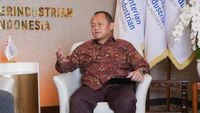
Jakarta – The Indonesian government is aggressively expanding its industrial downstreaming strategy to encompass a wider array of strategic domestic commodities, moving far beyond its initial heavy focus on metallic minerals. During the 2026 National Leadership Meeting (Rapimnas) of the Indonesian Chamber of Commerce and Industry (Kadin) held in Jakarta, Minister of Industry Muhammad Sarmuji outlined an ambitious roadmap that extends downstream processing to agricultural and marine products, including palm oil, coconuts, seaweed, and sago.
The policy pivot is designed not merely to export processed raw materials, but to comprehensively integrate domestic supply chains from primary extraction to final consumer goods. By fostering complete industrial ecosystems, the Ministry of Industry aims to generate exponential economic value, expand regional labor absorption, and catalyze equitable industrial growth outside of Java.
Moving Beyond Raw Material Exports: The Evolution of Industrialization
The core philosophy underpinning Indonesia’s current industrial policy is the systematic eradication of raw commodity exports. Historically, Indonesia has exported vast quantities of unprocessed or minimally processed agricultural and mining goods, forfeiting the high profit margins associated with manufacturing finished products.
Minister Sarmuji emphasized that the government’s industrialization blueprint must be continuous and holistic. "We must not stop at the supply of raw materials or intermediate goods," Sarmuji stated during his address at the Kadin Rapimnas. "We must be aligned from raw materials all the way to finished goods, and moreover, not just form a single finished product. We must create a new ecosystem capable of fostering supporting industries for future industrialization."
This approach mirrors the trajectory of Indonesia’s nickel downstreaming policy initiated years earlier. The nickel sector successfully evolved from the export of raw nickel ore to the domestic production of nickel pig iron (NPI), stainless steel, battery precursors, electric vehicle (EV) battery cells, and eventually finished EVs. The Ministry of Industry intends to replicate this multiplier effect across Indonesia’s most abundant biological resources.
Strategic Commodities Under the Expanded Downstreaming Lens
The government’s updated roadmap highlights several key sectors poised for massive industrial scaling. Each sector has been selected based on Indonesia’s natural endowments and global market potential.
1. Palm Oil and Coconut: Maximizing Agricultural Supremacy
Palm oil remains Indonesia’s crown jewel in agricultural exports. However, the government is shifting focus toward high-value downstream derivatives beyond traditional crude palm oil (CPO) and basic cooking oil, targeting oleochemicals, bioaviation fuel, and advanced specialty fats.
Concurrently, the coconut industry is experiencing a renaissance. Minister Sarmuji highlighted that Indonesia’s coconut derivatives, particularly coconut milk and high-grade coconut water products, have established strong footholds in international markets. "Our coconut industry is growing exceptionally well, and we will maintain our focus on nurturing it," Sarmuji noted. The strategy involves upgrading smallholder farming techniques, establishing localized processing plants, and standardizing quality control to meet stringent global export criteria.
2. Seaweed: Unlocking Coastal Economic Potential
As an archipelago boasting one of the longest coastlines in the world, Indonesia possesses a distinct competitive advantage in seaweed cultivation. Traditionally exported in raw or dried forms for basic hydrocolloid extraction, the government is now pushing for domestic processing into high-value applications, including pharmaceuticals, cosmetics, and advanced food and beverage ingredients.
This sector holds profound socio-economic implications. By establishing processing facilities near coastal regions, the government hopes to integrate remote coastal communities—historically marginalized from mainstream industrial development—directly into the formal manufacturing supply chain. "If this is developed given our vast coastlines, the benefits will be enormous for communities in remote areas and coastal shores who have previously lacked sufficient access to the industrial sector," Sarmuji explained.
3. Establishing a Dedicated Sago Industrial Zone in Maluku
In addition to marine and plantation commodities, the Ministry of Industry is targeting indigenous food crops. The government has unveiled plans to establish a specialized sago industrial zone in East Seram Regency, Maluku province.
East Seram boasts abundant natural sago forests and traditional cultivation areas that have remained underutilized at an industrial scale. By concentrating infrastructure, processing technology, and logistics in a designated special economic zone, the government aims to transform sago into a viable alternative staple food and a competitive industrial raw material for starch-based manufacturing, sweeteners, and biodegradable packaging.
Broader Implications and Economic Rationale
The accelerated push toward comprehensive industrial downstreaming carries profound macroeconomic implications for Indonesia as it strives to escape the middle-income trap and achieve its vision of becoming a top global economy.
First, the focus on non-mineral commodities directly addresses regional economic disparity. While mineral downstreaming (such as nickel and copper) tends to be capital-intensive and concentrated in specific mining regions like Central Sulawesi or Maluku, agricultural and marine downstreaming is inherently decentralized. Palm oil, coconuts, seaweed, and sago are cultivated across Sumatra, Kalimantan, Sulawesi, Maluku, and Eastern Indonesia. Establishing localized processing plants ensures that the value-addition process occurs closer to the source, generating regional employment, boosting local tax revenues, and improving infrastructure in underdeveloped regencies.
Second, the policy aligns with global trade dynamics and sustainability standards. International markets increasingly demand traceability and value chain transparency. By manufacturing finished goods domestically, Indonesia retains greater control over environmental standards, labor practices, and product quality compliance, insulating its export economy from raw commodity price volatility.
Industry Reception and Implementation Challenges
The business community, represented through platforms like Kadin, has generally welcomed the government’s comprehensive industrial vision. Private sector stakeholders acknowledge the long-term benefits of producing finished goods locally. However, industry analysts and business leaders have pointed out critical bottlenecks that must be addressed to ensure the policy’s success.
Chief among these challenges is infrastructure development. Transporting raw agricultural and marine goods from remote islands—such as the outer islands of Maluku or coastal Papua—requires robust logistics networks, reliable energy supplies, and efficient ports. Without concurrent investments in inter-island connectivity and maritime logistics, high operational costs could erode the competitive edge of regional processing facilities.
Furthermore, technological adaptation and workforce upskilling remain pressing priorities. Transitioning from raw material extraction to high-tech manufacturing—such as pharmaceutical-grade seaweed derivatives or advanced oleochemicals—requires specialized technical skills and rigorous research and development (R&D) support. The Ministry of Industry has emphasized that vocational training programs must be synchronized with regional industrial needs to supply the necessary human capital.
Conclusion and Future Outlook
As the government finalizes its regulatory frameworks and investment incentives for the expanded downstreaming agenda, the coming years will serve as a critical test for Indonesia’s industrial policy. By systematically moving from raw commodities to integrated industrial ecosystems across palm oil, coconuts, seaweed, and sago, Indonesia is laying the groundwork for a more resilient, diversified, and inclusive economy. Success will depend heavily on seamless collaboration between central and regional governments, state-owned enterprises, and private sector investors to build the necessary infrastructure, secure financing, and unlock the full economic potential of Indonesia’s rich natural heritage.
Related posts: