Iran’s Currency Conundrum: Geopolitical Tensions, Hyperinflation, and the Complex Redenomination of the Rial into Toman

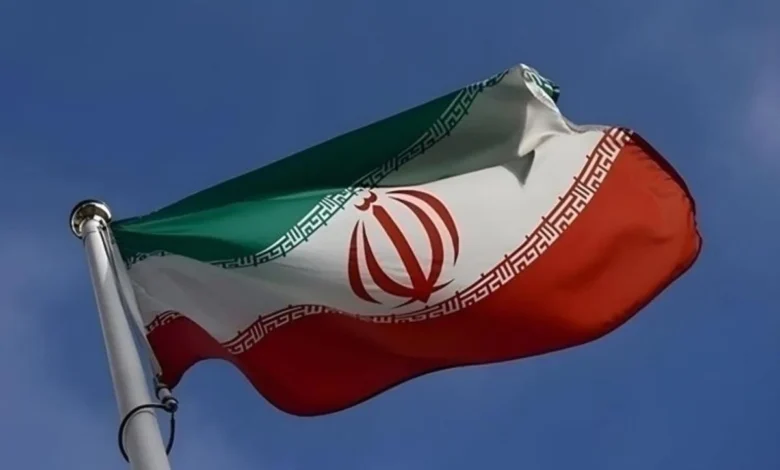
Jakarta (ANTARA) – Iran’s national currency has been under intense global scrutiny, particularly amid escalating geopolitical tensions and shifting international economic policies. The administration of former U.S. President Donald Trump notably intensified pressure on Tehran, implementing tariffs of up to 25 percent on nations engaging in business with Iran. This aggressive stance, often referred to as the "maximum pressure" campaign, has profoundly impacted Iran’s economy, most visibly through the significant depreciation of its national currency. The Iranian Rial (IRR) has, at various points, plummeted to record lows against major international currencies like the Euro and U.S. Dollar, starkly illustrating the immense economic strain inflicted by prolonged sanctions and rampant inflation.
However, a curious dichotomy emerges when one delves into the daily economic life within Iran. Despite the Rial being the officially recognized legal tender, traversing traditional bazaars or modern shopping centers reveals a different linguistic reality in transactions. The term "Rial" is conspicuously absent from everyday discourse. Instead, local Iranians predominantly use "Toman" when quoting prices for goods and services. This linguistic divergence is not merely a colloquialism but a direct consequence of decades of high inflation, which has rendered the Rial’s denominations unwieldy for practical commerce. To simplify pricing and circumvent the necessity of quoting excessively large numbers, Iran has informally adopted the Toman as an alternative accounting unit.
This phenomenon frequently confounds tourists and international economic observers alike, prompting fundamental questions: What precisely constitutes Iran’s official currency? And what is the essential difference between the Rial and the Toman, which continues to cause confusion both domestically and internationally? A comprehensive review, drawing from various economic and historical sources, sheds light on this intricate monetary landscape and the government’s ambitious plans for its future.
The Genesis of Economic Pressure: Sanctions and Geopolitics
To fully comprehend the fragility of the Iranian currency, it is imperative to contextualize it within the broader framework of Iran’s geopolitical standing and its tumultuous relationship with Western powers, particularly the United States. The current phase of intense economic pressure largely stems from the U.S. withdrawal from the Joint Comprehensive Plan of Action (JCPOA), commonly known as the Iran nuclear deal, in May 2018. The JCPOA, signed in 2015 by Iran and the P5+1 group of world powers (the United States, UK, France, China, Russia, and Germany), had offered Iran sanctions relief in exchange for curbs on its nuclear program.
Following the U.S. withdrawal, the Trump administration reimposed and expanded a comprehensive set of unilateral sanctions targeting key sectors of the Iranian economy. These sanctions aimed to halt Iran’s oil exports, restrict its access to international financial systems, and cripple its ability to conduct trade. The primary sectors targeted included:
- Oil and Petrochemicals: The cornerstone of Iran’s economy, oil exports were severely curtailed, drastically reducing the country’s foreign currency earnings.
- Banking and Finance: Iranian banks were largely cut off from the SWIFT international payment system, complicating cross-border transactions and making it difficult for Iran to access its assets abroad.
- Shipping and Ports: Sanctions on shipping lines and port operators further isolated Iran from global trade.
- Metals and Mining: Restrictions on industries like steel, aluminum, and copper exports added another layer of economic pressure.
The stated objective of this "maximum pressure" campaign was to force Iran to renegotiate the nuclear deal on more stringent terms and to curb its regional influence and ballistic missile program. However, the immediate and most palpable effect was a severe contraction of the Iranian economy, a dramatic surge in inflation, and the precipitous decline of the Rial’s value. Data from the International Monetary Fund (IMF) and the World Bank consistently highlighted the contraction of Iran’s GDP, which experienced sharp declines in the years following the reimposition of sanctions. For instance, Iran’s economy contracted by an estimated 4.9% in 2018 and a further 6.5% in 2019, primarily due to the oil sector’s struggles.
The Rial’s Decline: A Chronology of Devaluation
The Iranian Rial’s journey to its current weakened state is a prolonged narrative of economic instability, punctuated by periods of rapid depreciation. While inflation has been a persistent issue in Iran for decades, the post-2018 sanctions regime accelerated its decline significantly.
- Pre-2018 Stability (Relative): Before the U.S. withdrawal from the JCPOA, the Rial had shown some signs of stabilization, with the official exchange rate hovering around 35,000-40,000 Rials to the U.S. Dollar.
- Post-JCPOA Withdrawal (2018-2019): Following the U.S. exit and the reimposition of sanctions, the Rial began a sharp descent. By late 2018, the unofficial market rate had already surpassed 100,000 Rials to the Dollar, and it continued to weaken throughout 2019. The Central Bank of Iran struggled to supply foreign currency to the market, leading to a widening gap between official and unofficial exchange rates.
- Continued Pressure (2020-Present): The economic pressure persisted, compounded by global oil price volatility and the COVID-19 pandemic. The Rial continued to shed value, at times reaching unprecedented lows exceeding 300,000, 400,000, and even 500,000 Rials to the U.S. Dollar on the unofficial market. This freefall directly translated into soaring import costs and eroded the purchasing power of average Iranians. The unofficial market rate against the Euro similarly reflected this decline, often mirroring the U.S. Dollar’s movements, with the Rial frequently being cited as one of the least valued currencies globally when converted to major international counterparts.
The inflationary spiral has been relentless. Iran’s annual inflation rate has frequently soared into double-digits, at times exceeding 40-50% annually, according to official statistics, with unofficial estimates often much higher. This hyperinflation is a direct consequence of several factors: the dramatic reduction in foreign currency earnings from oil, leading to a shortage of hard currency to finance imports; the government’s reliance on printing money to cover budget deficits; and widespread supply chain disruptions exacerbated by sanctions. The cumulative effect has been a dramatic increase in the cost of living for Iranian citizens, making essential goods and services increasingly unaffordable.
The Official Currency: Rial (IRR)
Legally and administratively, the Iranian Rial remains the official currency of the Islamic Republic of Iran. All formal financial transactions, banking operations, government documents, and official price listings in modern commercial establishments are denominated in Rials, identified by its international currency code, IRR. The Central Bank of Iran (CBI) is the sole authority responsible for issuing Rial banknotes and coins. Despite its legal supremacy, the Rial’s everyday utility has been undermined by its diminished value.
The Popular Alternative: Toman
In stark contrast to its official status, the term "Rial" is rarely uttered in daily commerce by the Iranian populace. Instead, locals universally employ "Toman" when negotiating prices or making payments, whether in bustling traditional bazaars or smaller retail outlets. This practical shift is rooted in historical precedent and economic necessity.
Historically, the Toman was Iran’s official currency until 1932, when it was replaced by the Rial. However, as inflation began to erode the Rial’s value over the decades, Iranians naturally reverted to using the Toman as a simpler unit of account. The conversion rate is straightforward: one Toman is equivalent to 10 Rials. This means that when a merchant quotes a price in Tomans, it implicitly carries a factor of ten. For instance, if a vendor states a price of 60,000 Tomans for an item, the actual amount to be paid is 600,000 Rials.
This simplification became increasingly vital as inflation escalated. With the Rial’s value falling, prices for even basic goods began to require many zeros. A simple loaf of bread or a taxi fare could run into tens or hundreds of thousands of Rials. Using Tomans allowed people to "trim" one zero from their everyday calculations, making transactions less cumbersome and reducing the mental load of handling excessively large numbers. For foreign visitors, this discrepancy is a common source of confusion, often leading to miscommunication and potential overpayment if not clarified beforehand. A tourist unfamiliar with this convention might assume a price quoted in "Tomans" is in Rials and offer ten times the actual required amount.
The Redenomination Initiative: A Strategic Shift
Recognizing the long-standing confusion and the practical inefficiencies caused by the Rial’s low value, the Iranian government, through the Central Bank of Iran (CBI), embarked on a significant currency reform initiative: redenomination. The primary goal is to simplify the national financial system and align the official currency with the widely used colloquial term.
- Legislative Approval (2020): After years of discussion, the Iranian Parliament formally approved a bill in May 2020 to replace the Rial with the Toman as the national currency. Crucially, this reform involved slashing four zeros from the currency’s face value. This means that under the new system, 1 Toman will be equivalent to 10,000 old Rials. This radical redenomination aims to address the issue of cumbersome large numbers more effectively than the informal 1:10 Rial-Toman conversion.
- Implementation Timeline (Phased 2025-2026): The implementation of this ambitious policy is not instantaneous. The CBI has outlined a phased approach, with the full transition expected to occur between 2025 and 2026. This gradual rollout is designed to allow the financial system, businesses, and the general public sufficient time to adapt to the new denominations.
- New Denominations and Sub-units: Under the new system, the Toman will not only replace the Rial but will also be subdivided into smaller units called Qiran. One Toman will be equivalent to 100 Qirans. This move introduces a smaller denomination, similar to cents or pence in other currencies, aiming to facilitate smaller transactions and provide greater flexibility in pricing.
- Transition Period and "Shadow Zeros": During the transitional phase, both the old Rial banknotes and the new Toman banknotes will circulate concurrently. To aid public understanding and facilitate a smooth shift, new banknotes issued in the interim period may feature "shadow zeros" or subtle markings indicating the impending change and the effective reduction in numerical value. This visual cue helps prepare the public for the eventual removal of the zeros.
The CBI has stated that the redenomination will streamline accounting, reduce the cost of printing large volumes of high-denomination banknotes, and restore a sense of stability and normalcy to financial transactions. From an international perspective, it is hoped that a simpler, higher-value currency unit might project a more stable economic image, although the underlying economic fundamentals remain the primary driver of confidence.
Broader Implications and Challenges of Redenomination
While the redenomination is a significant administrative and symbolic undertaking, its actual impact on Iran’s core economic challenges is subject to considerable debate among economists.
- Addressing Inflation vs. Cosmetic Change: Critics argue that redenomination is primarily a cosmetic change that does not address the root causes of inflation, such as sanctions, government budget deficits, and declining oil revenues. Unless these underlying issues are resolved, the new Toman could eventually suffer the same fate as the Rial, requiring further redenomination in the future. Proponents, however, contend that while it doesn’t solve inflation, it removes a major symptom and improves transactional efficiency.
- Public Confidence and Acceptance: A crucial factor for the success of any currency reform is public trust and acceptance. The government must effectively communicate the changes to avoid confusion and speculation. If the public perceives the redenomination as merely an attempt to mask economic problems, its psychological impact could be limited.
- Logistical Hurdles: The transition involves immense logistical challenges. All ATMs, point-of-sale (POS) systems, accounting software, and financial records across the country must be updated to reflect the new currency. This process requires significant investment, coordination, and public education campaigns.
- Impact on Savings and Debt: While the redenomination should theoretically not alter the real value of savings or debt (as all values are simply divided by 10,000), miscalculations or a lack of understanding could lead to disputes or perceived losses, particularly among the less financially literate segments of the population.
- International Perception: While simplifying the currency, the redenomination alone is unlikely to fundamentally alter international financial institutions’ or investors’ perceptions of Iran’s economic health, which remains heavily influenced by geopolitical factors and the sanctions regime.
Iran’s Economic Outlook Beyond Redenomination
Despite the internal currency reforms, Iran’s economy continues to grapple with multifaceted challenges. The government has pursued a "resistance economy" strategy, focusing on self-sufficiency, boosting non-oil exports, and strengthening trade ties with "friendly" nations like China, Russia, and India to circumvent Western sanctions. Efforts are also being made to diversify the economy away from its heavy reliance on oil.
However, the long-term outlook remains complex. The prospect of renewed negotiations regarding the JCPOA and potential sanctions relief periodically offers a glimmer of hope for economic recovery, but these diplomatic efforts have often stalled. Meanwhile, internal challenges such as water scarcity, brain drain, and a burgeoning youth population requiring employment continue to exert pressure.
The redenomination of the Rial to the Toman is more than just a monetary adjustment; it is a symbolic attempt by Iran to streamline its economy in the face of profound external pressures and internal inflationary struggles. While it addresses the practical inconvenience of a devalued currency, its ultimate success will hinge on the government’s ability to tackle the underlying economic fragilities that have plagued the Rial for decades, and crucially, the evolution of its complex relationship with the international community. The road ahead for Iran’s currency, and its economy, remains challenging and intricately linked to the fluctuating tides of global politics.
Pewarta: Sean Anggiatheda Sitorus
Editor: Suryanto
Copyright © ANTARA 2026
Related posts: