Korlantas Polri Emphasizes Service Quality and Safety Over Ticket Quotas During Operasi Patuh 2026

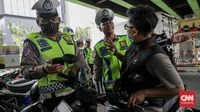
Jakarta, CNN Indonesia — The Indonesian National Police Traffic Corps, widely known as Korlantas Polri, has officially instructed all regional traffic directorates nationwide to utilize the ongoing Operasi Patuh 2026 as a strategic turning point. The primary directive focuses on elevating the overall quality of public services provided by traffic law enforcement divisions rather than prioritizing punitive measures such as issuing high volumes of traffic tickets.
This nationwide operation, scheduled to run from October 26 through November 8, 2026, serves as a comprehensive evaluation and enhancement period for traffic administration, safety education, law enforcement, and accident response units across the archipelago.
Operational Focus and Strategic Objectives
According to the Head of Operations for Korlantas Polri, Senior Commissioner Turmudi, the core philosophy underpinning Operasi Patuh 2026 centers on cultivating a deeply ingrained culture of road safety and compliance among Indonesian motorists. In a formal statement released on Sunday, November 1, 2026, Turmudi emphasized that the success of the multi-week operation must not be measured quantitatively by the number of citations issued to traffic violators. Instead, success is defined by qualitative improvements in public compliance, heightened safety awareness, and the efficiency of police services rendered to the community.
"Ensure that all personnel understand thoroughly that Operasi Patuh serves as a critical momentum to comprehensively upgrade the quality of traffic police functions," Turmudi stated. He explicitly instructed all regional traffic directors, or Dirlantas, to convey to their respective subordinates that fostering long-term behavioral change among road users supersedes the mere accumulation of penalty tickets.
The directive outlines four core pillars of traffic police administration that require simultaneous optimization during the operational window:
- Keamanan dan Keselamatan (Kamsel): Focusing on security and safety through proactive public education and community outreach programs.
- Penegakan Hukum (Gakkum): Executing law enforcement duties with strict professionalism, proportionality, and transparency.
- Registrasi dan Identifikasi (Regident): Streamlining and enhancing the quality of administrative services related to vehicle registration and driver licensing.
- Penanganan Kecelakaan Lalu Lintas (Laka Lantas): Ensuring rapid, professional, and empathetic responses to traffic accidents.
Chronology and Timeline of Operasi Patuh 2026
The implementation of Operasi Patuh 2026 follows a structured timeline designed to maximize outreach and maintain high visibility without causing unnecessary friction with the motoring public.
Preparation Phase (Mid-October 2026): Prior to the official rollout, Korlantas Polri conducted internal coordination meetings with regional police commands to synchronize strategies, inspect personnel readiness, and standardize standard operating procedures (SOPs). Emphasis was placed on training officers to prioritize persuasive and educational approaches over aggressive enforcement.
Execution Phase (October 26 – November 8, 2026): The two-week operation deployed thousands of traffic personnel across major thoroughfares, toll roads, and accident-prone zones throughout Indonesia. Checkpoints were established not solely to catch rule-breakers, but to inspect vehicle roadworthiness and distribute educational materials regarding road safety.
Evaluation Phase (Post-November 8, 2026): Following the conclusion of the active enforcement period, regional directorates are mandated to submit comprehensive impact assessments analyzing accident rates, public compliance levels, and administrative service feedback.
Balancing Humanistic Approaches with Firm Enforcement
A significant policy shift highlighted during Operasi Patuh 2026 is the strong emphasis on humanistic, educational, and persuasive communication styles. While officers retain the authority to issue citations—particularly for hazardous infractions that directly threaten human lives, such as riding motorcycles without helmets, driving under the influence, excessive speeding, and contraflow violations—the overarching tone of the operation is cooperative rather than adversarial.
Traffic analysts and safety advocates have long argued that heavy-nosed ticketing policies often fail to address the root causes of reckless driving. By instructing the Gakkum (law enforcement) division to act proportionally, Korlantas Polri aims to rebuild public trust in traffic authorities. Simultaneously, the Regident (registration and identification) division is tasked with reducing bureaucratic delays in license renewals and vehicle documentation, ensuring that citizens find it easier to comply with legal requirements.
Background Context: Road Safety Challenges in Indonesia
Indonesia continues to face formidable challenges concerning road safety infrastructure and driver behavior. Statistics compiled by national transportation safety committees indicate that traffic accidents remain one of the leading causes of injury and mortality in the country, disproportionately affecting productive-age demographics.
Factors contributing to these statistics include rapid urbanization, exponential growth in private vehicle ownership, inconsistent adherence to traffic signals, and varying degrees of infrastructure quality across provinces. National operations like Operasi Patuh have historically served as vital instruments for reminding the public of existing regulations while exerting temporary, high-visibility pressure on reckless road users.
However, the deliberate pivot away from ticket quotas in the 2026 iteration marks a departure from traditional policing models. Critics in past decades frequently accused traffic enforcement agencies of treating quotas as performance metrics, which occasionally led to opportunistic enforcement practices. By redefining institutional success around education and service quality, Korlantas Polri is attempting to align its operational ethos with modern, community-oriented policing standards.
Broader Implications and Long-Term Impact
The implications of the directives issued by Senior Commissioner Turmudi extend far beyond the two-week duration of Operasi Patuh 2026. If successfully implemented at the grassroots level, this holistic approach could yield several positive outcomes for Indonesia’s transportation ecosystem:
First, enhanced public trust in traffic police officers is likely to improve cooperation during routine inspections and accident investigations. When citizens perceive law enforcement as a supportive public service rather than an arbitrary punitive force, voluntary compliance tends to rise.
Second, strengthening the Kamsel function through continuous educational campaigns can foster generational changes in driving culture. Schools, community groups, and commercial transport operators are increasingly integrated into local safety outreach programs initiated by regional traffic directorates.
Third, the emphasis on swift and professional accident handling ensures that emergency medical services and traffic clearing operations are coordinated more efficiently, thereby minimizing secondary collisions and alleviating urban congestion caused by stalled vehicles or crash sites.
Conclusion
As Operasi Patuh 2026 progresses toward its conclusion on November 8, the leadership of Korlantas Polri remains firm on its core message: true discipline on the nation’s roadways cannot be achieved through punitive metrics alone. By harmonizing education, professional law enforcement, streamlined administration, and rapid emergency response, the Indonesian National Police aims to guide the public toward a safer, more disciplined, and mutually respectful driving culture.
Related posts: