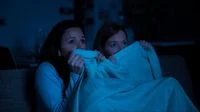
While many moviegoers instinctively close their eyes, shield their faces, or retreat from theaters entirely at the first sign of a terrifying sequence, an entirely distinct demographic actively seeks out dread. These enthusiasts purposefully purchase tickets to the most harrowing cinematic releases, navigate pitch-black amusement park haunted attractions, and intentionally court adrenaline spikes. For this segment of the population, a horror experience that fails to deliver visceral shocks or lingering suspense is often dismissed as underwhelming.
To the average observer, fear is fundamentally a survival mechanism—an aversion response designed to protect humans from physical danger. Yet, a robust psychological and physiological subculture thrives on engineered terror. The phenomenon of seeking out frightening stimuli for recreational enjoyment has increasingly captured the attention of behavioral scientists, neurobiologists, and psychologists attempting to reconcile why human beings derive pleasure from distress.
Defining Recreational Fear in Controlled Environments
In psychological literature, the deliberate pursuit of frightening experiences for enjoyment is categorized as "recreational fear." Unlike genuine existential threats, recreational fear occurs within a tightly regulated, safe environment. Participants retain an underlying awareness that they are insulated from actual physical harm, allowing them to process the physiological manifestations of terror—such as elevated heart rates, dilated pupils, and sharp bursts of adrenaline—as forms of excitement rather than genuine trauma.
To investigate this paradox empirically, researchers conducted a comprehensive field study titled Playing With Fear: A Field Study in Recreational Horror, published in the journal Psychological Science. Rather than relying solely on retrospective surveys or laboratory questionnaires, the research team deployed biometric monitoring equipment directly onto participants traversing a commercial haunted house attraction.
Throughout the immersive, multi-room experience, subjects were outfitted with heart-rate monitors. Simultaneously, researchers captured real-time self-reports evaluating subjective levels of fear and enjoyment at various intervals. This dual-methodology approach bridged the gap between physiological arousal and psychological perception, yielding profound insights into how human beings process terror in real time.
The Inverted-U Curve: Balancing Terror and Amusement
The empirical data gathered from the haunted house study revealed a distinct mathematical relationship between fear and pleasure, mapping onto what psychologists describe as an inverted-U curve.
According to the findings, an individual’s enjoyment of a frightening scenario increases proportionally with the intensity of the fear experienced, but only up to an optimal threshold. Once fear surpasses this critical tipping point, the psychological experience shifts from exhilarating to overwhelming, causing overall enjoyment to plummet.
Under moderate conditions where the stimulus is perceived as manageable, sudden surprises, atmospheric dread, and suspense generate high levels of engagement. Conversely, if an encounter fails to stimulate sufficient fear, the experience quickly devolves into boredom. If the terror is excessively severe or prolonged, it produces distress rather than delight.
Furthermore, the study illuminated a direct correlation between autonomic nervous system fluctuations and emotional states. Macro-level spikes in heart rate corresponded closely with reported levels of fear, whereas subtle, micro-level oscillations in cardiac rhythms aligned with the inverted-U curve of pleasure. This suggests that the human body continuously calibrates physical arousal against contextual safety cues to determine whether an intense experience remains enjoyable.
The Psychology of Agency: Why Voluntary Participation Amplifies Enjoyment
Beyond biometric responses, the behavioral context of how individuals encounter fear plays a critical role in shaping their emotional outcomes. The research data underscored a notable behavioral divide among participants entering the haunted attraction: approximately 56.5 percent of subjects entered entirely of their own volition, driven by intrinsic curiosity or a love for the genre. Meanwhile, 43.5 percent participated due to external social pressures, such as invitations from friends, romantic partners, or corporate colleagues.
Across the entire cohort, subjective enjoyment scored an average of 6.95 out of a maximum scale of nine, while reported fear averaged 5.71 out of nine. However, a deeper statistical analysis uncovered a significant divergence: participants who initiated their visit voluntarily reported substantially higher levels of enjoyment compared to those who attended under external persuasion.
This finding highlights the psychological significance of personal agency. Choosing to confront fear establishes a mental framework of control. When individuals willingly cross the threshold into a terrifying environment, they mentally prepare to contextualize the impending shocks as entertainment. Conversely, individuals who feel compelled or nudged into frightening situations often lack this psychological armor, transforming what should be a playful scare into an anxiety-inducing ordeal.
Personality Traits and Sensation-Seeking Behaviors
Individual differences in personality structure further dictate how human beings interact with horror media. Research summarized in the journal Frontiers in Psychology emphasizes the role of "sensation-seeking"—a recognized personality trait characterized by the continuous pursuit of novel, complex, and intense sensory experiences.
Individuals who score high on sensation-seeking scales are naturally drawn to high-arousal environments, including extreme sports, fast-paced action media, and intense horror narratives. For these individuals, the physiological rush of adrenaline and the mental challenge of navigating high-tension scenarios serve as primary motivators.
However, researchers caution that sensation-seeking alone cannot fully explain society’s broad fascination with horror. Emotional responses are mediated by a complex matrix of variables, including baseline anxiety levels, empathic capacity, and individual sensitivities to specific thematic tropes.
For instance, a spectator might thoroughly enjoy psychological thrillers defined by ambient dread and cerebral mystery while feeling physically repulsed by explicit gore or gratuitous violence. Another individual might relish sudden jump scares but reject narratives grounded in hyper-realistic trauma. Consequently, an affinity for horror is not a monolithic trait; rather, it is highly nuanced and tailored to personal psychological boundaries.
Implications for Entertainment and Mental Well-Being
The scientific exploration of recreational fear offers broader implications for understanding human emotion, emotional regulation, and the entertainment industry. As creators continue to push the boundaries of immersive cinema, virtual reality, and interactive theme park attractions, understanding the mechanics of the inverted-U curve provides a blueprint for maximizing audience engagement without crossing into genuine psychological distress.
From a therapeutic perspective, some psychologists suggest that recreational fear may actually serve an adaptive function. By confronting simulated threats in a secure environment, individuals can practice emotional regulation, build resilience against stress, and process feelings of vulnerability in a controlled setting. The ability to voluntarily induce and subsequently master fear allows individuals to test their psychological limits safely.
Ultimately, the science demonstrates that enjoying horror is neither a marker of profound bravery nor an indicator of aberrant psychology. Rather, it is a sophisticated cognitive and physiological process. As long as individuals feel securely grounded in reality and retain the autonomy to step away, the shadowed corridors of haunted houses and the flickering screens of horror cinema will continue to provide a uniquely thrilling space where terror transforms seamlessly into triumph.