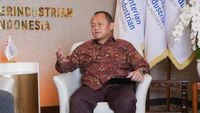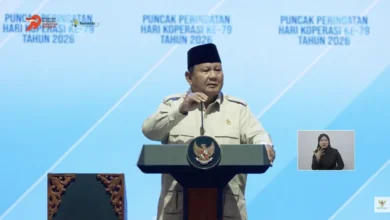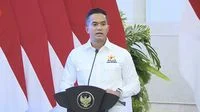
The Indonesian Chamber of Commerce and Industry (KADIN) has officially concluded its high-profile National Leadership Meeting, commonly known as Rapimnas Kadin, by formulating three pivotal economic recommendations tailored for President Prabowo Subianto. Announcing the outcomes at a press briefing in Jakarta, KADIN General Chairman Anindya Novyan Bakrie underscored that these strategic policy proposals are specifically designed to reinforce Indonesia’s economic foundation, secure domestic production supply chains, and enhance the nation’s competitive edge amidst persistent global macroeconomic uncertainties.
The comprehensive recommendations stem from intense deliberations conducted across three primary commissions—Commission A, Commission B, and Commission C—during the two-day high-level summit held from October 29 to October 30, 2026. By synthesizing comprehensive feedback gathered from KADIN chapters spanning all 38 Indonesian provinces, alongside insights from numerous industry associations and business guilds, the leadership meeting successfully captured the authentic pulse, struggles, and strategic needs of the domestic commercial sector.
Comprehensive Chronology and Background of the 2026 Rapimnas Kadin
The 2026 Rapimnas Kadin materialized against a backdrop of complex geopolitical tensions, fluctuating commodity prices, and tightening global financial conditions. As supply chains continuously adapt to shifting trade policies worldwide, Indonesian businesses have faced mounting pressures, ranging from domestic purchasing power fluctuations to regulatory bottlenecks in international trade. Recognizing the urgent necessity for a cohesive public-private strategy, KADIN convened its national membership to deliberate on actionable solutions that bridge local enterprise realities with overarching national development objectives.
The deliberations kicked off on October 29, 2026, with delegates dissecting critical macroeconomic vulnerabilities, foreign direct investment inflows, and infrastructural readiness across regions. Throughout the intensive workshops, business leaders collaborated closely with regional economic stakeholders to evaluate how fiscal decentralization impacts local business ecosystems. By October 30, the strategic committees finalized their findings, culminating in the formal articulation of the three foundational pillars presented by Anindya Novyan Bakrie during the Friday press conference.
Pillar One: Fortifying Economic Cushions and Buffers
The first core recommendation prioritized by KADIN centers heavily on establishing robust economic cushions to absorb external shocks. Anindya elaborated that this defensive yet proactive stance requires a multifaceted approach involving the meticulous safeguarding of cash flows across both private enterprises and state treasuries, harmonizing regional fiscal policies, and aggressively revitalizing household purchasing power.
In an increasingly interconnected global economy vulnerable to sudden financial contagion and inflationary spikes, local industries and micro, small, and medium enterprises (MSMEs) require sufficient liquidity to survive downturns. By maintaining healthy cash flow management frameworks and ensuring targeted fiscal stimuli at the regional level, the state can prevent widespread corporate distress. Furthermore, bolstering household consumption acts as the ultimate domestic stabilizer, ensuring that consumer-facing sectors retain strong absorption capacities even when export markets experience contractions.
Pillar Two: Securing Raw Materials and Integrated Supply Chains
Addressing the operational backbone of the nation’s manufacturing and trade sectors, the second recommendation zeroes in on securing a stable, continuous supply of raw materials for both grassroots production and large-scale industrial manufacturing. Anindya emphasized that sustainable economic growth is unattainable without a resilient, fully integrated supply chain stretching seamlessly from upstream resource extraction to downstream distribution.
To achieve this, KADIN is actively advocating for structural frameworks that link popular and traditional production systems directly with modern financial institutions and broad-scale consumer markets. By bridging systemic gaps between raw material producers, logistical networks, and end-buyers, Indonesia can minimize production bottlenecks, reduce reliance on vulnerable foreign imports for critical inputs, and maximize value addition domestically. This integration is vital for elevating the global competitiveness of Indonesian goods, ensuring that local artisans and heavy industries alike have uninterrupted access to the resources they require.
Pillar Three: Ensuring Business Certainty to Compete Globally
The third strategic recommendation zeroes in on establishing absolute certainty within the domestic business climate to empower Indonesian corporations to successfully expand their footprints into international markets. Predictable regulatory frameworks, transparent legal procedures, and streamlined bureaucratic processes are flagged as non-negotiable prerequisites for attracting long-term capital and fostering robust corporate expansion.
To operationalize this ambition globally, KADIN introduced two compelling foundational twin concepts during the briefing: "Buy from Indonesia" and "Buy Indonesia."
The "Buy from Indonesia" initiative is strategically designed to aggressively propel national export volumes, encouraging international markets to procure Indonesian commodities, manufactured goods, and creative industry outputs. Conversely, the "Buy Indonesia" paradigm serves as a clarion call for inbound investment—encompassing both Foreign Direct Investment (FDI) aimed at establishing physical operational facilities within the archipelago, and portfolio investments directed toward purchasing sovereign bonds, state securities, and local corporate equities. Together, these slogans encapsulate a dual-pronged aggressive marketing strategy for the nation’s economic diplomacy.
Official Responses and High-Level Government Synergy
Demonstrating the close collaborative synergy between the state administration and the private sector, these meticulously drafted recommendations will be delivered directly to the highest office in the land. Anindya confirmed that official confirmation has already been secured from the Cabinet Secretariat (Sekretariat Kabinet), verifying that a dedicated delegation representing KADIN will be formally received by President Prabowo Subianto on Saturday, October 31, 2026.
This impending high-level audience highlights the administration’s receptiveness to private sector inputs in shaping national economic policy. Anindya reiterated the foundational philosophy championed by the President, emphasizing the concept of "Indonesia Incorporated"—a strategic doctrine defined by collective synergy, mutual cooperation, and shared responsibility between the government and the business community.
"Beliau selalu mengatakan Indonesia Incorporated, yang artinya adalah gotong-royong antara pemerintah dan juga dunia usaha," Anindya stated during the press conference, reinforcing that sustainable national resilience is rooted in public-private harmonization.
Fact-Based Analysis of Implications and Future Outlook
The presentation of the three Rapimnas Kadin recommendations carries profound implications for Indonesia’s macroeconomic trajectory over the medium to long term. By directly addressing liquidity buffers, supply chain integrity, and regulatory predictability, KADIN’s proposals offer a pragmatic roadmap that aligns corporate interests with national welfare goals.
If successfully integrated into forthcoming state policies, the focus on reinforcing household purchasing power and regional fiscal health will likely insulate the domestic market against external currency shocks and global trade slowdowns. Furthermore, the emphasis on integrated supply chains directly supports the ongoing national industrialization agenda, particularly downstream processing policies designed to retain higher economic value within the country rather than exporting raw commodities unprocessed.
Moreover, the "Buy from Indonesia" and "Buy Indonesia" frameworks provide clear operational vectors for the Ministry of Trade, the Ministry of Foreign Affairs, and the Investment Coordinating Board (BKPM) to coordinate international promotional campaigns. By bolstering investor confidence through enhanced regulatory certainty, Indonesia stands well-positioned to capture shifting global supply chain relocations, solidifying its status as Southeast Asia’s premier investment destination.
As the KADIN leadership prepares to present these blueprints to President Prabowo Subianto, the business community anticipates that these recommendations will serve as vital building blocks for upcoming regulatory reforms, fiscal budgets, and trade agreements. The convergence of regional grassroots insights and executive-level policymaking signals a unified front capable of steering the Indonesian economy steadily through the complexities of the global marketplace.
Related posts: