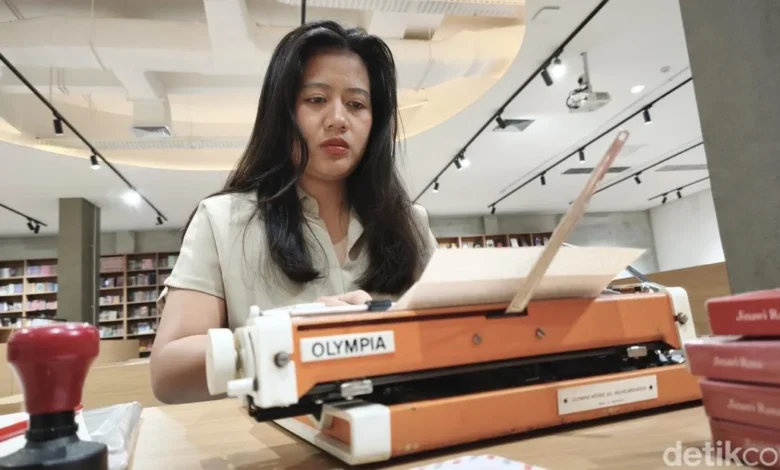
The rhythmic, mechanical clatter of a vintage Olympia typewriter echoes through a bustling corner of Jalan Pandanaran in Semarang Central Java, cutting softly through the hum of urban traffic and pedestrian chatter. Sitting behind a small, neatly arranged desk is Jiwani Rana Putri, a former television news reporter turned street-side poet. Better known simply as Jeje, she listens intently as a visitor pours out a deeply personal narrative, absorbing every inflection, hesitation, and sigh. Within minutes, that raw emotional release is alchemically transformed into a bespoke, freshly typed poem on a strip of textured paper—a unique public offering known locally as "Piknik Puisi" or "Puisi on The Spot."
This intimate creative exchange represents a growing intersection between literature, public performance, and mental wellness. Operating regularly from Friday through Sunday between 4:00 PM and 9:00 PM local time, Jeje’s pop-up poetry station invites strangers to pause, converse, and leave with a tangible piece of art. Armed with nothing more than her vintage typewriter, a stack of her published poetry books titled Sabda Diri, and an open-door philosophy operating on a "pay as you wish" basis, the Lumajang-born writer has successfully carved out a meditative oasis in the heart of Indonesia’s provincial capital.
The Genesis and Evolution of Piknik Puisi
The roots of Piknik Puisi trace back to July 2025, when Jeje initially launched a localized question-and-answer and writing project in Semarang’s historic Kota Lama district. Having spent years navigating the fast-paced, high-pressure environment of national television journalism, Jeje sought a deliberate career pivot that would allow her to reconnect with her foundational passion for writing while establishing immediate, unmediated human connections.
What began as a modest personal experiment quickly garnered significant public interest. Recognizing the community’s appetite for accessible literature, Jeje expanded the initiative into a mobile performance poetry format. By moving her operations to various public spaces—including popular local retail hubs like Gramedia Jalma on Jalan Pandanaran—she aimed to demystify the creative process of poetry writing. Rather than keeping the craft confined to elite academic circles or solitary room desks, Jeje’s on-the-spot method brings the poet’s workshop directly into the public eye, turning the creation of literature into an engaging, participatory public spectacle.
The Mechanics of Instant Composition: From Confession to Verse
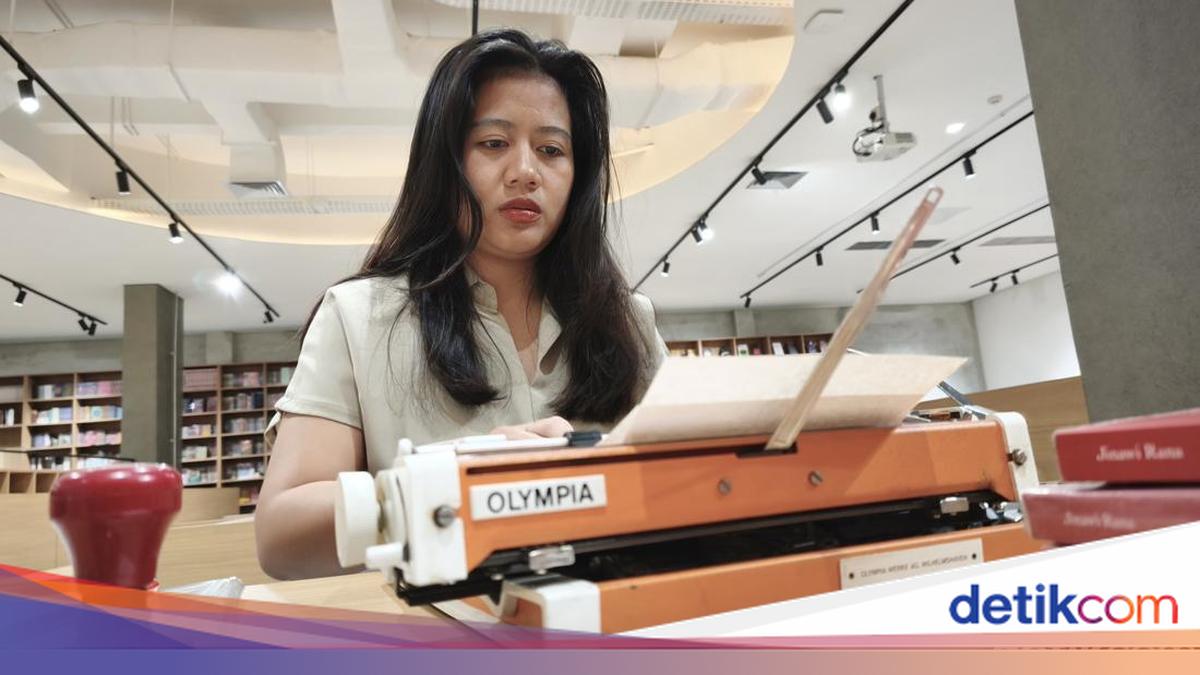
The operational workflow of Piknik Puisi is deceptively simple yet psychologically profound. Visitors approach the desk, sit down, and are given absolute freedom to share whatever occupies their minds—ranging from daily frustrations and romantic heartbreaks to existential anxieties and fleeting joys.
Once the storytelling begins, Jeje embarks on a high-stakes linguistic tightrope walk. Her fingers dance across the typewriter’s keys with practiced familiarity. Her gaze shifts fluidly between the speaker’s face to observe micro-expressions and the moving carriage of her Olympia machine. Occasional frowns of deep concentration punctuate the dialogue as she sifts through phrases, distilling complex emotional dumps into precise lines, rhythmic cadences, and cohesive stanzas.
The entire process typically takes about 30 minutes. The final product emerges as a neat block of typewriter ink stamped onto a modest 4×2-inch slip of matte paper. Notably, the mechanical nature of the typewriter prohibits corrections, erasures, or the security blanket of a digital delete key. Every strike of the hammer is permanent, forcing the poet to embrace semantic risks, maintain metric flow, and commit entirely to her instantaneous editorial decisions.
The psychological impact on participants is immediate. Kiara, a recent visitor who sought out the station amid a busy schedule, described the experience as a powerful form of emotional catharsis. Speaking just before departing to meet a prior engagement, Kiara noted that confiding in a sympathetic stranger—coupled with the unexpected reward of a personalized poem tucked securely into her bag—provided an undeniable sense of healing and psychological relief.
Artistic Rationale: Why the Vintage Typewriter Matters
Jeje’s deliberate choice of medium is far from a mere aesthetic gimmick. In an era dominated by screens, digital word processors, and instant messaging apps, the physical presence of a vintage typewriter serves as a powerful theatrical beacon. It signals to passersby that something deliberate, artisanal, and human is taking place.
The conceptual framework behind this methodology draws unexpected inspiration from international street poets, notably a practitioner in London who famously set up a typewriter near a public lake to capture stories from passersby. For Jeje, this approach addresses a common occupational hazard among contemporary writers: the tendency to become trapped within one’s own intellectual echo chamber. By actively soliciting stories from total strangers representing diverse socioeconomic backgrounds and walks of life, she deliberately expands her thematic repertoire, gaining fresh narrative perspectives that would otherwise remain entirely outside her personal sphere of experience.
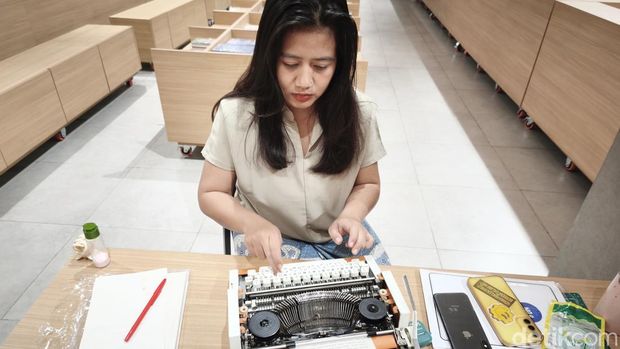
Furthermore, the mechanical constraints of the typewriter impose a rigorous creative discipline. The absence of a backspace key eliminates the paralyzing hesitation born of perfectionism. It transforms the act of writing into an immediate, high-tension performance art piece where spontaneity and technical mastery must intersect in real-time.
Broader Socio-Cultural Implications and Community Reception
The success of Piknik Puisi in Semarang highlights a broader cultural hunger for analog experiences and authentic human engagement in an increasingly digitized society. Urban centers across Indonesia have experienced rapid modernization, often accompanied by rising levels of social isolation and stress among young adults navigating the complexities of modern employment and urban living.
Street-level artistic initiatives like Jeje’s serve multiple vital functions within the urban ecosystem. First, they democratize access to high art, breaking down the perceived barriers between highbrow literature and the general public. By framing poetry as an interactive, conversational service rather than an intimidating academic exercise, projects of this nature foster a renewed appreciation for creative writing among demographics that might otherwise ignore literature entirely.
Second, the initiative functions as a localized mental health outlet. While not formally trained as a counselor, Jeje utilizes active listening, deep empathy, and peer-to-peer conversational norms to validate the emotional experiences of her visitors. The resulting poems serve as physical talismans of validation, allowing individuals to feel seen, heard, and understood in a public space.
Looking forward, Jeje averages about four dedicated writing sessions per regular operating day, with output scaling significantly during special cultural events, literary festivals, and public community gatherings in Central Java. Her model demonstrates that traditional literary skills can be successfully adapted to contemporary, experiential economic models without losing their artistic integrity.
As the afternoon light fades along Jalan Pandanaran and the steady, rhythmic tak-tak-tak of the Olympia typewriter continues to punctuate the Semarang air, Piknik Puisi stands as a testament to the enduring power of the written word. It proves that even in the twenty-first century, the oldest human desire remains remarkably simple: the need to tell our stories, and the profound comfort of hearing them mirrored back to us in verse.