Nine State-Owned Bank Officials Face 7-10 Year Prison Sentences in PT Sritex Corruption Case

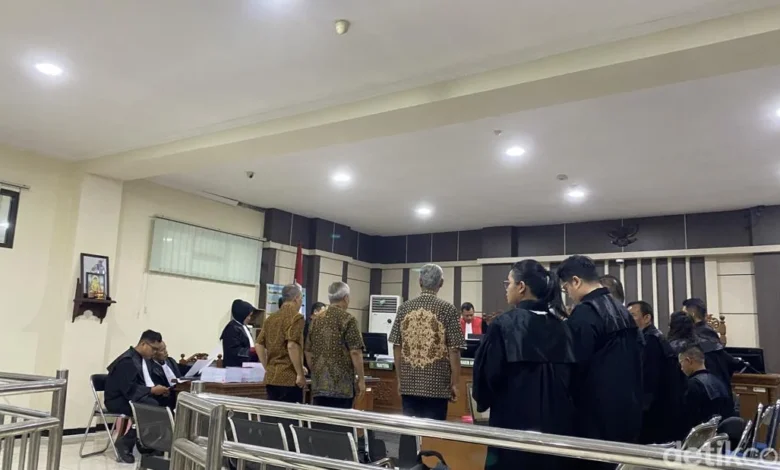
Semarang, Indonesia – Prosecutors have demanded prison sentences ranging from seven to ten years for nine officials from three Indonesian state-owned banks, implicated in a corruption case involving the provision of credit facilities to PT Sritex. One of the accused faces an additional demand to pay USD 50,000 in restitution. The proceedings, held at the Semarang Corruption Court, saw prosecutors present their charges in three separate sessions, addressing the defendants from each bank individually. The accused are alleged to have jointly and continuously committed acts of corruption, resulting in significant losses to state finances.
Allegations of Fraudulent Credit Facilitation
The prosecution’s case centers on accusations that the bank officials manipulated lending procedures to facilitate substantial credit lines to PT Sritex, a prominent textile manufacturer. Prosecutors contend that these actions circumvented established banking regulations and oversight mechanisms, leading to financial impropriety and substantial losses for the state.
During the trial, prosecutor Fajar Santoso detailed the alleged involvement of a former Director of Corporate and Commercial Business at one of the implicated banks, identified as P. According to Santoso, P is accused of orchestrating the division of a credit application, initially for IDR 250 million, into two separate applications of IDR 75 billion and IDR 175 billion. This maneuver, prosecutors allege, was specifically designed to bypass the mandatory approval of the bank’s board of commissioners.
"The application for credit facilities, initially amounting to IDR 250 million, was split into two: IDR 75 billion and IDR 175 billion, with the aim of avoiding the necessity of consultation with the Bank’s Board of Commissioners," Santoso stated at the Semarang Corruption Court on Monday, April 20, 2026.
The prosecution further revealed that the total disbursed credit reached approximately IDR 1.75 trillion. However, a significant portion of these funds was allegedly diverted for other purposes, including settling obligations at different financial institutions. This diversion, prosecutors claim, ultimately enriched Iwan Setiawan Lukminto and Iwan Kurniawan Lukminto, believed to be key figures within PT Sritex, by IDR 502 billion.
Beyond the prison sentence, the prosecution has also requested a fine of IDR 1 billion, with an alternative of 190 days of imprisonment for P.
Escalating Demands for Higher-Ranking Officials
The severity of the demands escalated for higher-ranking officials. SP, identified as a former President Director at one of the banks, faces the most significant demand: ten years imprisonment and a fine of IDR 1 billion, with an alternative of 190 days in detention. Prosecutors found SP to be jointly responsible for the non-compliant credit provisions that allegedly caused state losses.
"The defendant’s actions do not support the government’s program in eradicating corruption and undermine public trust in the banking sector," the prosecutor asserted.
SL, formerly the Head of the Corporate and Commercial Business Division at the same bank, has been sentenced to seven years in prison and a fine of IDR 1 billion, with an alternative of 190 days imprisonment. The prosecution argued that SL’s actions damaged public confidence, particularly in financial institutions.
Allegations Against Officials from a Second State-Owned Bank
The prosecution also presented demands against three officials from another state-owned bank. Among them is YR, a former President Director, who faces a ten-year prison sentence, minus time already served, and a fine of IDR 1 billion, with an alternative of 190 days imprisonment.
YR is accused of having the authority to approve corporate credit, but allegedly approved an increase in credit facilities totaling IDR 550 billion to PT Sritex. Prosecutors highlighted that these credit provisions were allegedly granted without adhering to established regulations, including extending credit to a high-risk debtor and without adequate collateral.
"The element of enriching others or cooperatives is evidenced by the fact that PT Sritex received funding facilities amounting to IDR 550 billion, a substantial portion of which has not yet been repaid," the prosecutor stated.
Further irregularities cited by the prosecution include the manipulation of credit needs calculations, the reduction of interest rates without proper authorization, and the extension of credit without the necessary approvals.
BR, a Senior Executive Vice President of Business at this bank, also faces a ten-year prison sentence, minus time already served. Meanwhile, DS, the Head of the Commercial and Corporate Division, has been sentenced to six years imprisonment and a fine of IDR 1 billion, with an alternative of 190 days imprisonment.
Third Bank and Restitution Demands
The prosecution’s demands extended to three more officials from a third state-owned bank. ZM, identified as a former President Director, has been sentenced to eight years imprisonment, minus time already served.
Significantly, ZM is also accused of personally benefiting from the corruption, having allegedly received USD 50,000. Consequently, the prosecution has demanded an additional restitution payment of USD 50,000, with the seized USD 50,000 already deposited into a holding account of the Attorney General’s Office of the Republic of Indonesia.
Other officials from this bank facing charges include BF, a former Director of MSME Credit concurrently serving as Director of Finance, and PS, the Director of Technology and Operations. Both BF and PS have been sentenced to seven years imprisonment and a fine of IDR 1 billion, with an alternative of 190 days imprisonment.
Broader Context and Previous Convictions
This case is part of a larger investigation into alleged corruption related to credit facilities provided to PT Sritex. Previously, prosecutors had demanded sixteen-year prison sentences for Iwan Setiawan, Iwan Kurniawan, and Allan Moran, who were accused of causing state financial losses amounting to IDR 1.35 trillion. These individuals were also sought to pay a fine of IDR 1 billion, with an alternative of 190 days imprisonment, and restitution of IDR 677 billion, with an alternative of eight years imprisonment.
The repeated instances of alleged malfeasance involving state-owned banks and large corporate entities highlight a persistent challenge in ensuring robust governance and accountability within Indonesia’s financial sector. The scale of the alleged financial irregularities, amounting to trillions of rupiah, underscores the critical importance of stringent oversight and adherence to regulatory frameworks to safeguard public funds and maintain confidence in the banking system.
Implications for Indonesia’s Financial Sector
The ongoing prosecution of these bank officials carries significant implications for Indonesia’s financial sector. Firstly, it underscores the government’s commitment to combating corruption, even within its own institutions. The demands for substantial prison sentences and restitution signal a move towards stricter penalties for financial crimes.
Secondly, the case raises questions about the internal control mechanisms and risk management practices within state-owned banks. The alleged circumvention of approval processes and the provision of credit without adequate collateral suggest potential systemic weaknesses that need to be addressed. This could lead to increased scrutiny of lending practices and a push for enhanced compliance and internal audit functions.
Thirdly, the prolonged legal battles and the potential for significant financial penalties could impact the operational capacity and financial health of the implicated banks. However, it may also serve as a deterrent, promoting greater caution and adherence to regulations in future lending activities.
The outcomes of these trials will likely influence the public’s perception of the integrity of Indonesia’s banking system. A successful prosecution and the recovery of state funds could bolster confidence, while any perceived leniency or procedural failures might further erode trust. The case serves as a critical juncture in the ongoing efforts to strengthen governance and transparency in Indonesia’s financial landscape, aiming to prevent similar incidents and ensure the responsible management of public resources. The court’s final verdicts are keenly awaited, as they will set precedents and potentially reshape the regulatory and ethical landscape for state-owned financial institutions in Indonesia.