Prabowo Subianto Announces Free Tuition for All Students Following the Official Inauguration of the SMA Taruna Nusantara Cimahi Campus

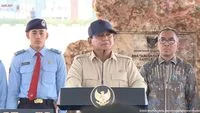
The Indonesian government has officially announced a sweeping policy to waive all tuition and educational fees for every student enrolled in the prestigious SMA Taruna Nusantara high school system. This landmark decision was formally disclosed by the Presidential Secretariat following President Prabowo Subianto’s official inauguration of the newly established SMA Taruna Nusantara Campus located in Cimahi, West Java. The announcement marks a transformative shift in the operational framework of one of the nation’s most elite secondary educational institutions, transitioning it from a partially fee-reliant model to a fully state-subsidized academy designed to cultivate future national leaders.
According to the official press release issued by the Presidential Secretariat, the newly minted policy guarantees that all enrolled students will no longer be burdened by financial obligations related to their academic pursuits. Previously, while the institution offered various scholarship schemes and financial aid to exceptional candidates from diverse socioeconomic backgrounds, the general framework required families to contribute to educational costs. Under the new administration of President Prabowo Subianto, the financial barrier has been entirely removed, ensuring that admission is determined strictly by merit, academic aptitude, and leadership potential rather than financial capacity.
The inauguration ceremony in Cimahi served as the backdrop for unveiling this monumental educational reform. In his keynote address, President Prabowo Subianto reflected on the historical trajectory of SMA Taruna Nusantara, highlighting its steady evolution since its inception. Established more than three decades ago in 1990 under the initiative of then-Minister of Defense and Security General Benny Moerdani, the institution was envisioned as a national center of excellence that combines rigorous academic standards, physical conditioning, leadership training, and a profound commitment to the Indonesian state ideology, Pancasila.
For the vast majority of its operational history, the institution maintained a singular flagship campus located in Magelang, Central Java. Despite operating with only one location for decades, the school successfully produced thousands of alumni who have gone on to assume prominent leadership roles across various sectors, including the Indonesian National Armed Forces (TNI), the Indonesian National Police (Polri, government ministries, corporate boardrooms, and civil society organizations. The decision to expand the campus network and implement a tuition-free model represents a concerted effort by the current administration to scale this successful educational blueprint to a national level.
Strategic Expansion and National Footprint
The inauguration of the Cimahi campus is part of a broader, aggressive infrastructural expansion strategy aimed at decentralizing access to elite education across the Indonesian archipelago. During his address, President Prabowo elaborated on the rapid physical growth of the SMA Taruna Nusantara network, noting that the institution has expanded from its original home in Magelang to incorporate five newly constructed campuses strategically distributed across key geographic regions of the country.
With the addition of the Cimahi facility, the SMA Taruna Nusantara network now encompasses a total of six distinct campus locations. This nationwide footprint includes the original campus in Magelang, Central Java; the established facility in Malang, East Java; the newly inaugurated campus in Cimahi, West Java; the regional campus in Pagar Alam, South Sumatra; a strategically significant facility in the new capital city, Nusantara (IKN), in East Kalimantan; and the northernmost outpost in Langowan, Minahasa regency, North Sulawesi.
This multi-campus expansion strategy is designed to democratize access for talented adolescents hailing from Indonesia’s diverse regions, sparing families the logistical and financial hardships associated with sending their children far across the archipelago for quality secondary education. By establishing regional hubs, the government aims to tap into high-potential youth pools in Sumatra, Sulawesi, and Kalimantan, ensuring a more geographically representative student body that reflects Indonesia’s national motto, Bhinneka Tunggal Ika (Unity in Diversity).
Chronology of Development and Institutional Evolution
The journey of SMA Taruna Nusantara from a single military-adjacent boarding school to a nationwide network of tuition-free elite academies represents one of the most ambitious educational scaling projects in modern Indonesian history. A retrospective examination of the institution’s chronology highlights key milestones that have shaped its current trajectory:
In July 1990, the original SMA Taruna Nusantara campus was officially opened in Magelang, adjacent to the Indonesian Military Academy (Akmil). Founded under the auspices of the Tamansiswa Perguruan Persatuan and the Department of Defense, the school was explicitly designed to educate the brightest middle school graduates from across the nation, integrating standard national curricula with specialized nation-building and leadership modules.
Throughout the 1990s and 2000s, the school solidified its reputation as a premier incubator for future leaders. Admission grew fiercely competitive, attracting tens of applicants for every available seat. Graduates consistently secured top placements in premier domestic and international universities, as well as high-ranking positions within the state apparatus.
As Indonesia transitioned into the 2020s, discussions regarding the necessity of scaling the SMA Taruna Nusantara model gained momentum within defense and educational policy circles. Policymakers argued that relying on a single campus limited the institution’s national impact. Consequently, planning commenced for a multi-campus rollout, leveraging state infrastructure development budgets and strategic partnerships.
Between 2023 and 2024, construction accelerated on multiple fronts. Facilities in Malang, Pagar Alam, Langowan, and the nascent capital of IKN were systematically developed. The integration of a campus within the capital city project underscored the administration’s intent to position the institution at the heart of future national governance and administrative planning.
In late October 2024, the culmination of these efforts was marked by the official inauguration of the SMA Taruna Nusantara Kampus Cimahi by President Prabowo Subianto. This event was immediately followed by the historic policy announcement guaranteeing absolute tuition waivers for all current and future students across all six operating campuses.
Policy Rationale and Official Government Stance
The decision to absorb all educational expenditures for students at SMA Taruna Nusantara aligns directly with the broader human capital development agenda championed by the Prabowo administration. In statements released by the Presidential Secretariat, the government emphasized that investment in elite education must not be restricted by economic strata.
"The complete elimination of tuition fees at SMA Taruna Nusantara is a strategic intervention designed to ensure that financial constraints never stand in the way of exceptional intellectual and leadership talent," the Presidential Secretariat noted in its official dispatch. "By removing economic barriers, the state reaffirms its constitutional obligation to provide accessible, high-quality education and to cultivate a generation of young citizens characterized by uncompromising academic excellence, moral integrity, and an unyielding dedication to the motherland."
Educational analysts and policy experts have pointed out that running a boarding school system with comprehensive facilities—including specialized laboratories, sports complexes, residential dormitories, and intensive extracurricular training—involves substantial operational costs. By subsidizing these expenses entirely through the state budget (APBN), the central government is signaling a heavy fiscal commitment to institutionalizing meritocracy. Under the previous framework, despite scholarship availability, indirect costs often deterred exceptionally gifted students from lower-income families from completing the rigorous application process. The new mandate aims to achieve absolute socioeconomic equity in admissions.
Socioeconomic Implications and Long-Term Impact
The implementation of free tuition at SMA Taruna Nusantara is anticipated to trigger profound ripple effects across Indonesia’s broader educational landscape. Observers have identified several key areas where this policy will generate significant long-term impacts:
First, the democratization of elite education is expected to drastically increase application volume. With the financial impediment removed, the admissions pipeline will likely experience an unprecedented surge in applicants from rural and economically disadvantaged regions who previously self-selected out of the application process. This broader talent pool will enable the institution to select candidates based purely on cognitive capability, emotional intelligence, and leadership potential.
Second, the expansion to six campuses combined with free tuition creates a scalable model for public-sector talent pipelines. As Indonesia pursues its "Golden Indonesia 2045" vision—which targets transforming the nation into a top global economy by its centenary of independence—the demand for ethical, highly skilled, and technologically literate leaders is at an all-time high. Institutions like SMA Taruna Nusantara serve as foundational nurseries for individuals who will eventually populate critical decision-making roles in national defense, diplomacy, public administration, and economic enterprise.
Third, the policy sets a compelling benchmark for public-private educational partnerships in Indonesia. While traditional public schools are funded by the state, specialized boarding institutions with intensive character-building curricula have historically required private cost-sharing. By absorbing the financial weight of such an intensive model, the government has demonstrated that specialized, high-investment educational frameworks can be fully democratized under centralized public sponsorship.
Challenges and Implementation Oversight
Despite the overwhelmingly positive reception of the tuition-free policy, educational economists and governance watchdogs have emphasized the critical importance of rigorous implementation oversight. Maintaining the high standards of instruction, facility maintenance, nutritional standards, and extracurricular infrastructure across six distinct campuses requires meticulous fiscal management and transparent institutional governance.
Ensuring that the expansion does not dilute the quality of education that made the original Magelang campus renowned is a primary concern for academic stakeholders. Maintaining low student-to-teacher ratios, recruiting top-tier instructional staff, and providing continuous faculty development across all regional branches will require sustained budgetary allocations and robust administrative oversight from both the Ministry of Education and the Ministry of Defense, which maintains a close historical affiliation with the institution.
Furthermore, transparent merit-based selection mechanisms must be fiercely protected against patronage or external interference. As the prestige of attending a tuition-free, state-sponsored elite academy surges, the pressure on admissions integrity will inevitably increase. Establishing foolproof, audited testing procedures will be vital to preserving public trust in the fairness of the selection process.
Conclusion and Future Outlook
The formal inauguration of the SMA Taruna Nusantara Cimahi campus and the concurrent announcement of universal tuition-free education mark a watershed moment for Indonesian secondary education. By bridging geographic expansion with absolute financial accessibility, the government has positioned the institution as a cornerstone of national human resource development.
As the six campuses across Magelang, Malang, Cimahi, Pagar Alam, Ikan, and Langowan begin operating under this new paradigm, all eyes will be on the incoming cohorts of students. These young individuals represent the vanguard of a policy experiment designed to prove that elite, character-based leadership training can be made universally accessible to the nation’s brightest minds, irrespective of background or economic standing. If executed successfully, the initiative will not only redefine the future of SMA Taruna Nusantara but also establish a transformative blueprint for specialized public education across the Indonesian republic for decades to come.
Related posts: