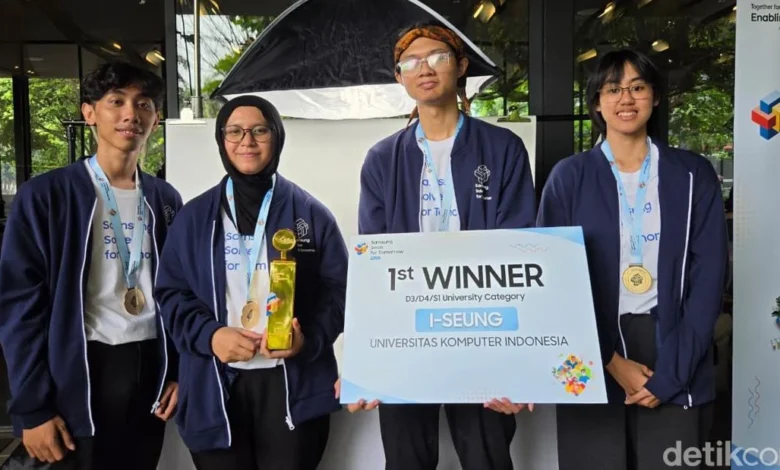
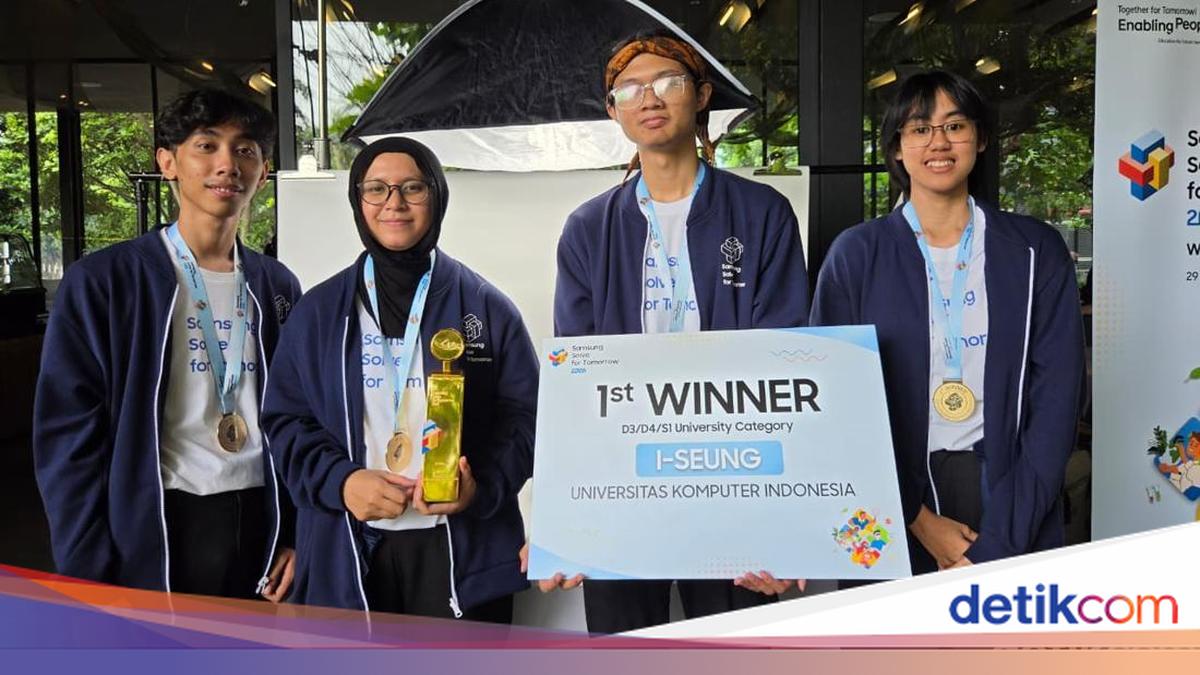
In a remarkable display of technological innovation aimed at social inclusivity, four undergraduate students from the Universitas Komputer Indonesia (Unikom) have secured first place in the prestigious Samsung Solve for Tomorrow (SFT) 2026 competition. The winning team, known as I-SEUNG, developed an Artificial Intelligence-powered platform named NovaSight, designed specifically to dismantle the barriers that prevent visually impaired students from independently mastering complex mathematical concepts. The team, consisting of Ratuayu Nurfajar, Regia Qolbu Rivita Atmowidjaja, Mohamad Zaki Zakiran, and Damar Fikri Haikal, received the top honor in the D3/D4/S1 category during the final awards ceremony held in Jakarta on October 29, 2026.
The Genesis of NovaSight
The conceptualization of NovaSight was not an overnight endeavor but the result of rigorous field research and a deep commitment to addressing educational inequality. The team began their journey by identifying a critical gap in the special education sector: while visually impaired students receive general instruction, subjects requiring visual interpretation—such as geometry, calculus, and algebra—remain notoriously difficult.
The team conducted extensive interviews and observational studies at the SLB Negeri A Citeureup in Cimahi, West Java. Their interactions with both students and educators revealed a sobering reality: current pedagogical tools often fail to render abstract mathematical representations like graphs and diagrams into accessible formats. Furthermore, the lack of specialized software for recording mathematical steps forces students to rely heavily on constant human assistance, thereby stifling their academic autonomy.
"We began by synthesizing literature and internet research to formulate our initial hypotheses," Ratuayu explained during the post-award press briefing. "However, the true validation came from our direct engagement with the students and teachers in the field. We needed to understand their pain points from their perspective, not just through theory."
Technical Architecture and Features
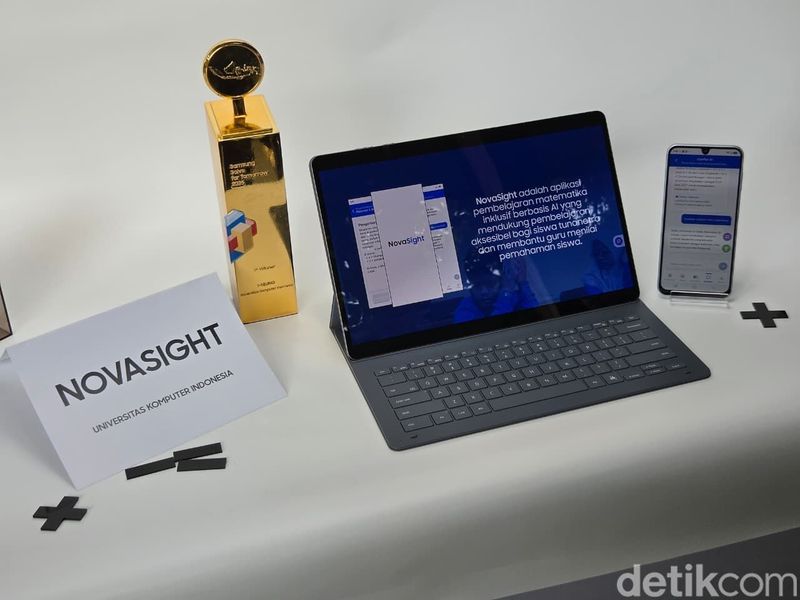
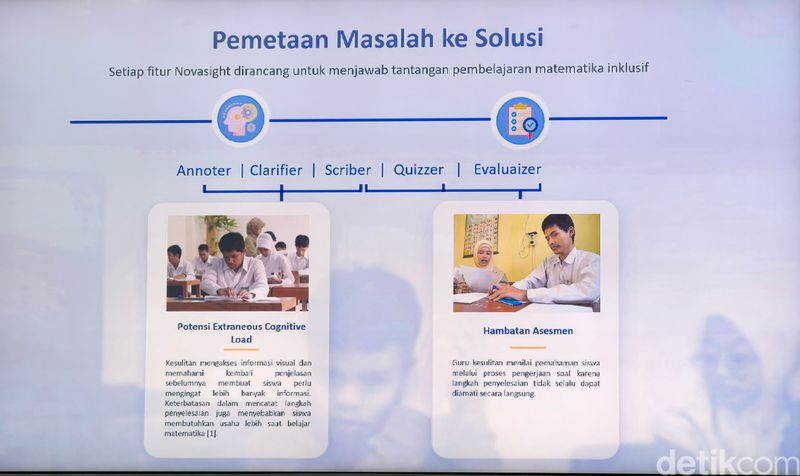
NovaSight is built upon a robust technical foundation, utilizing the Flutter framework for cross-platform accessibility, integrated with Azure OpenAI’s advanced language models, and optimized for screen-reading software like TalkBack. The platform distinguishes itself through five specialized AI modules:
- Annoter: This core feature serves as the eyes of the user, converting complex visual data—including geometric graphs and intricate diagrams—into descriptive, high-fidelity text that can be read aloud by assistive technology.
- Scriber: Recognizing the difficulty of inputting mathematical notation, the team developed a specialized interface that allows students to record calculation steps using a keyboard layout tailored for the visually impaired.
- Clarifier: This module acts as an on-demand AI tutor, capable of answering context-specific mathematical questions based on the curriculum.
- Quizzer: A tool for educators that automates the generation of mathematics quizzes and answer keys, ensuring that materials are formatted correctly for accessibility from the outset.
- Evaluaizer: Perhaps the most sophisticated component, this tool analyzes the student’s methodology and final answers to identify precisely where a logical error occurred, providing constructive feedback rather than just a pass/fail score.
Navigating Development Challenges
The path to the SFT 2026 championship was not without significant hurdles. The team faced a major setback early in the development phase regarding user interface design. Initially, the team designed a keyboard layout they believed would be intuitive for blind users. However, during subsequent field testing, the students at SLB Negeri A reported that the design was counterintuitive and difficult to navigate.
"We had to go back to the drawing board," Regia Qolbu Rivita noted. "Our initial assumption was that we knew what was best, but the users showed us otherwise. We had to pivot and strictly adhere to the Web Content Accessibility Guidelines (WCAG) to ensure the interface was truly user-friendly."
This iterative process, which spanned approximately four months, underscores the importance of human-centered design in technology. By prioritizing the feedback of those with lived experience, the team successfully refined their prototype, eventually reaching a level of maturity that impressed the SFT judges.
Empirical Success and Pilot Testing
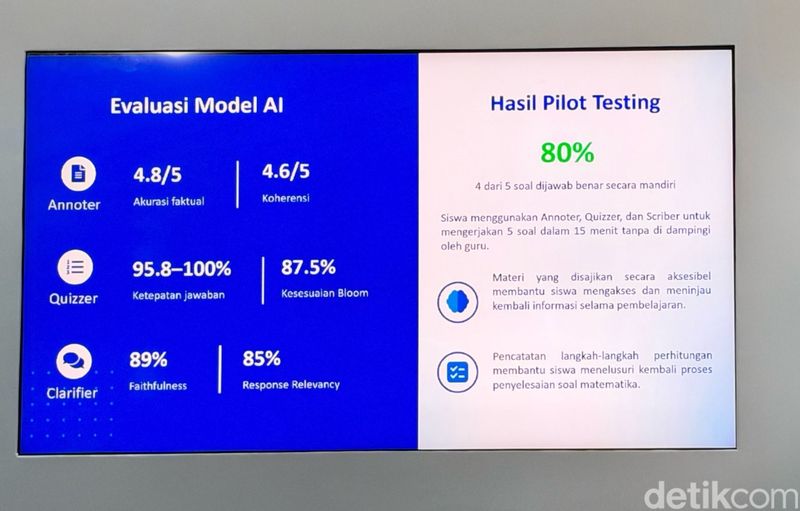
The effectiveness of the tool was demonstrated during a pilot test involving students at the SLB Negeri A institution. In a controlled environment, a student was tasked with solving five mathematical problems. Utilizing the Annoter, Quizzer, and Scriber modules, the student was able to correctly solve four out of the five problems within 15 minutes, operating entirely without the aid of a teacher.
Irman, a student in the eleventh grade at SLB Negeri A, provided a poignant testimonial regarding the impact of the software. "Before this, geometry was a mystery to me because I couldn’t see the graphs. NovaSight has allowed me to grasp these concepts and record my own work independently. It has changed the way I approach my studies," he stated.
Educators have also lauded the innovation. Bayu, a mathematics teacher, noted that tools of this caliber are rare in the current Indonesian educational landscape. He emphasized that the platform’s strength lies in its dual utility: it supports the student’s independence while simultaneously reducing the administrative burden on the teacher.
The Broader Context: Samsung Solve for Tomorrow
The Samsung Solve for Tomorrow (SFT) initiative is a global corporate social responsibility program that encourages youth to leverage Science, Technology, Engineering, and Mathematics (STEM) to solve pressing local issues. The 2026 iteration in Indonesia attracted hundreds of applicants, with the jury panel focusing on feasibility, social impact, and innovation.
The I-SEUNG team’s journey is particularly notable given that they nearly missed the application deadline. Like many student groups, they were balancing academic requirements and personal lives, initially delaying their submission. "We were almost among the ‘late’ teams," Regia admitted. "The extension of the registration period was our lucky break, and that single opportunity has completely transformed our trajectory."
Implications and Future Outlook
While the initial results are promising, the development team remains grounded. They acknowledge that a pilot study with a small sample size does not equate to nationwide efficacy. Future development will require longitudinal studies to determine the platform’s impact on long-term learning outcomes and student confidence.
From a policy perspective, the development of NovaSight aligns with the Indonesian government’s focus on inclusive education. According to data from the Ministry of Basic and Secondary Education (Kemendikdasmen), there are at least 4,229 visually impaired students enrolled in special needs schools (SLB) across the country. If scaled effectively, NovaSight could significantly alter the learning landscape for this demographic.
The team is currently in the beta phase and has yet to release the application for public download. They are actively seeking investment and partnerships to transition from a competition prototype to a scalable educational product. By securing the first-place title, the I-SEUNG team has not only brought glory to Unikom but has also signaled that the next generation of Indonesian developers is deeply invested in creating technology that serves the most vulnerable members of society.
As the team looks toward the future, their goal is clear: to ensure that NovaSight reaches every school for the blind in West Java before expanding to a national scale. In a world where AI is often viewed through the lens of automation and job displacement, projects like NovaSight offer a compelling counter-narrative: AI as a bridge to equity, accessibility, and the empowerment of those who have historically been sidelined by traditional educational systems.