DPR Open to Revising Anti-Corruption Law Amid Push for Asset Forfeiture and Alignment with International Standards

The Indonesian House of Representatives (DPR RI) has expressed a strong willingness to deliberate a comprehensive revision of Law Number 20 of 2001, which serves as the Second Amendment to Law Number 31 of 1999 on the Eradication of Criminal Acts of Corruption, commonly known as the Corruption Eradication Law (UU Tipikor). This development comes amid a flurry of high-level policy discussions involving the executive branch, economic advisory bodies, and legislative leaders aimed at modernizing Indonesia’s legal framework to better address contemporary financial crimes and international obligations.
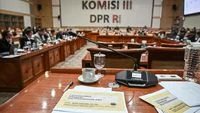
Ahmad Sahroni, the Deputy Chairman of Commission III of the DPR RI—which oversees legal affairs, human rights, and security—confirmed that the legislature is fully open to revisiting the long-standing statute. Speaking at the Parliamentary Complex in Senayan, Jakarta, Sahroni outlined that the parliament intends to initiate a series of extensive consultations with subject matter experts, legal scholars, and institutional stakeholders to shape the parameters of the proposed legislative changes.
Background and Context of the Legislative Push
The discourse surrounding the potential overhaul of the Corruption Eradication Law did not emerge in a vacuum. It follows a series of strategic policy initiatives and high-level consultations driven by the administration of President Prabowo Subianto. Recently, the National Economic Council (DEN), spearheaded by veteran statesman Luhut Binsar Pandjaitan, submitted a comprehensive policy study to the president.
Among the most notable and debated proposals within the DEN study is the recommendation to recalibrate how "state financial losses" are defined within the context of corruption offenses, potentially removing or significantly redefining certain interpretations that critics argue have historically hindered business confidence and administrative decision-making. Following the submission of this study, Luhut engaged in critical policy alignment meetings with Coordinating Minister for Law, Human Rights, Immigration, and Corrections Yusril Ihza Mahendra.
Minister Yusril has been a vocal proponent of updating the UU Tipikor, noting that the statute has remained largely untouched since its last major amendment in 2001. Yusril has emphasized that Indonesia’s primary anti-corruption legislation urgently needs harmonization with the newly enacted Criminal Code (KUHP) and Criminal Procedure Code (KUHAP), both of which are slated to overhaul the nation’s domestic jurisprudence. Furthermore, Yusril highlighted the necessity of aligning domestic anti-corruption provisions with the United Nations Convention Against Corruption (UNCAC), an international treaty ratified by Indonesia back in 2006 via Law Number 7 of 2006.
Chronology of Recent Developments and Legislative Synergy
The momentum toward revising the UU Tipikor is closely intertwined with the ongoing deliberations surrounding the long-awaited Asset Forfeiture Bill (RUU Perampasan Aset). Commission III of the DPR has spent recent months conducting a series of Public Hearings (RDPU) regarding the Asset Forfeiture Bill, engaging a wide spectrum of society, including anti-corruption activists, academic researchers, and legal practitioners.
Legislators like Sahroni acknowledge that the concurrent timing of the Asset Forfeiture Bill and the proposed amendments to the Corruption Eradication Law necessitates a synchronized legislative approach. Because asset recovery and anti-corruption enforcement are deeply codependent, reforming one statute without adjusting the other could lead to legal loopholes or operational friction within the criminal justice system.
"We are continuously discussing this with various parties, but regarding the selection of resource persons and experts, this is something we need to incorporate properly. Only after that can we determine the exact mechanism for revising the Corruption Eradication Law," Sahroni told reporters in Jakarta. He added that the feasibility of fast-tracking these studies within the current legislative timeframe to address the president’s directives is currently being evaluated.
Expanding the Scope of Corruption: The Under-Invoicing Debate
Beyond the overarching debate on state losses and international alignment, the proposed revision of the UU Tipikor has opened the door for specific, highly technical economic crimes to be formally classified as corruption.
Sahroni has publicly voiced strong support for incorporating "under-invoicing"—the illicit trade practice of manipulating commercial documents to falsely declare a lower transaction value, price, quantity, or volume of goods than what actually occurred—into the formal definition of corruption under the revised law. Under-invoicing is frequently utilized by corporate actors to evade customs duties, dodge corporate taxes, and launder illicit capital across borders, resulting in substantial losses to state revenue.
"I fully support the proposal to include under-invoicing into the Corruption Eradication Law. This is a matter that urgently needs to be considered, because this deceitful practice has also become a serious concern for President Prabowo," Sahroni stated prior to the formal parliamentary announcements.
The inclusion of under-invoicing highlights a broader shift in Indonesia’s anti-corruption strategy, moving beyond traditional bribery and state-fund embezzlement toward tackling sophisticated corporate and transnational economic crimes that bleed the national economy of trillions of rupiah annually.
Implications and Broader Impact on the Legal and Economic Landscape
The potential overhaul of Indonesia’s anti-corruption architecture carries profound implications for both the legal system and the national economy. Legal analysts point out that harmonizing the UU Tipikor with the new KUHP and UNCAC could resolve long-standing jurisdictional conflicts and ambiguities that have occasionally hampered prosecutors and investigators from the Corruption Eradication Commission (KPK), the Attorney General’s Office (AGO), and the Indonesian National Police.
Economically, business associations have cautiously welcomed discussions surrounding the redefinition of state losses, arguing that fear of criminal prosecution for genuine business misjudgments or administrative errors has historically paralyzed bureaucratic execution and corporate investment. However, civil society organizations and anti-corruption watchdogs have issued cautionary statements, warning that any legislative changes must not dilute the enforcement power of anti-corruption bodies or provide safe havens for corrupt state officials and corporate elites.
As the DPR moves forward with expert consultations and inter-ministerial coordination, the coming months will prove critical in determining whether the legislature can successfully balance the demands of economic modernization, international treaty obligations, and robust anti-corruption enforcement. The progression of these twin legislative agendas—the revised UU Tipikor and the Asset Forfeiture Bill—will serve as a definitive litmus test for Indonesia’s legal reform trajectory under the current administration.