The Javanese folk song "Gundul-Gundul Pacul" has long transcended its status as a mere children’s rhyme, emerging as a profound pedagogical tool for teaching leadership, character education, and moral integrity. While generations of Indonesian children have memorized its lyrics, the song’s contemporary relevance is being rediscovered by educators and scholars who view it as an indigenous framework for discussing the ethics of power. In an era where leadership crises and the misuse of authority are global concerns, this traditional tembang dolanan serves as a poignant reminder that stewardship is defined by humility rather than the prestige of a title.
Historical and Cultural Context of the Song
"Gundul-Gundul Pacul" originated within the Javanese oral tradition, serving as a didactic tool to instill values in children. According to experts in Javanese literature and education, such as Purwadi and Endang Waryanti (2016), the song is categorized as tembang dolanan, a genre specifically designed to balance entertainment with ethical guidance.
The lyrics are deceptively simple:
Gundhul-gundhul pacul-cul, gembelengan
Nyunggi-nyunggi wakul-kul, gembelengan
Wakul ngglimpang, segane dadi sak latar.
Linguistically, the song carries heavy symbolism. A "gundul" (bald head) signifies a state of being free from physical vanity, while "pacul" (hoe) represents the fundamental tool of the common laborer. "Nyunggi wakul" (carrying a basket on the head) serves as a metaphor for carrying the trust of the people or the responsibilities of leadership. The term "gembelengan," often translated as arrogance or carelessness, becomes the fulcrum of the song’s moral lesson. When a leader acts with "gembelengan"—becoming intoxicated by their own power—the "wakul" (the basket of the people’s welfare) falls, and the "segane" (the rice/the people’s livelihood) is spilled across the yard.
The Anatomy of a Leadership Crisis
The narrative of the song provides a clear chronology of a systemic failure. It begins with the acquisition of a task (carrying the basket), progresses to the manifestation of hubris (gembelengan), and culminates in the catastrophic loss of public trust (the spilled rice).
Recent scholarly analysis, such as the work by Adi Suprayogi (2018) and Muhammad Indra Saputra (2016), underscores the song’s application to modern organizational management. The "cangkul" or hoe serves as an instrument of production; it is not a symbol of status, but an implement for building the future. The interpretation here is critical: a leader is defined not by the chair they occupy, but by the tangible impact of their actions using the tools—or power—at their disposal.
This analysis aligns with contemporary theories of "Servant Leadership," which emphasize that authority is a trust granted by the collective. When leaders prioritize their own ego over the needs of their constituents, they inevitably lose the ability to maintain the equilibrium required to protect the "basket" of communal interests.
Data-Driven Implications for Modern Education
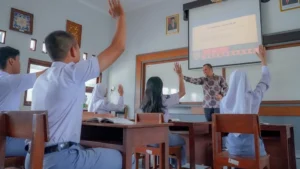
The integration of traditional folk songs into the modern curriculum is not merely a nostalgic exercise; it is an attempt to address the gap in character education. Current pedagogical research, including a 2022 study by Kholid Irsani, Aman, and Saefur Rochmat published in Diakronika, highlights the potential of "ethnopedagogy."
Statistical observations in schools that utilize narrative-based learning show higher retention rates for abstract concepts like "accountability" and "transparency" when they are tied to culturally resonant stories. Rather than relying on rigid, textbook-heavy definitions of ethics, educators are finding that "Gundul-Gundul Pacul" allows for a more fluid, Socratic dialogue. By asking students to identify the consequences of the "spilled rice," educators can stimulate discussions on:
- Accountability: The direct impact of one person’s decisions on the community.
- Humility: The necessity for leaders to remain grounded, even as their influence grows.
- Risk Management: The danger of losing focus when one becomes "gembelengan."
Official Perspectives and Academic Response
Academic discourse from various Indonesian institutions reflects a consensus that the song serves as a foundational text for civil responsibility. Educators from the Reformed Theological Seminary (STT Reformed Indonesia) and other academic circles suggest that the song effectively demystifies the concept of power.
From an administrative standpoint, the lesson is clear: institutions are vulnerable to the same failures described in the song. Whether it is a student council president, a school principal, or a government official, the mechanism of failure is identical. When the leadership becomes disconnected from the reality of the people—represented by the "segane" (rice) scattered on the ground—the legitimacy of the authority is lost.
Furthermore, the song’s emphasis on the "gundul" (baldness) suggests that a leader must be stripped of personal vanity to truly serve. This is a radical departure from modern perceptions of leadership, where image and branding often overshadow the substance of the work being performed.
Broader Societal Impact and Future Challenges
The persistence of "Gundul-Gundul Pacul" in the collective consciousness of Indonesia provides a unique opportunity for social cohesion. However, the challenge remains in ensuring that the song is not treated as a static relic. To remain effective, its interpretation must be dynamic and contextual.
The implications for policy-making and corporate governance are profound. If the foundational education of a society emphasizes that "power is a basket to be balanced," then the transition from the classroom to the boardroom is marked by a clear expectation of stewardship. The song warns that no matter how high one is positioned, the weight of the "basket" is heavy, and the ground remains unforgiving.
Conclusion: Leadership as a Shared Responsibility
The resilience of this folk song lies in its ability to condense the complexities of human ambition into a single, harrowing image: the contents of a life’s work spilled because of a lack of humility. As Indonesia continues to navigate the complexities of a modern, democratic state, the values embedded in "Gundul-Gundul Pacul" offer a timeless framework for the next generation of leaders.
The lesson is not one of fear, but of awareness. It reminds us that every person, regardless of their role in society, is a bearer of some form of trust. Whether it is a teacher, a parent, or a political leader, the responsibility to "carry the basket" with caution and integrity is the hallmark of a healthy society. By teaching these values through the lens of local culture, the education system can foster a more empathetic and responsible citizenry—one that understands that their influence is not a personal crown, but a public trust that must be guarded with care. Ultimately, the song stands as a testament that the most vital lessons in leadership are often the simplest ones, preserved in the stories we tell our children.