The global political landscape witnessed significant developments this week, highlighted by shifting power dynamics in the Israeli parliamentary elections, international scrutiny regarding Indonesia’s diplomatic positioning in the Middle East, and an unexpected logistical crisis stranding luxury cruise passengers in Southeast Asia. These events, compiled in the latest international roundup for Friday, October 30, reflect the complex interplay of domestic politics, international law, and global economic pressures.
Israeli Election Updates: Netanyahu Block Declines as Arab Parties Surge
The political future of incumbent Israeli Prime Minister Benjamin Netanyahu faces unprecedented uncertainty following the latest parliamentary election cycle. With the Israeli Central Election Committee completing 90.4 percent of the vote count by Thursday, October 29, preliminary results indicate a notable decline in seats for Netanyahu’s right-wing nationalist bloc, contrasted with a simultaneous surge in representation for Arab political factions.
According to the election committee’s data, Netanyahu’s governing bloc secured 52 seats in the Knesset. Meanwhile, the primary opposition faction led by Gadi Eisenkot captured 48 seats. Crucially, Arab-majority parties accumulated a combined total of 20 seats, divided between the Joint List with 12 seats and the Ra’am party with 8 seats.
Political analysts and electoral experts point out that forming a stable governing coalition will present monumental challenges due to deep ideological divisions and contentious policy issues that dominated the campaign trail. The situation is further complicated by the pivotal role now occupied by Arab parties, which could serve as the ultimate kingmakers, potentially tipping the balance of power and enabling the opposition bloc led by Eisenkot to forge a path toward the premiership.
The prolonged political deadlock reflects a deeply fractured Israeli electorate. Key issues such as national security, economic inflation, and judicial reform have polarized voters, leading to lower-than-average turnout in traditional strongholds and energizing minority coalitions. As the final ballots are verified, coalition negotiations are expected to be protracted and fraught with political horse-trading.
UN Special Rapporteur Cautions Indonesia Over Board of Peace Engagement
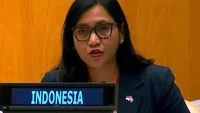
In a separate international development, Francesca Albanese, the United Nations Special Rapporteur on the occupied Palestinian territories, has publicly urged the Indonesian government to re-evaluate its potential participation in the newly formed Board of Peace (BoP).
In an interview with Reuters on Thursday, October 22, Albanese argued that the BoP does not adequately represent the voices or aspirations of the Palestinian people, noting that the initiative was spearheaded by the United States and Israel. She emphasized that, under international legal frameworks, Israel should not hold a determining role in shaping the long-term political and administrative future of Palestine.
In response to these concerns, a BoP official contested Albanese’s assertions, firmly denying that Palestinians are excluded from the governance structure. The official clarified that civilian administration and reconstruction efforts in the Gaza Strip are spearheaded by the National Committee for the Administration of Gaza. This body is composed entirely of Palestinian professionals from Gaza and is chaired by Ali Shaath, a former senior official of the Palestinian Authority.
The Indonesian Ministry of Foreign Affairs (KEMLU) has previously maintained a cautious stance regarding its foreign military and humanitarian deployments. KEMLU reiterated that any deployment of Indonesian personnel—should it materialize—would be strictly confined to humanitarian and peacekeeping support within designated areas in Gaza. Jakarta has emphasized that its personnel will not engage in combat operations or undertake any actions that could lead to direct military confrontation.
The debate underscores the delicate diplomatic balancing act required of nations engaging in post-conflict reconstruction initiatives in the Middle East, where multilateral legitimacy and adherence to international law remain heavily contested.
Luxury Cruise Passengers Stranded in Cambodia Amid Global Fuel Crisis
Far from the geopolitical tensions of the Middle East, a logistical and financial crisis stranded hundreds of civilian travelers in Southeast Asia. Passengers aboard the luxury residential cruise ship Villa Vie Odyssey found themselves stranded in the port city of Sihanoukville, Cambodia, after the vessel’s operators suspended the journey due to an inability to purchase necessary ship fuel.
Steve Skulnich, one of the affected passengers, recounted the ordeal to Channel News Asia (CNA). He stated that travelers were instructed to disembark the vessel after the management company exhausted its operating funds, leaving them unable to refuel the ship for the next leg of its international itinerary.
More than 200 passengers were left in limbo on Tuesday, October 27, when Villa Vie Residences, the United States-based operator of the cruise line, officially paused operations. The company cited unprecedented spikes in marine fuel costs, directly attributing the financial strain to ongoing geopolitical conflicts in the Middle East, specifically the broader economic fallout stemming from heightened tensions between the United States and Iran.
According to corporate disclosures, monthly fuel expenses per cabin across various Asian maritime routes skyrocketed from a baseline of $1,800 to an unsustainable $8,000. The dramatic escalation in operational overhead rendered the luxury cruise model temporarily unviable, highlighting how localized military conflicts can trigger cascading economic disruptions that impact global commercial sectors, including international tourism and maritime transport.
As affected passengers work with consular services and travel insurance providers to arrange repatriation or alternative travel plans, the incident serves as a stark reminder of the vulnerability of global supply chains and luxury services to macroeconomic shocks.
Related posts: