Finland and Sweden Deploy Fighter Jets to Intercept Russian Military Aircraft over Gulf of Finland Amid Heightened Baltic Sea Tensions

The air forces of Finland and Sweden jointly scrambled multiple fighter jets on Friday, September 25, to intercept a formation of Russian military aircraft detected flying over international waters in the Gulf of Finland. The coordinated response marks a significant milestone in military cooperation between the two Nordic nations, both of which recently integrated into the North Atlantic Treaty Organization (NATO). While the Russian fleet technically remained in international airspace, the proximity of the flight path to sovereign Nordic territory, coupled with an eclectic mix of specialized aircraft, triggered immediate security protocols under the Quick Reaction Alert (QRA) framework.
The incident underscores the deeply fragile security architecture of the Baltic Sea region, an area that has experienced an exponential rise in geopolitical friction since the escalation of the Russia-Ukraine war in February 2022. As European borders remain on high alert for unauthorized aerial incursions and electronic warfare provocations, Friday’s interception highlights how defense integration among Nordic neighbors has transformed regional deterrence capabilities.
Chronology of the Interception and Joint Nordic Response
The aerial confrontation unfolded on the morning of Friday, September 25, when radar networks operated by the Finnish Air Force detected unusual and multi-unit military movements originating from Russian airbases. According to official reports released by the Finnish military, the Russian formation was not a routine patrol; rather, it comprised a specialized mixed unit of aircraft designed for electronic reconnaissance, command, and tactical combat.
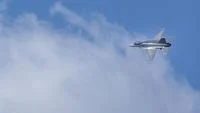
The Russian armada included a Tupolev Tu-134 turbofan transport and training aircraft—frequently utilized for VIP transport, navigation training, or electronic intelligence gathering—alongside several Mikoyan MiG-31 interceptor-strike fighters and Sukhoi Su-30 multirole fighter jets. The presence of the high-speed, long-range MiG-31 interceptors alongside a slower transport platform suggested a coordinated, complex operational flight rather than a standard transit.
In response to the detected approach, the Finnish Air Force activated its Quick Reaction Alert (QRA) protocol. Concurrently, operating under rapidly evolving bilateral defense agreements and their shared new status as NATO allies, Swedish air defense units mobilized their own QRA assets.
The ensuing operation marked a historic operational milestone: the first joint mission identification conducted cooperatively by the Finnish and Swedish air forces. Fighter jets from both nations shadowed the Russian formation as it navigated the Gulf of Finland. Although the Russian aircraft did not cross the sovereign land or maritime borders of either Finland or Sweden, flying strictly within international airspace, the intercepting jets maintained close visual contact to identify the aircraft, document their payload configurations, and signal operational readiness.
Regional Context and the Geopolitical Significance of the Baltic Sea
The Gulf of Finland and the broader Baltic Sea basin have transformed into one of the most heavily militarized and politically volatile geopolitical flashpoints in Europe. Historically characterized by relatively low maritime and aerial tensions following the end of the Cold War, the region’s security dynamic shifted dramatically following Russia’s full-scale invasion of Ukraine in 2022.
In the wake of the conflict, countries situated along NATO’s eastern flank—including Poland, the Baltic states of Estonia, Latvia, and Lithuania, and now Finland and Sweden—have reported a steady stream of security incidents. These have ranged from electronic GPS jamming and maritime infrastructure disruptions (such as undersea communication cable and pipeline cuts) to frequent, unannounced incursions by Russian military aircraft and reconnaissance drones into sovereign airspace.
For decades, both Finland and Sweden maintained formal policies of military non-alignment. However, the profound shift in European security prompted both historically neutral nations to reevaluate their strategic postures. Finland officially joined NATO in April 2023, effectively doubling the military alliance’s border with Russia. Sweden followed suit, officially becoming a member in March 2024.
This historic dual accession fundamentally redrew the security map of Northern Europe, turning the Baltic Sea into what many military analysts describe colloquially as a "NATO lake." Consequently, joint air policing missions, such as the one executed on September 25, are no longer isolated national responses but part of an integrated, highly synchronized regional defense strategy designed to secure NATO’s newly expanded northern perimeter.
Official Reactions and Statements from Leadership
The interception quickly drew high-level political attention across the Nordic region, with national leaders using the platform to underscore the fragility of the current security climate while reassuring the public of robust defensive readiness.
Swedish Prime Minister Ulf Kristersson took to social media, specifically utilizing the X platform (formerly Twitter), to address the incident and articulate his government’s assessment of the geopolitical environment. Kristersson stated bluntly that the "Baltic Sea is at its most raw and vulnerable point," pointing to the relentless pace of hybrid threats, intelligence-gathering operations, and military posturing by Moscow.
Despite the sobering assessment, Kristersson moved swiftly to reassure citizens regarding the efficacy of modern deterrence measures. He emphasized that the region is currently defended and monitored better than at any point in modern history, directly crediting the seamless integration of Swedish and Finnish military assets within the broader NATO alliance.
As of late Friday, official channels in Moscow had not issued a formal statement, commentary, or diplomatic protest regarding the joint interception by Finnish and Swedish forces. Russia’s Ministry of Defense routinely maintains that its military flights over international waters strictly adhere to international airspace regulations, a legalistic argument frequently deployed to counter western criticisms of provocative military maneuvering. Defense analysts note that while Moscow often avoids public acknowledgment of routine QRA interceptions, such missions are carefully logged by Russian military planners to test response times, radar signatures, and coordination protocols among allied nations.
Implications for European Defense and Future Aerial Operations
The September 25 incident carries profound implications for the future of European aerial policing and bilateral military integration. Beyond the immediate tactical success of intercepting and identifying the Russian fleet without incident, the operation serves as a stress test for the newly minted defense architecture linking Helsinki and Stockholm.
For years, military planners argued that interoperability between Finland and Sweden was already high due to decades of joint exercises, shared equipment standards, and compatible tactical doctrines. However, translating theoretical interoperability into real-time combat operations—such as coordinating joint QRA intercepts of multi-type Russian military formations—requires flawless communication, shared secure data networks, and unified command structures. The successful execution of Friday’s mission demonstrates that both nations have effectively bridged the gap between allied cooperation and operational integration.
Furthermore, the incident highlights the changing nature of airspace defense in the Gulf of Finland. The corridor is one of the busiest maritime and aerial bottlenecks in Europe, handling heavy commercial air traffic alongside vital maritime shipping lanes connecting Russian ports like St. Petersburg to the open ocean. Unannounced military flights carrying electronic intelligence platforms or interceptor aircraft introduce severe risks of miscalculation, accidental collision, or civilian air traffic disruption.
As the war in Ukraine continues with no clear diplomatic resolution in sight, military experts anticipate that Russia will maintain its operational tempo of probing flights along NATO’s borders. These missions serve multiple purposes for Moscow: testing the reaction times of newly formed allied coalitions, gathering electronic intelligence on NATO radar and communication frequencies, and signaling strategic resolve in the face of ongoing Western sanctions and geopolitical isolation.
In response, NATO’s enhanced air policing missions, alongside homegrown regional initiatives like the Finnish-Swedish QRA framework, will remain a permanent fixture of Northern European security. The ability of nations like Finland and Sweden to project unified, rapid, and measured deterrence ensures that while the Baltic Sea remains a zone of high geopolitical tension, it remains heavily guarded against unauthorized encroachment or tactical surprise.