Mid-Air Cockpit Altercation Forces Flydubai Tel Aviv Flight to Divert to Saudi Arabia Following Pilot Dispute


An international commercial flight operated by Flydubai, traveling from the United Arab Emirates to Israel, was forced to make an unscheduled emergency diversion to Saudi Arabia on Wednesday, September 30, 2026, after the two pilots on board became embroiled in a severe physical altercation inside the cockpit. The incident, which immediately triggered international aviation security protocols and initial concerns of a potential hijacking, highlights rare but critical vulnerabilities regarding crew resource management and cockpit dynamics at high altitudes.
The aircraft, carrying approximately 150 passengers and a standard complement of cabin crew, landed safely at Tabuk Regional Airport in northwestern Saudi Arabia. Local authorities, aviation regulators, and airline representatives quickly mobilized to manage the unfolding crisis, which ultimately concluded without any reported injuries among the passengers, though the pilots involved faced immediate grounding and subsequent detention for questioning.
Incident Chronology and Flight Tracking Data
The flight, operating as a routine commercial connection between Dubai International Airport (DXB) and Ben Gurion International Airport (TLV) in Tel Aviv, departed Dubai airspace without any preliminary signs of distress. Flight tracking data retrieved from global aviation monitoring platforms, including Flightradar24, indicates that the aircraft proceeded normally along its designated West Asian flight corridor for the initial portion of the journey.
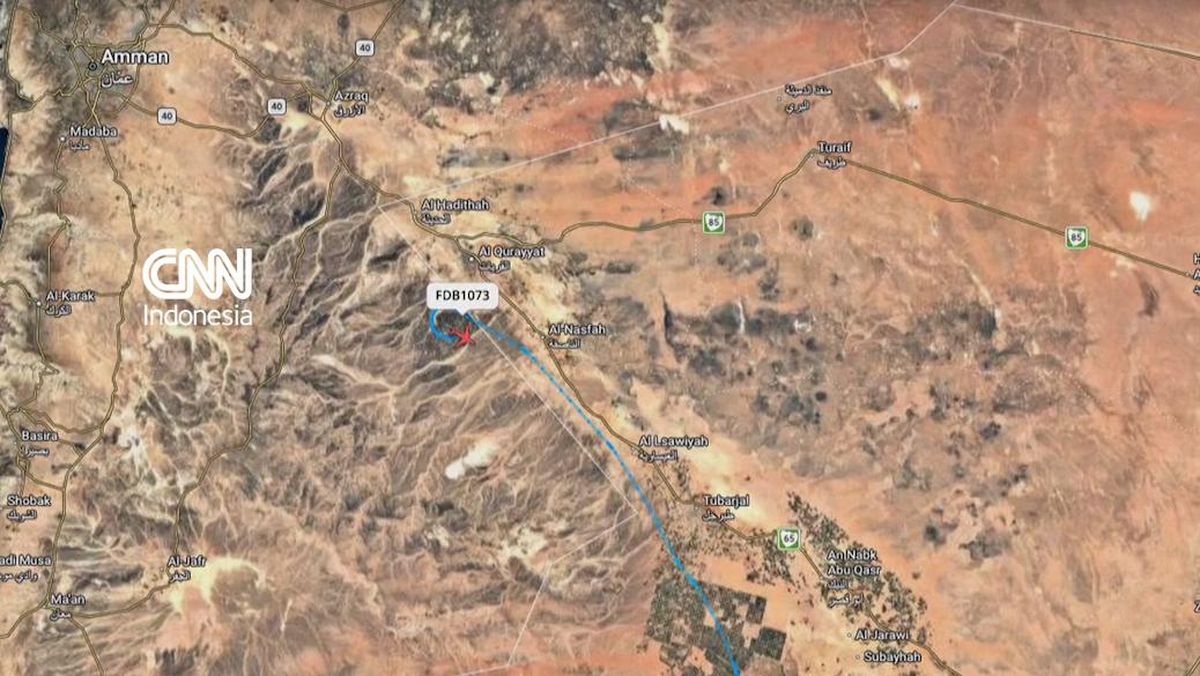
Approximately halfway through the scheduled duration, however, anomalous telemetry data began to transmit from the flight deck. According to aviation logs, the aircraft executed an uncharacteristic and abrupt alteration of its heading, turning south toward Saudi Arabian airspace. Simultaneously, the flight crew transmitted an emergency squawk code—specifically 7500, the international transponder code universally designated for unlawful interference or hijacking—followed swiftly by code 7700, indicating a general airborne emergency.
The activation of the transponder emergency codes immediately alerted regional air traffic control centers in the Middle East. Given the tense geopolitical climate surrounding flights transiting between the UAE and Israel, defense networks and civil aviation authorities momentarily treated the trajectory change as a potential security crisis. Air traffic controllers in Saudi Arabia established immediate communication with the aircraft, granting emergency landing clearance at the nearest available facility, which was Tabuk Regional Airport. The wide-bodied aircraft touched down safely under the supervision of local emergency services, and security personnel immediately boarded the aircraft to secure the cabin and flight deck.
Investigation into Cockpit Dynamics and Crew Altercation
Initial reports emerging from airline investigators and regional aviation authorities confirmed that the emergency was not the result of an external security breach, technical malfunction, or mechanical failure, but rather an internal breakdown in communication and professional conduct between the captain and the first officer.
According to preliminary internal findings from Flydubai, a verbal disagreement regarding flight operations escalated rapidly into a physical confrontation within the confines of the cockpit. Aviation experts note that modern commercial aircraft cockpits are designed for two-person operation under strict Standard Operating Procedures (SOPs). Both pilots are required to maintain professional decorum and adhere to a strict division of duties, known as Pilot Flying (PF) and Pilot Monitoring (PM). When a personal or operational dispute disrupts this dynamic, the safety of the entire aircraft is immediately compromised.

In this instance, the escalation reportedly became severe enough to interfere with the safe operation of the aircraft, prompting the activation of emergency protocols and forcing the diversion to the nearest sovereign airfield. Aviation psychologists and safety analysts emphasize that cockpit altercations, while statistically extremely rare, represent a severe threat to flight safety, as they directly undermine the redundancy and cross-checking mechanisms intended to prevent human error.
Airline and Regulatory Responses
Flydubai issued a formal statement acknowledging the diversion of the flight to Tabuk, citing an "operational incident involving the flight crew." The airline expressed regret for the disruption and anxiety experienced by the passengers on board, emphasizing that the safety of travelers and crew remains the carrier’s paramount priority.
"We are cooperating fully with the General Civil Aviation Authority (GCAA) of the UAE and the relevant authorities in Saudi Arabia to investigate the circumstances surrounding this incident," a Flydubai spokesperson stated. "The crew members involved have been immediately relieved of their duties pending a comprehensive disciplinary and medical inquiry."
International aviation bodies, including the International Civil Aviation Organization (ICAO), have previously underscored the critical importance of psychological fitness and peer-support programs within commercial airlines. The incident in Saudi Arabia is expected to prompt renewed scrutiny from regulators regarding pilot screening processes, stress management protocols, and the enforcement of strict cockpit behavioral standards.

Diplomatic and Regional Implications
The choice of Tabuk, Saudi Arabia, as the diversion airport also carried notable logistical and diplomatic dimensions. Although direct diplomatic relations and commercial flight corridors between the UAE and Israel expanded significantly following the historic normalization agreements in 2020, airspace access across the region remains complex and subject to strict national sovereignty rules.
Saudi Arabia’s prompt authorization of the emergency landing and its subsequent cooperation in handling the situation demonstrated adherence to international aviation treaties, specifically the Chicago Convention, which mandates that states render assistance to aircraft in distress regardless of geopolitical context. Local authorities in Tabuk provided temporary terminal accommodations for the 150 stranded passengers, offering food, water, and medical evaluations while Flydubai arranged a replacement flight and a fresh crew to transport the travelers safely to their final destination in Tel Aviv.
Broader Industry Impact and Safety Analysis
The incident has reignited global discussions concerning mental health, fatigue management, and interpersonal conflict resolution in commercial aviation. Long-haul and regional flight deck crews operate under high-stress environments characterized by irregular sleep schedules, time zone shifts, and intense operational demands. While most airlines maintain robust training modules to manage crew resource management (CRM), experts argue that more proactive measures are necessary to identify early warning signs of interpersonal friction between paired pilots before minor disagreements escalate into physical altercations.
As the formal investigation continues, the aviation community awaits the final findings of the joint inquiry by UAE and Saudi authorities. The incident serves as a stark reminder that despite advanced avionics and redundant safety systems, human factors remain one of the most critical variables in commercial aviation safety, necessitating constant vigilance, rigorous oversight, and uncompromised professionalism on the flight deck.
Related posts: