President Joko Widodo Visits Sikka Regency in East Nusa Tenggara to Meet Earthquake Survivors and Assess Recovery Efforts

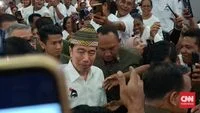
Jakarta — President Joko Widodo undertook a strategic working visit to East Nusa Tenggara (NTT) province, arriving in Sikka Regency to directly inspect post-disaster recovery efforts and engage with local communities affected by a significant seismic event that struck the region in mid-August. The presidential aircraft touched down at approximately 13:00 Central Indonesia Time (WITA), marking another regional outreach effort focused on disaster relief, infrastructure oversight, and direct civic engagement.
The visit comes in the wake of a notable earthquake that rattled various parts of NTT on August 15, leaving infrastructural damage and psychological distress among residents in several regencies, particularly Sikka. Local government officials confirmed the itinerary, emphasizing the administration’s commitment to monitoring reconstruction and rehabilitation processes at the grassroots level.
Chronology of the Sikka Post-Disaster Engagement
The sequence of events surrounding President Joko Widodo’s arrival in NTT highlights a structured approach to crisis response and empathetic governance. Following the mid-August earthquake, local disaster management agencies, in coordination with national bodies such as the National Agency for Disaster Countermeasure (BNPB) and regional administrations, initiated emergency response protocols, search-and-rescue operations, and damage assessments.
Upon landing at the designated arrival time, the President’s delegation immediately transitioned to coordination meetings with local government leaders, disaster response task forces, and community representatives. The primary agenda centered on evaluating the progress of damaged residential structures, public facilities, and houses of worship. Furthermore, the schedule included direct dialogue sessions with displaced families and local residents to distribute humanitarian aid, assess living conditions in temporary shelters, and listen to grievances regarding bureaucratic hurdles in accessing calamity assistance funds.
While initial official rosters regarding the President’s exact accompanying entourage remained fluid upon arrival, regional visits of this magnitude typically involve key ministers overseeing social welfare, public works, and disaster mitigation, alongside military and police leadership responsible for maintaining regional security and logistics distribution.
Contextualizing Regional Visits within the Broader National Itinerary
This journey to East Nusa Tenggara is part of a broader, highly active schedule of domestic travels undertaken by the Indonesian head of state in recent weeks. The executive branch has increasingly prioritized field inspections to bridge the gap between central policymaking and regional realities.
Just days prior to the NTT deployment, President Joko Widodo traveled to Cirebon, West Java, on Saturday, September 12. During that visit, the President attended a traditional ceremony—specifically, the khitanan (circumcision) celebration for the son of KH Muhammad Busthomi, the custodian of the Al-Busthomi Islamic Boarding School. The event drew significant public attention, accompanied by local figures, regional leadership from the Indonesian Solidarity Party (PSI) in West Java, and the President’s youngest son and party chairman, Kaesang Pangarep. The Cirebon trip underscored the administration’s continuous engagement with religious leaders, traditional communities, and the broader public in Java.
In contrast, the trip to East Nusa Tenggara emphasizes a starkly different facet of presidential duties: disaster diplomacy and executive accountability in disaster-prone regions. NTT holds strategic geographical importance due to its vulnerability to natural disasters, including earthquakes, tectonic shifts, and extreme weather patterns associated with the archipelago’s position along the Pacific Ring of Fire.
Historical Precedents and Recent Engagements in East Nusa Tenggara
President Joko Widodo’s presence in East Nusa Tenggara is not an isolated occurrence for the year. Earlier in the architectural calendar, the President spent a substantive three-day period in the province, anchoring his itinerary primarily in Kupang from July 31 through August 2.
During that extensive mid-year visit, the presidential agenda combined economic development oversight with political and cultural engagements. Key activities included inspecting seaweed farming initiatives and interacting directly with local cultivators at Oesina Beach in Kupang Regency. Seaweed farming represents a vital economic pillar for coastal communities in NTT, contributing significantly to the regional maritime economy and export portfolios.
Additionally, the Kupang visit incorporated attendance at the Regional Coordination Meeting (Rakorda) of the Indonesian Solidarity Party, participation in a public fitness walk during the city’s Car Free Day (CFD), and immersion in a vibrant cultural carnival showcasing the diverse heritage of the province’s distinct ethnic groups.
Beyond NTT, the executive itinerary has frequently placed the President in the national spotlight through varied regional engagements. For instance, a previous official trip to Lampung involved participation in a traditional indigenous ceremony that sparked nationwide cultural discussions and media coverage, notably regarding specific ritual practices such as stepping on a buffalo head—an event that illuminated the complex interplay between traditional customs and modern media discourse in Indonesia.
Socio-Economic and Political Implications of Regional Outreach
The continuous cadence of presidential field visits carries multifaceted implications for governance, public administration, and national socio-political dynamics.
From a governance perspective, direct presidential oversight in disaster zones such as Sikka Regency accelerates bureaucratic responses. When the head of state visits a disaster-stricken region, local administrative bottlenecks frequently experience expedited resolutions. Funds allocation for rebuilding homes, repairing damaged schools, and restoring clean water infrastructure often sees heightened urgency and priority from relevant ministries. For the residents of Sikka, the presidential visit serves as both a psychological reassurance that the central government has not forgotten their plight and a practical catalyst for more efficient disbursement of calamity relief funds.
Economically, regions like East Nusa Tenggara benefit from sustained high-level attention directed toward their primary economic drivers, such as agriculture, fisheries, maritime resources, and tourism. By highlighting local industries—exemplified by the previous inspections of seaweed cultivation in Kupang—the administration draws national and potential foreign investor interest to peripheral economies that historically lag behind the major industrial hubs of Java and Sumatra.
Politically, these frequent domestic deployments maintain a high level of public visibility and connectivity. Engaging with diverse segments of society—ranging from Islamic boarding school communities in West Java and indigenous groups in Lampung to disaster survivors in East Nusa Tenggara and urban participants in Car Free Day events—consolidates broad-based public relations. These engagements allow the executive branch to project an image of accessibility, empathy, and hands-on leadership.
However, such extensive travel schedules also prompt operational and logistical considerations. Coordinating high-level security, managing presidential motorcades, and temporarily shifting local administrative focus to accommodate presidential visits require meticulous planning by regional apparatuses to ensure that regular public services are not disrupted.
Outlook on Post-Disaster Reconstruction in Sikka
As the recovery phase in Sikka Regency progresses, the long-term success of the intervention will depend heavily on the sustained execution of infrastructure rehabilitation projects and economic revitalization programs. The aftermath of the August 15 earthquake tested the resilience of local infrastructure, prompting renewed calls for disaster-resilient construction standards across seismic zones in eastern Indonesia.
Local authorities, backed by national directives resulting from this presidential visit, are expected to fast-track the reconstruction of structurally compromised houses and public amenities. Furthermore, mental health support and economic stimulus packages for small-scale merchants and farmers whose livelihoods were disrupted by the tremor remain critical components of the comprehensive recovery matrix.
Ultimately, President Joko Widodo’s visit to Sikka Regency encapsulates the ongoing administrative strategy of combining empathetic crisis management with active regional diplomacy, ensuring that peripheral regions receive direct executive attention during critical junctures of recovery and development.
Related posts: