The pursuit of optimal child health and nutritional equity in Indonesia has entered a granular phase of logistical experimentation, moving beyond the mere conceptualization of national feeding initiatives to address the complex mechanics of daily food delivery and consumption. In the city of Mataram, located within the province of West Nusa Tenggara, recent field trials evaluating the distribution methodology of the national nutrition agenda have yielded compelling insights into how food is consumed, managed, and perceived within educational institutions. M Rizky Prasetyo, the Regional Coordinator for the National Nutrition Agency (Badan Gizi Nasional or BGN) in Mataram City, announced that a specialized trial implementing a buffet or self-service distribution system for the Makan Bergizi (MBG) program demonstrated high efficacy in drastically reducing food waste while simultaneously fostering disciplined social habits among primary school students.
Conducted between October 19 and October 21, 2026, at SD Al Iqro Mataram, the trial introduced a departure from traditional pre-packaged lunch boxes. Instead of receiving fixed, individual containers distributed uniformly across desks, the pilot project engaged 64 sixth-grade students and three supervising teachers in a self-service arrangement. According to evaluation data compiled immediately following the three-day exercise, the buffet model successfully transformed the dynamic between the recipient and the meal, translating into measurable environmental, nutritional, and educational benefits that regional coordinators hope will inform broader policy frameworks moving forward.
Background Context of the National Nutrition Agenda and School Feeding Framework
The implementation of the MBG program represents a cornerstone of modern public policy in Indonesia, designed to combat stunting, improve cognitive development among school-aged children, and stimulate local agricultural economies through sustained nutritional intervention. However, as nationwide rollouts scale up across diverse geographic terrains—ranging from dense urban centers to remote island communities—logistical challenges have consistently emerged. Chief among these challenges is the issue of plate waste, where pre-portioned meals often fail to align with individual appetites, resulting in discarded food, nutritional deficits, and operational inefficiencies.
In response to these localized hurdles, regional bodies under the BGN have been tasked with testing adaptive distribution strategies. The choice of Mataram City as a testing ground for the buffet system reflects an intentional effort to assess whether student-managed portioning can mitigate the rigid limitations of conventional packaging. SD Al Iqro Mataram was selected for this pilot due to its structured classroom environment and receptive administrative framework, providing a controlled setting to measure behavioral and operational outcomes over a focused seventy-two-hour window.
Chronology and Execution of the Mataram Pilot Project
The trial commenced on the morning of October 19, 2026, with logistical preparations managed jointly by BGN regional personnel and the administrative staff of SD Al Iqro Mataram. Unlike the standard protocol where meals arrive in sealed, single-use compartments, the buffet setup required the establishment of a centralized, hygienic serving station within or immediately adjacent to the participating sixth-grade classroom.
Day One: Introduction and Behavioral Adaptation
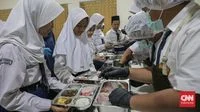
On the first day of the trial, students were introduced to the self-service protocol. Supervisors guided the children through the steps of handwashing, queuing in an orderly fashion, and utilizing serving utensils to transfer food from heated communal vessels onto their individual plates. The initial phase focused heavily on adherence to health protocols and behavioral management, ensuring that the transition from passive recipients to active selectors did not disrupt the classroom routine. Observers noted an immediate curiosity among the students, who examined the various components of the balanced meal—comprising proteins, carbohydrates, vegetables, and fruit—prior to making their selections.
Day Two: Optimization and Flow Management
By the second day, October 20, the operational flow of the serving line had significantly streamlined. Teachers reported a marked reduction in congestion around the buffet stations as students grew accustomed to the spatial layout and the expectations of self-regulation. The culinary staff maintained the temperature of the dishes through insulated holding equipment, ensuring that hot items remained palatable throughout the staggered dining shifts. This operational adjustment proved critical in sustaining student interest in the food items, particularly for vegetable-based dishes that traditionally suffer from high rejection rates when served lukewarm or cold.
Day Three: Comprehensive Evaluation and Finalization
The final day of the trial, October 21, involved rigorous data collection regarding consumption rates, residual food weight, and qualitative feedback from both students and the three supervising educators. Weighing protocols were established to measure any leftover food remaining on plates after the dining period concluded. The synthesis of these metrics formed the basis of the comprehensive evaluation report submitted upward through the bureaucratic hierarchy of the BGN.
Key Findings and Analytical Insights from the Evaluation
The field evaluation highlighted four primary pillars of success associated with the self-service buffet distribution model. These findings offer a multifaceted perspective on how structural changes in food delivery can influence behavioral and nutritional outcomes in school environments.
Achieving Near-Zero Food Waste Through Personal Autonomy
The most striking metric derived from the SD Al Iqro trial was the near-total elimination of plate waste, categorized in operational terms as a zero-waste outcome. In traditional pre-packaged distribution systems, uniform portioning frequently disregards the differential caloric needs and physical appetites of growing children, leading to instances where smaller students or those with lower immediate appetites leave substantial portions uneaten. By allowing students to exercise personal autonomy in determining their initial scoop sizes—within structurally supervised nutritional boundaries—the buffet model ensured that children only took what they intended to consume. Consequently, the volume of discarded organic waste dropped to negligible levels, maximizing the resource efficiency of the public funds allocated for the ingredients.
Palatability and Sensory Appeal of Freshly Served Food
Temperature and presentation play profound roles in children’s culinary acceptance. In standard distribution models, food must often be prepared hours in advance and sealed in containers that trap moisture, frequently altering textures and lowering temperatures by the time consumption occurs. The buffet system allowed the food to be kept in temperature-controlled chafing dishes and served immediately prior to eating. According to Prasetyo, this maintenance of freshness significantly enhanced the sensory appeal of the meals, driving higher voluntary consumption rates of micronutrient-dense foods that might otherwise be bypassed.
Pedagogical Integration of Public Health and Social Discipline
Beyond nutritional intake, the self-service format served as an active pedagogical instrument for reinforcing Behavioral and Health Hygiene Practices (Perilaku Hidup Bersih dan Sehat, or PHBS). The physical act of queuing, maintaining personal space, using serving utensils correctly, and executing mandatory hand hygiene before interacting with the food station transformed the dining hour into a practical lesson in civic responsibility and health literacy. Educators noted that the self-policing nature of the queue fostered a cooperative environment where students encouraged one another to maintain orderly conduct.
Visual Engagement and Nutritional Education
The spatial arrangement of the buffet was designed to highlight the principles of a balanced diet. By displaying components in clean, organized, and visually appealing arrays, the layout acted as an educational display. Children were able to visualize the composition of a healthy plate, observing the direct relationship between vibrant food variety and nutritional balance. This visual transparency stimulated discussions among the students regarding the benefits of specific food groups, enhancing the overall educational value of the midday meal initiative.
Official Responses, Bureaucratic Reporting, and Future Implications
The positive outcomes recorded in Mataram City have been formally documented and transmitted through administrative channels to the central leadership of the National Nutrition Agency. While local coordinators like Prasetyo have advocated for the broader adoption of the buffet methodology, the ultimate authority regarding the institutionalization of this distribution system rests with executive decision-makers at the national level.
"The positive evaluation results from SD Iqra are expected to serve as a reference and benchmark for strengthening the governance and distribution patterns of the MBG program in Mataram City and its surrounding areas moving forward," Prasetyo stated. He emphasized that regional offices remain poised to implement any overarching policy directives issued by their superiors, acting as an operational bridge between national strategy and localized execution.
The implications of this trial extend beyond the immediate municipal boundaries of Mataram. As Indonesia continues to scale its school feeding initiatives to cover tens of millions of students nationwide, logistical flexibility will be paramount. While pre-packaged boxes offer advantages in rapid, long-distance transport to isolated rural outposts, urban and semi-urban schools with adequate infrastructural capacity may find that buffet-style distribution models offer superior outcomes in terms of waste reduction, nutritional absorption, and behavioral development.
As policymakers review the Mataram findings, the debate over centralized school meal logistics will likely incorporate a hybrid perspective—one that balances the logistical speed of pre-packaging with the qualitative and ecological efficiencies of self-service governance. For the students and teachers at SD Al Iqro Mataram, however, the three-day trial has already demonstrated that how food is served is just as important as the nutrients it contains.
Related posts: