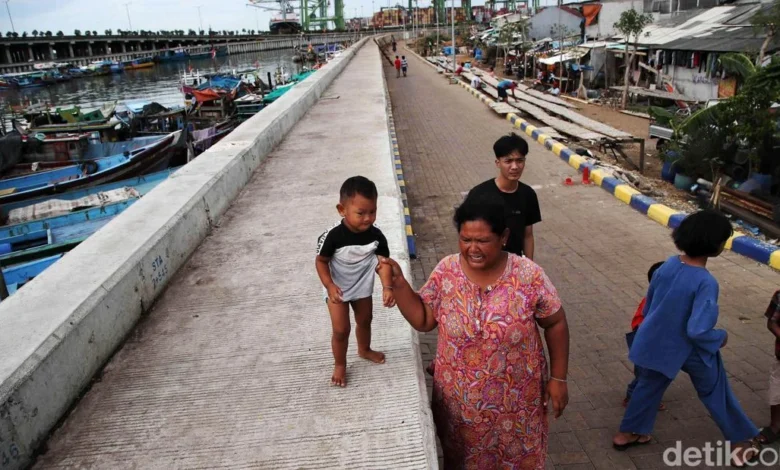
The Indonesian government is rapidly advancing its strategic plans for the colossal Giant Sea Wall project along the northern coast of Java, with intentions to commence construction in the near future. This ambitious undertaking, designed to protect critical infrastructure and densely populated areas, was a central topic of discussion during a high-level meeting chaired by President Prabowo Subianto at the Presidential Palace in Central Jakarta on Monday, April 20, 2026. The urgency surrounding the project underscores the nation’s proactive stance against the escalating threats of climate change and environmental degradation.
Minister of Higher Education, Science, and Technology (Mendiktisaintek), Brian Yuliarto, a key participant in the limited cabinet meeting, emphasized the paramount importance of the Giant Sea Wall. He articulated that the project is strategically vital, capable of shielding approximately 60% of Java’s northern industrial zones from the existential threat posed by rising sea levels and the compounding challenge of land subsidence. Beyond industrial protection, Minister Yuliarto highlighted the profound human element, stating that the initiative is poised to safeguard the livelihoods and homes of over 30 million residents in the vulnerable coastal regions. "The Giant Sea Wall is strategic in saving 60% of industrial areas and more than 30 million residents. If this program proceeds, it will at least save these two crucial aspects," Yuliarto remarked following the meeting.
The Imperative: Why Northern Java Needs the Sea Wall
Northern Java stands as Indonesia’s economic powerhouse, home to a vast network of manufacturing, logistics, and port facilities that contribute significantly to the national GDP. However, this critical region faces a confluence of severe environmental challenges, making it one of the most vulnerable coastal areas globally. Decades of intensive groundwater extraction for urban and industrial use have led to alarming rates of land subsidence, with some areas sinking by as much as 10-20 centimeters annually. This geological phenomenon, coupled with the global average sea-level rise of approximately 3-4 millimeters per year, creates a catastrophic scenario where coastal communities and vital infrastructure are increasingly exposed to tidal flooding, storm surges, and permanent inundation.
Historical data paints a grim picture. Coastal cities like Semarang, Demak, and parts of Jakarta have experienced chronic flooding, disrupting daily life, damaging property, and incurring substantial economic losses. Estimates suggest that without intervention, significant portions of these areas, including industrial estates and agricultural land, could be submerged by mid-century. The economic value of assets at risk runs into the hundreds of billions of dollars, encompassing factories, power plants, transportation networks, and residential areas. The human cost, in terms of displacement, health impacts, and lost livelihoods, is immeasurable. The Giant Sea Wall project, therefore, is not merely an infrastructure undertaking but a critical national security and economic stability initiative.
Project Scope and Vision: A Multi-faceted Defense
The concept of the Giant Sea Wall extends beyond a simple barrier against water. While precise details are still under refinement, the vision for the project is multi-faceted, encompassing coastal defense, land reclamation, urban development, and infrastructure integration. It is envisioned as a comprehensive system that includes not only primary sea walls but also secondary dikes, pumping stations, water management systems, and potentially new urban areas built on reclaimed land. Such an integrated approach aims to not only mitigate immediate flood risks but also create long-term solutions for sustainable coastal development and economic growth.
The project is expected to be implemented in phases, with initial focus on the most critically affected areas. It will involve massive civil engineering works, requiring significant investment in materials, technology, and skilled labor. The scale of the project suggests it will be one of the largest infrastructure developments in Southeast Asia, akin to similar mega-projects seen in the Netherlands, South Korea, and parts of Japan.
Official Momentum and Presidential Backing
President Prabowo Subianto’s direct engagement in the planning discussions signals a strong political will to expedite the project. The Monday meeting served to review the progress of preliminary studies and consolidate strategies for moving forward. The President’s presence underscores the project’s classification as a National Strategic Project (PSN), granting it priority status and streamlined bureaucratic processes.
Minister Yuliarto’s robust advocacy for the project during the briefing highlighted its dual benefits: safeguarding the national economy by protecting industrial output and ensuring the well-being of a substantial portion of the Indonesian population. His figures—60% of industrial zones and over 30 million residents—provide a stark measure of the colossal stakes involved and the transformative impact the sea wall is projected to have.
Leveraging Domestic Expertise and Innovation
A cornerstone of the Giant Sea Wall’s development strategy, as articulated by Minister Yuliarto, is the extensive involvement of Indonesian academic and research institutions. This commitment to domestic expertise aims to foster national technological independence and ensure solutions are tailored to local conditions. Yuliarto specifically cited the successful application of local university research in the construction of the sea wall integrated into the Demak-Semarang Toll Road project as a precedent. This earlier project demonstrated the viability of leveraging indigenous scientific capabilities for complex coastal engineering challenges.
In a concrete step towards this, Minister Yuliarto announced that his ministry would host a meeting next week with leading Indonesian professors specializing in coastal engineering, land reclamation, and sea wall construction. "Yes, so next week we will immediately invite several professors who already have expertise and have been involved in several cases for various projects, such as land creation, reclamation, and the like. We will invite them to meet with the Head of the Sea Wall Authority in Indonesia," Yuliarto elaborated. This collaborative approach seeks to harness the collective knowledge of the nation’s brightest minds, ensuring innovative and sustainable engineering solutions are integrated into the project’s design. The engagement of these experts will be crucial in addressing complex technical challenges, including sediment management, environmental impact mitigation, and structural integrity in dynamic marine environments.
Progress and Procedural Deliberations
Didit Herdiawan Ashaf, Head of the North Java Coastal Management Authority (Badan Otorita Pengelola Pantai Utara Jawa – Pantura), who also attended the presidential meeting, provided an update on the project’s current status. He clarified that the discussions primarily revolved around the ongoing planning phases, emphasizing that no definitive new decisions regarding immediate construction had been made during the session. "It is still in the planning stage, and we will delve deeper into activities related to construction," Didit stated after the meeting.
When pressed for a timeline for construction commencement, Didit remained cautious, indicating that while acceleration is a priority, a precise schedule has yet to be finalized. "The target for construction, well, it’s not yet determined, but at least it can be accelerated," he explained. He further elaborated that the project’s timeline is intricately linked to the availability and utilization of domestic resources. "The plan from the calculations is still being timed because it relates to the resources available in Indonesia, which we will maximize. So, one of the main things is that we can utilize environmental aspects, so we absorb things related to waste," Didit added. This suggests a potential strategy of incorporating sustainable practices, such as utilizing industrial waste or dredged materials for reclamation, which could also influence the project’s phasing and execution. The emphasis on resource optimization also hints at potential cost-saving measures and a desire to minimize reliance on foreign materials or expertise where domestic alternatives exist.
Broader Economic Implications and Opportunities
The Giant Sea Wall project carries immense economic implications, extending far beyond simple flood protection. The successful implementation of the wall is expected to unlock significant economic opportunities:
- Protection of Economic Assets: By securing industrial zones, ports, and critical infrastructure, the project safeguards billions in annual economic output and prevents future losses from climate-induced disasters.
- Stimulus for Growth: The construction phase itself will generate thousands of jobs, from engineering and construction to logistics and support services. It will also spur demand for local materials and technologies.
- New Economic Zones: The potential for land reclamation could create new areas for urban expansion, industrial parks, and commercial development, further stimulating economic growth.
- Enhanced Investment Confidence: A secure northern coastline will boost investor confidence, both domestic and foreign, in establishing and expanding businesses in the region.
- Improved Logistics and Trade: Protected ports and transportation networks will ensure the smooth flow of goods, enhancing Indonesia’s competitiveness in regional and global trade.
However, these opportunities are intertwined with significant financial challenges. The estimated cost of a project of this scale could run into tens of billions of US dollars, potentially requiring a blend of state budget allocations, public-private partnerships (PPPs), and international financing from multilateral development banks such as the World Bank or the Asian Development Bank.
Environmental and Social Considerations: A Dual Challenge
While the economic and safety benefits are clear, the Giant Sea Wall project also presents formidable environmental and social challenges that require careful and comprehensive mitigation strategies.
- Ecological Impact: The construction of a massive sea wall and potential reclamation could profoundly alter coastal ecosystems. Mangrove forests, vital natural barriers against erosion and nurseries for marine life, could be destroyed or severely impacted. Sedimentation patterns, water quality, and marine biodiversity, particularly fisheries, are at risk. Robust environmental impact assessments (EIAs) and strategic environmental assessments (SEAs) are crucial to identify, predict, and mitigate these impacts.
- Social Impact and Displacement: Large-scale infrastructure projects often lead to the displacement of local communities, particularly fishing villages and coastal farmers. Ensuring fair compensation, adequate resettlement, and the protection of traditional livelihoods will be paramount. Transparent public consultation processes are essential to gain community buy-in and address concerns proactively.
- Water Management: The wall could affect the natural flow of rivers into the sea, potentially exacerbating issues like inland flooding or altering freshwater-saltwater interfaces, impacting agriculture. Integrated water resource management plans will be necessary.
- Long-term Sustainability: The project’s long-term effectiveness depends on adaptive management, considering future climate change projections, maintenance requirements, and potential unforeseen ecological shifts.
Environmental advocacy groups and local community representatives, though not explicitly quoted in the original article, would undoubtedly raise these concerns, calling for stringent environmental safeguards, transparent decision-making, and inclusive development processes. Their voices would underscore the need for a holistic approach that balances economic development with ecological preservation and social equity.
Financing the Megaproject: A National Endeavor
The financial scale of the Giant Sea Wall project necessitates a sophisticated and diversified funding strategy. Given its classification as a National Strategic Project, significant initial capital will likely be drawn from the state budget. However, the sheer magnitude of the investment required points towards a strong reliance on Public-Private Partnerships (PPPs), where private sector entities contribute capital, expertise, and management in exchange for revenue streams or concessions.
Furthermore, international financial institutions and bilateral partners are likely to be approached for loans, grants, and technical assistance. Organizations like the World Bank, Asian Development Bank (ADB), and possibly climate finance mechanisms could play a pivotal role. The government’s emphasis on utilizing domestic resources and waste management could also be a strategy to optimize costs and enhance the project’s sustainability profile, making it more attractive to green financing initiatives. Transparent financial planning and robust governance frameworks will be critical to ensure accountability and prevent cost overruns, which are common in projects of this complexity and scale.
Lessons from Global Precedents and Future Outlook
Indonesia can draw valuable lessons from similar large-scale coastal defense projects globally. The Netherlands, with its Delta Works, offers a masterclass in comprehensive flood protection and integrated water management. South Korea’s Saemangeum Seawall, while controversial for its environmental impact, demonstrates immense engineering capability. Japan’s extensive network of seawalls provides insights into seismic resilience and adaptive design. Learning from both the successes and failures of these precedents can help Indonesia navigate the technical, environmental, and social complexities of its own Giant Sea Wall.
The path ahead for the Giant Sea Wall is undoubtedly complex, fraught with engineering challenges, financial hurdles, and critical environmental and social considerations. However, the unwavering commitment from the highest echelons of government, coupled with a strategy to harness domestic scientific expertise, signals a determined effort to protect Indonesia’s vital northern coastline. As planning intensifies and construction looms, the project stands as a testament to the nation’s resolve to safeguard its future against the formidable forces of a changing climate and a sinking landscape, promising both immense benefits and significant challenges in its ambitious realization.
Related posts: