Indonesia’s Edible Bird’s Nest Industry: A Deep Dive into its Historical Roots, Economic Dominance, and Future Prospects

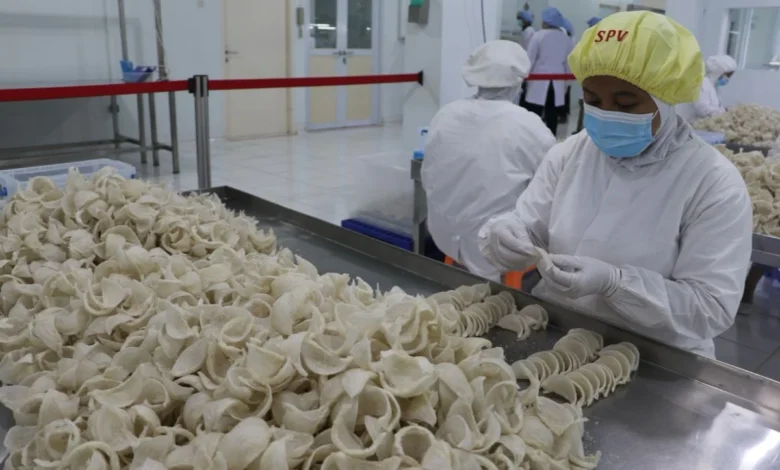
Jakarta (ANTARA) – Edible bird’s nests (EBN), primarily derived from the saliva of swiftlets, have long been recognized as one of Indonesia’s most valuable and strategic commodities. What began as a traditional food staple has evolved into a global export powerhouse, firmly establishing Indonesia as the world’s largest producer. The archipelago currently supplies an estimated 80 percent of the global demand for EBN, with a significant portion destined for the discerning Chinese market, making it an indispensable component of the national economy. This extensive overview delves into the rich history of EBN, tracing its journey from ancient discoveries to its current status as a premium Indonesian export, drawing insights from various historical and industry sources.
The Ancient Genesis: Discovery and Early Adoption
While China has been the primary importer and consumer of edible bird’s nests for centuries, historical evidence firmly places the origin of this coveted "Caviar of the East" in Southeast Asia, a region abundant in the natural habitats of swiftlets. Research points to findings by the Malaccan historian Lin Biao, who, in the 17th century, documented the earliest known accounts of EBN utilization. These records credit Admiral Zheng He, the renowned explorer of China’s Ming Dynasty, with its initial discovery.
During a perilous voyage in the 15th century (specifically between 1405 and 1433, across seven expeditions), Admiral Zheng He’s formidable armada encountered a violent storm near the Malay Peninsula. Forced to seek refuge, the crew found shelter in the precarious coastal caves. Faced with dwindling food supplies and the grim prospect of starvation, they resorted to consuming the gelatinous nests clinging to the cave walls. To their astonishment, the consumption of these nests not only provided sustenance but also reportedly led to a remarkable recovery in their physical condition and overall well-being. This fortuitous discovery proved pivotal.
Upon his return to China, Zheng He presented this novel food source to Emperor Chengzu of the Ming Dynasty. The unique texture, delicate flavor, and perceived health benefits quickly captivated the imperial court and the broader aristocracy. From this point, edible bird’s nests rapidly ascended to become one of East Asia’s most luxurious culinary ingredients, eventually expanding beyond regional delicacies to become a highly prized and economically significant international commodity. The demand for EBN became a driving force for early maritime trade routes between Southeast Asia and China, cementing its place in the annals of global commerce.
Integration into Indonesian Culture and Traditional Harvesting
In Indonesia, the lore surrounding edible bird’s nests is woven into the fabric of local folklore and traditional practices. One of the most enduring tales recounts the story of Kiai Surti, an emissary from the Mataram Kartasura Kingdom. According to legend, Kiai Surti received a divine revelation from Dewi Suryawati, guiding him to Gua Karang Bolong (Karang Bolong Cave) to find a cure for the ailing queen. The miraculous remedy he discovered was none other than the coveted bird’s nest. This narrative highlights the early recognition of EBN’s purported medicinal properties within Indonesian culture.
The process of harvesting edible bird’s nests in those early days was an extraordinarily perilous undertaking, demanding exceptional skill, courage, and respect for nature. Swiftlets typically build their nests in the highest, most inaccessible crevices of coastal caves, often hundreds of feet above treacherous waters or jagged rocks. Harvesters, known as pemanjat or penjarah sarang, would scale sheer cave walls using rudimentary bamboo ladders, ropes, and their bare hands. This dangerous pursuit was not merely an economic activity but was deeply imbued with spiritual and cultural significance.
Traditional harvesting was frequently preceded by elaborate adat rituals—ancient customs performed as a plea for safety and a bountiful harvest. In the communities along Java’s southern coast, particularly around Karang Bolong, a traditional wayang kulit (shadow puppet play) performance was an essential precursor to the harvest season. A unique and crucial stipulation of these performances was the absolute prohibition of any scene depicting a character’s demise. This belief stemmed from the conviction that such an occurrence would portend ill fortune and endanger the lives of the harvesters. These deeply ingrained traditions underscore the profound cultural connection between coastal communities and this precious commodity, illustrating a symbiotic relationship between humans, nature, and ancestral beliefs.
The Evolution into a Strategic Export Commodity
The formalization of edible bird’s nest trade from the Indonesian archipelago dates back to the 15th century, with records indicating its presence in the markets frequented by small-scale farmers in East Java and East Kalimantan. By the 17th century, merchants from the Ming Dynasty were actively engaged in sourcing and trading bird’s nests from various regions across the Nusantara. This enduring commercial relationship, spanning centuries, forged a deep and lasting bond between Indonesia and China within the EBN industry. The consistent demand from China propelled the industry’s growth, transforming it from a localized trade into a burgeoning international market.
As global demand for EBN continued its upward trajectory, Indonesia’s role as a supplier steadily expanded, culminating in its current position as the world’s largest producer. The Balai Besar Karantina Hewan, Ikan, dan Tumbuhan (BBKHI, now part of Badan Karantina Indonesia or Barantin) DKI Jakarta, reported a substantial export volume of 894.86 tons of edible bird’s nests from January to September 2025. This figure, though potentially a forward projection or specific to the original article’s publication context, unmistakably underscores EBN’s status as a premier Indonesian export commodity. The value generated from these exports contributes significantly to Indonesia’s foreign exchange reserves and supports countless livelihoods across the country.
Beyond its traditional primary market in China, the export destinations for Indonesian EBN have diversified considerably. Key importing countries now include Hong Kong, Vietnam, Macau, Singapore, Malaysia, the United States, Japan, and South Korea. This market diversification helps mitigate risks associated with over-reliance on a single market and reflects the growing global appreciation for the unique properties of bird’s nests.
Health Benefits and Modern Scientific Inquiry
The enduring appeal of edible bird’s nests is not solely due to its historical luxury status but also its widely acclaimed health benefits. Traditionally, EBN is believed to possess potent medicinal properties, particularly in Traditional Chinese Medicine (TCM). It is often consumed to enhance overall vitality, boost the immune system, improve complexion, and support respiratory health.
Modern scientific research has begun to explore the biochemical composition of EBN to validate these traditional claims. Edible bird’s nests are primarily composed of glycoproteins, which are complex proteins with attached carbohydrate chains. They are also rich in various amino acids (including essential amino acids), mineral salts (such as calcium, iron, potassium, and magnesium), and other bioactive compounds.
Key components that have attracted scientific interest include:
- Epidermal Growth Factor (EGF)-like substances: These compounds are believed to promote cell growth, tissue repair, and regeneration, which could contribute to the anti-aging and skin-rejuvenating effects often attributed to EBN. Studies suggest a potential role in accelerating wound healing and improving skin elasticity.
- Sialic Acid (N-acetylneuraminic acid): This sugar derivative is abundant in EBN and is thought to play a crucial role in enhancing brain development in infants, improving cognitive function, and strengthening the immune system by acting as a receptor for certain pathogens, potentially blocking their entry into cells.
- Amino Acids: The high protein content and diverse amino acid profile support overall bodily functions, muscle repair, and immune system integrity. Specific amino acids like aspartic acid, threonine, serine, and glutamic acid are found in significant quantities.
- Antioxidants: Some research indicates the presence of antioxidants in EBN, which can help combat oxidative stress and protect cells from damage.
While more rigorous, large-scale human clinical trials are needed to conclusively prove all the traditional health claims, the growing body of scientific evidence supports many of the perceived benefits, particularly in areas of immunity, skin health (reducing wrinkles and dark spots, as mentioned in the original text), and cellular repair. This blend of traditional wisdom and modern scientific validation continues to fuel global demand.
Challenges and Opportunities in a Dynamic Global Market
Despite its strong position, Indonesia’s EBN industry faces a complex array of challenges alongside significant opportunities for growth and innovation.
Challenges:
- Sustainability and Environmental Impact: The shift from wild harvesting to swiftlet farming (creating specialized birdhouses) has mitigated some pressure on wild populations. However, concerns remain regarding the ecological impact of swiftlet houses, potential alteration of swiftlet migration patterns, and the need for sustainable farming practices to ensure the long-term health of swiftlet populations and their ecosystems.
- Quality Control and Food Safety: Maintaining consistent quality and ensuring food safety standards are paramount, especially for export markets like China, which impose stringent regulations. Issues such as adulteration, contamination (e.g., with nitrates, heavy metals), and inadequate hygiene during processing can damage market reputation and lead to trade barriers. Strict adherence to Good Manufacturing Practices (GMP) and Hazard Analysis and Critical Control Points (HACCP) is essential.
- Illegal Trade and Smuggling: The high value of EBN makes it a target for illegal harvesting and smuggling. This undermines legitimate businesses, deprives the government of tax revenues, and makes it difficult to control quality and origin.
- Price Volatility: Global market prices for EBN can fluctuate due to supply-demand dynamics, economic conditions in major importing countries, and geopolitical factors. This volatility can impact the income stability of farmers and exporters.
- Biosecurity: With the concentration of swiftlets in farming operations, there’s an inherent risk of disease outbreaks. Effective biosecurity measures are crucial to prevent the spread of avian diseases that could devastate swiftlet populations and disrupt the industry.
Opportunities:
- Value-Added Products: Moving beyond raw or minimally processed nests, there is immense potential to develop value-added products such as EBN beverages, supplements, cosmetics, and pharmaceuticals. This diversification can capture higher profit margins and appeal to a broader consumer base.
- Market Diversification and Expansion: While China remains dominant, exploring and expanding into emerging markets in other parts of Asia, Europe, and North America can reduce market concentration risks and open new revenue streams.
- Technological Advancement: Investing in research and development for improved swiftlet farming techniques (e.g., climate control, acoustic lure systems), advanced processing technologies (e.g., precise cleaning, lyophilization), and sophisticated authentication methods can enhance efficiency, quality, and consumer trust.
- Branding and Certification: Developing a strong "Brand Indonesia" for EBN, coupled with robust certification schemes (e.g., origin tracing, organic certification), can differentiate Indonesian products, command premium prices, and build consumer confidence in quality and ethical sourcing.
- Sustainable Practices: Promoting and incentivizing environmentally friendly and ethical swiftlet farming practices can appeal to conscious consumers and ensure the long-term viability of the industry. This includes research into swiftlet behavior and habitat preservation.
Governmental Role and Industry Collaboration
The Indonesian government, through various ministries and agencies, plays a crucial role in safeguarding and promoting the EBN industry. Agencies like the Badan Karantina Indonesia (Barantin, formerly BBKHI) are instrumental in implementing stringent quality control and phytosanitary regulations for exports. Their efforts ensure that Indonesian EBN meets the demanding international standards, particularly those of China, which require detailed traceability and compliance. Barantin’s investigative efforts, such as those related to export restrictions to China (as hinted in the original article’s linked content), underscore their active role in resolving trade issues and facilitating smooth international commerce.
The Ministry of Trade and the Ministry of Agriculture are also involved in formulating policies that support EBN farmers, encourage sustainable practices, and facilitate market access. This includes providing technical assistance, promoting investment, and negotiating trade agreements. Industry associations and cooperatives also play a vital role in unifying farmers, sharing best practices, and advocating for their interests. Collaboration between the government, industry players, and research institutions is key to addressing challenges and capitalizing on opportunities. This multi-stakeholder approach ensures a holistic strategy for the industry’s sustainable growth.
Conclusion: A Legacy of Luxury and Economic Power
The journey of edible bird’s nests in Indonesia is a compelling narrative that intertwines ancient maritime adventures, rich cultural traditions, and robust economic development. From the serendipitous discovery by Admiral Zheng He and its integration into Indonesian folklore through figures like Kiai Surti, EBN has transitioned from a perilous wild harvest to a sophisticated, modern industry. Indonesia’s unparalleled dominance, supplying 80 percent of the world’s EBN, underscores its strategic importance to the national economy, generating substantial export revenues and supporting a vast network of swiftlet farmers, processors, and traders.
The enduring global demand, driven by both traditional reverence and emerging scientific validation of its health benefits, ensures EBN’s continued prominence. As Indonesia navigates the complexities of global trade, sustainability concerns, and evolving consumer expectations, strategic investments in quality assurance, value-added innovation, and market diversification will be crucial. With its deep historical roots, significant economic impact, and a commitment to sustainable practices, the Indonesian edible bird’s nest industry stands as a testament to the nation’s unique natural resources and its capacity to transform a traditional commodity into a beacon of national pride and economic prowess on the international stage.
Related posts: