Banyuwangi Reaffirms Status as National Food Barn with Robust Rice Harvest Exceeding 160,000 Tons Amidst Strategic Agricultural Expansion

Jakarta, Indonesia – Banyuwangi Regency, long heralded as a critical pillar of Indonesia’s national food security, has once again demonstrated its formidable agricultural prowess with a substantial rice harvest for the first planting season (MT1) of January-March 2026. From a total cultivated area spanning 24,652 hectares, the "Bumi Blambangan" region successfully yielded an impressive 160,239 tons of rice, further solidifying its indispensable role in supplying the archipelago’s staple food. This significant output underscores Banyuwangi’s consistent contribution to national rice reserves, a crucial factor in maintaining food stability across Indonesia.
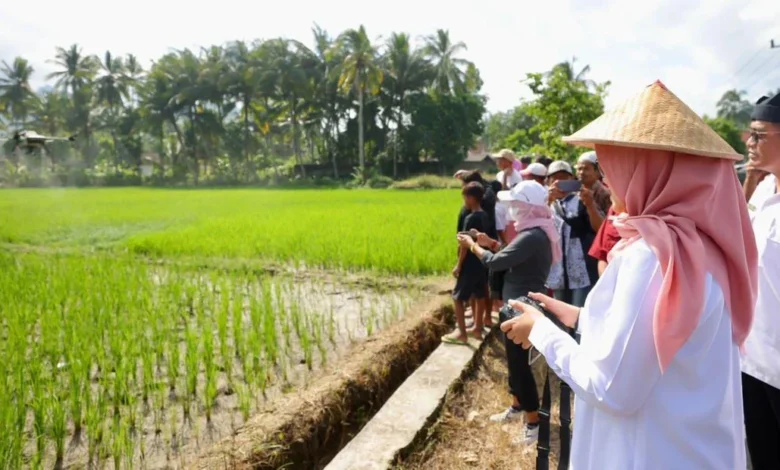
The successful harvest, which commenced in early 2026 and concluded by the end of March, was geographically widespread, encompassing nearly all districts within Banyuwangi. Among the many productive locales highlighted for their robust yields was Dusun Salamrejo, situated in Desa Sumbergondo, Kecamatan Glenmore, which served as a representative example of the widespread agricultural success experienced throughout the regency. This distributed harvest strategy not only maximizes output but also ensures broader community participation and economic benefit for local farming communities.
A Pillar of National Food Security
Banyuwangi’s consistent high-yield harvests are not merely a local success story but a strategic component of Indonesia’s broader national food security agenda. As one of the largest archipelagic nations, Indonesia faces perennial challenges in ensuring a stable and affordable food supply for its over 270 million people. Rice, being the primary staple, necessitates robust domestic production to mitigate reliance on imports and buffer against global commodity price fluctuations, which can have significant socio-economic impacts. The national government, through various ministries and agencies such as the Ministry of Agriculture and the National Food Agency (Badan Pangan Nasional), actively promotes and supports regions identified as "food barns" to enhance agricultural productivity and resilience. Banyuwangi, with its fertile plains, conducive climate, and dedicated farming communities, consistently features prominently in these national strategies.
Bupati Banyuwangi, Ipuk Fiestiandani, expressed profound gratitude and satisfaction with the harvest results. "Alhamdulillah, we are truly thankful that Banyuwangi continues to be recognized as one of the national food barns. The harvest results achieved by our farmers are, thankfully, excellent," Ipuk stated in a written release on Monday, April 20, 2026. Her remarks highlight the collective effort and the inherent productivity of the region’s agricultural sector, which continues to be a cornerstone of the local economy and a source of pride for its inhabitants. The Bupati’s emphasis on gratitude also reflects the profound connection between the community’s well-being and the success of its agricultural endeavors, a sentiment deeply rooted in Indonesian rural life.
Unpacking the 2026 Harvest: Key Figures and Regional Distribution
The detailed figures from the January-March 2026 harvest paint a clear picture of Banyuwangi’s agricultural efficiency. With 24,652 hectares dedicated to rice cultivation during this period, the total production of 160,239 tons translates to an impressive average productivity. Head of the Banyuwangi Agriculture and Food Agency, Danang Hartanto, elaborated on these figures, stating that rice productivity across the regency averaged between 6.8 tons and 7 tons per hectare. This figure is significantly higher than the national average for rice productivity, which typically hovers around 5.2-5.5 tons per hectare, underscoring Banyuwangi’s advanced farming techniques and favorable conditions.
"Even in other villages, the average productivity of our farmers’ rice consistently reaches 6.8 to 7 tons per hectare. The local government remains committed to continually boosting this productivity," Danang affirmed. This high yield per hectare is a testament to several factors, including the adoption of superior seed varieties, optimized irrigation management, effective pest and disease control, and the continuous application of agricultural extension services that educate farmers on best practices. The commitment of the local government, as highlighted by Danang, is pivotal in providing the necessary support infrastructure, from technical assistance to access to quality fertilizers and market linkages.
Historical Context and Consistent Surplus
Banyuwangi’s current success is built upon a foundation of sustained agricultural excellence. The regency has a proven track record of generating substantial rice surpluses, consistently contributing beyond its own consumption needs to the national supply chain. In the preceding year, 2025, Banyuwangi’s total regional rice production reached 546,923 tons. After accounting for the local community’s consumption requirements, the regency recorded a remarkable surplus of 383,258 tons. This historical data provides a strong indicator of Banyuwangi’s reliable capacity to not only feed its own population but also to serve as a net exporter of rice to other regions within Indonesia.
"We are optimistic that Banyuwangi will once again achieve a surplus this year, as the trend has consistently shown a surplus every year," Danang concluded, expressing confidence in the regency’s agricultural trajectory. This optimism is not unfounded; it is rooted in decades of strategic agricultural planning, investment in farmer welfare, and an adaptive approach to modern farming challenges. The consistent surplus directly impacts national food price stability, preventing shortages and ensuring that rice remains accessible and affordable for a broader population, thereby mitigating potential socio-economic unrest linked to food insecurity.
Voices from Leadership: Commitment to Agriculture
The leadership in Banyuwangi, from Bupati Ipuk Fiestiandani to the Head of the Agriculture and Food Agency Danang Hartanto, consistently articulates a deep-seated commitment to supporting the agricultural sector. Bupati Ipuk’s vision extends beyond mere production figures; she often emphasizes the welfare of farmers, sustainable agricultural practices, and the integration of modern technology to enhance efficiency and resilience. This holistic approach ensures that farming remains a viable and attractive livelihood for future generations. Her administration has likely implemented various programs, such as farmer training initiatives, provision of agricultural machinery, and facilitation of access to micro-credit, all designed to empower the farming community.
From a technical perspective, Danang Hartanto’s agency plays a crucial role in the day-to-day implementation of these strategies. This includes monitoring crop health, disseminating weather advisories, managing irrigation infrastructure, and promoting diversification where appropriate. The agency also works closely with farmer cooperatives and national agricultural research institutions to introduce high-yielding, disease-resistant rice varieties that are well-suited to Banyuwangi’s specific agro-climatic conditions. Such collaborative efforts are essential in translating policy into tangible improvements on the ground, directly benefiting the farmers and boosting overall productivity.
The Broader Economic and Social Impact
The consistent rice surplus from Banyuwangi has far-reaching economic and social implications. Economically, it provides a stable income source for tens of thousands of farming households, lifting rural communities out of poverty and contributing significantly to the regional Gross Domestic Product (GDP). The agricultural sector acts as a primary economic driver, supporting ancillary industries such as transportation, storage, processing, and agricultural equipment suppliers. The robust rice production also helps to stabilize local food prices, ensuring that consumers have access to affordable staples and contributing to overall macroeconomic stability by controlling inflation related to food costs.
Socially, the success of Banyuwangi’s agriculture fosters community resilience and pride. Farmers, often considered the backbone of the nation, gain greater financial security and recognition for their vital role. This in turn encourages younger generations to engage in agriculture, potentially through modernized farming techniques or value-added processing, thereby preventing rural-urban migration and preserving agricultural traditions. The emphasis on local food production also strengthens food sovereignty, empowering communities to manage their own food systems more effectively.
Navigating Challenges and Future Outlook
While Banyuwangi’s agricultural success is commendable, the sector is not immune to challenges. Climate change presents a significant threat, with unpredictable weather patterns, increased frequency of droughts or floods, and changing pest dynamics. The regency’s agricultural agencies are likely implementing adaptive strategies, such as developing more resilient crop varieties, improving water management systems, and promoting climate-smart agriculture practices. Land conversion, where agricultural land is repurposed for urban development or industrial use, also poses a long-term threat to sustained productivity. Strict zoning regulations and incentives for maintaining agricultural land are crucial to counter this trend.
Looking ahead, Banyuwangi aims to not only maintain but potentially enhance its status as a national food barn. Future initiatives may include further investment in smart farming technologies, such as precision agriculture using drones and IoT sensors for optimized resource management. There is also potential for diversifying agricultural output, introducing high-value crops alongside rice, and developing stronger agro-processing industries to create value-added products, thus increasing farmer income and expanding market reach. Exploring export opportunities for premium rice varieties could also be a strategic direction.
Banyuwangi’s Model for Sustainable Agriculture
Banyuwangi’s success story serves as a compelling model for sustainable agriculture within the Indonesian context and potentially for other developing nations. Its approach integrates traditional farming wisdom with modern scientific advancements, supported by proactive government policies and strong community engagement. The focus on high productivity per hectare, coupled with efforts to maintain soil health and efficient water use, embodies principles of sustainability. By prioritizing the welfare of its farmers and investing in resilient agricultural systems, Banyuwangi not only ensures its own food security but also significantly bolsters the national effort to feed a growing population. The ongoing commitment to innovation, adaptation, and collaboration positions Banyuwangi as a dynamic and enduring force in Indonesia’s agricultural landscape.
Related posts: