A Deep Dive into "Skyfall": James Bond’s Most Personal Mission Airs on Trans TV
On Sunday, July 19, 2026, at 8:15 PM Western Indonesian Time, Indonesian audiences will have the opportunity to revisit one of the most critically acclaimed installments in the enduring James Bond saga: Skyfall. Airing on Bioskop Trans TV, this 2012 cinematic offering, directed by Sam Mendes, marks the third outing for Daniel Craig as the iconic Agent 007, portraying a mission that delves deeper into the agent’s psyche and past than ever before. Skyfall is not merely an action-packed espionage thriller; it is a profound exploration of legacy, loyalty, and the very essence of what it means to be James Bond in a rapidly changing world.
The film’s narrative commences with a high-stakes operation in Istanbul. MI6 agents are tasked with retrieving a hard drive containing the identities of deep-cover operatives stationed around the globe. The mission, however, goes disastrously wrong. During a tense pursuit across rooftops and through a bustling marketplace, James Bond, in a desperate attempt to prevent the drive from falling into enemy hands, is shot and presumed dead. This pivotal moment sets the stage for a narrative that challenges Bond’s established persona and forces him to confront his own mortality and the vulnerability that comes with his clandestine profession.
However, Bond’s supposed demise is short-lived. When MI6 headquarters itself comes under a devastating cyberattack, orchestrated by a shadowy antagonist, the very foundations of British intelligence are shaken. The attack not only jeopardizes the security of countless agents but also threatens to expose the agency’s most sensitive secrets. With M (Judi Dench), his steadfast superior, facing immense pressure and the potential dissolution of her legacy, Bond emerges from the shadows, driven by a renewed sense of duty and a burning desire to protect the institution he has served for so long. His return, however, is met with skepticism and a stark realization that his skills and methods are being questioned in an era where digital warfare and evolving threats demand a different approach.
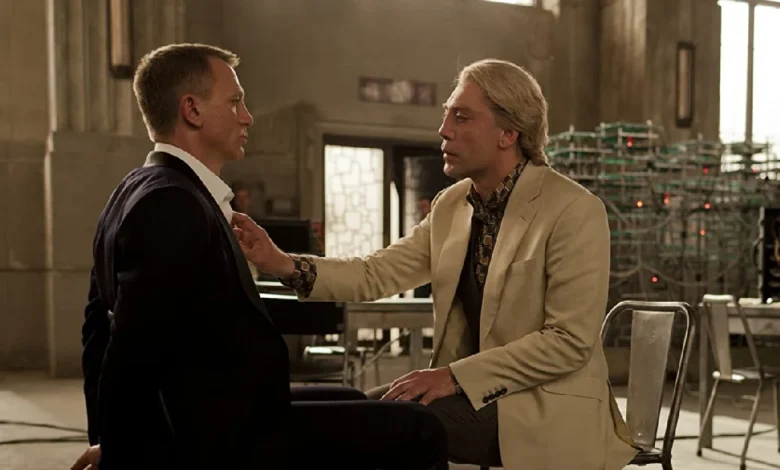
The investigation into the cyberattack and its mastermind leads Bond on a trail of vengeance and betrayal. He soon discovers that the architect of the mayhem is Raoul Silva (Javier Bardem), a former MI6 agent with a chillingly brilliant mind and a profound, personal vendetta against M. Silva, a formidable adversary, possesses an unparalleled mastery of technology and a deep-seated resentment stemming from a past operation where he believes M abandoned him. His motivations are not simply those of a common criminal; they are rooted in a perceived injustice, making him one of Bond’s most complex and psychologically driven antagonists. Bardem’s portrayal of Silva is often cited as one of the most compelling villain performances in the franchise, imbuing the character with a disquieting blend of charm, menace, and intellectual superiority.
As Bond delves deeper into Silva’s machinations, he is forced to confront not only the immediate threat but also the ghosts of his own past. This introspective journey takes him back to Skyfall, his ancestral home in the Scottish Highlands. This return to his roots is a significant departure from the glamorous international locales typically associated with Bond films. Skyfall represents a sanctuary, a place of both cherished memories and deep-seated trauma. It is here, amidst the rugged beauty and imposing architecture of his childhood home, that the ultimate confrontation with Silva is set to unfold, a battle that will determine not only the fate of MI6 but also the personal redemption of James Bond himself.
Thematic Resonance and Critical Acclaim
Skyfall distinguishes itself through its rich thematic tapestry. Beyond the expected espionage thrills and elaborate action sequences, the film masterfully weaves in explorations of loyalty, sacrifice, and the enduring, complex relationship between Bond and M. Judi Dench’s performance as M is particularly poignant, as she navigates the perilous waters of leadership and faces the consequences of her past decisions. The film humanizes James Bond, presenting him not as an invincible super-spy, but as a flawed individual grappling with the physical and emotional toll of his dangerous profession. This vulnerability, coupled with his unwavering determination, resonates deeply with audiences, offering a fresh perspective on the character.
The film’s critical reception was overwhelmingly positive, solidifying its place as a landmark in the James Bond canon. Reviewers lauded Sam Mendes’s direction for its atmospheric tension, stunning cinematography, and nuanced storytelling. The film was praised for its ability to balance the franchise’s signature blend of action, wit, and suspense with a more mature and character-driven narrative. Skyfall went on to achieve significant commercial success, grossing over $1.1 billion worldwide, making it the highest-grossing film in the James Bond series at the time of its release. It also garnered numerous awards and nominations, including five Academy Award nominations, winning for Best Original Song for Adele’s iconic theme song, "Skyfall," and Best Sound Editing.
Box Office Dominance and Franchise Evolution
The commercial triumph of Skyfall underscored the enduring appeal of the James Bond franchise and its successful reinvention with Daniel Craig at the helm. Released in 2012, the film capitalized on a global audience eager for sophisticated spy thrillers. Its $1.108 billion global box office haul not only surpassed previous Bond records but also placed it among the highest-grossing films of all time. This financial success provided a powerful validation for the direction the franchise had taken, demonstrating that a more grounded and emotionally resonant portrayal of Bond could be both critically and commercially successful.
The film’s impact extended beyond its box office numbers. Skyfall is often seen as a turning point in the Craig era, a film that solidified his interpretation of Bond as a character capable of depth and introspection, while still delivering the requisite thrills. The success of Skyfall paved the way for subsequent installments, Spectre (2015) and No Time to Die (2021), which continued to explore the personal arcs and complex relationships established in this pivotal film. The narrative threads introduced in Skyfall, particularly the lingering questions about Bond’s past and his connection to M, were further developed, creating a more cohesive and character-driven overarching narrative for Craig’s tenure as 007.
Behind the Scenes: A Collaborative Masterpiece
The creation of Skyfall was a monumental undertaking, involving a dedicated team of filmmakers and artists. Directed by Sam Mendes, a filmmaker primarily known for his work in drama, the choice to bring him aboard for a Bond film was initially met with curiosity. However, Mendes’s vision proved instrumental in shaping the film’s unique tone and thematic depth. He collaborated closely with screenwriters John Logan and Neal Purvis, who brought a fresh perspective to the Bond mythology.
The film’s visual splendor was a testament to the work of cinematographer Roger Deakins, whose breathtaking imagery earned him an Academy Award nomination. Deakins’s use of light and shadow, particularly in the sequences at Skyfall manor, contributed significantly to the film’s atmospheric intensity. The production design, led by Dennis Gassner, meticulously recreated both the iconic MI6 headquarters and the evocative landscapes of Scotland.
The casting of Javier Bardem as Raoul Silva was a stroke of genius, bringing a chilling intensity to the role. His performance was meticulously crafted, balancing menace with a disarming charisma. The supporting cast, including Naomie Harris as Eve Moneypenny and Bérénice Marlohe as Sévérine, provided strong performances that complemented Craig’s central portrayal.
The creation of the theme song, "Skyfall," by Adele and Paul Epworth was another critical element of the film’s success. The song not only captured the melancholic and epic tone of the film but also became a global phenomenon, winning an Academy Award for Best Original Song and a Golden Globe Award. The song’s powerful vocals and sweeping orchestration perfectly encapsulated the emotional weight of Bond’s journey in the film.
Legacy and Impact on the James Bond Franchise
Skyfall‘s enduring legacy lies in its ability to redefine what a James Bond film could be. It demonstrated that the franchise could evolve beyond its established formulas, embracing more complex character development and thematic depth without sacrificing the core elements that have made it a global phenomenon for over six decades. The film’s success revitalized interest in the character and provided a blueprint for future installments.
The emphasis on Bond’s vulnerability and his confrontation with his past resonated with a modern audience that increasingly values character-driven narratives. The film’s exploration of the aging of espionage and the relevance of old-school methods in a technologically advanced world also struck a chord, reflecting contemporary anxieties about security and intelligence.
Furthermore, Skyfall‘s critical and commercial success proved that a James Bond film could be both a blockbuster spectacle and a critically acclaimed work of art. This dual achievement elevated the franchise’s standing within the cinematic landscape, earning it respect from both mainstream audiences and discerning critics. The film’s influence can be seen in subsequent spy thrillers that have sought to emulate its blend of action, character depth, and thematic resonance.
As viewers tune in to Bioskop Trans TV this Sunday, they will witness not just a thrilling espionage adventure, but a pivotal moment in the evolution of one of cinema’s most iconic characters. Skyfall remains a testament to the enduring power of the James Bond saga, a film that continues to captivate and resonate with audiences around the world.
Related posts: