Empowering Rural Women: Yogyakarta’s KWT Sumber Boga Tamanan Transforms Aloe Vera into Economic Opportunity with BRI Support

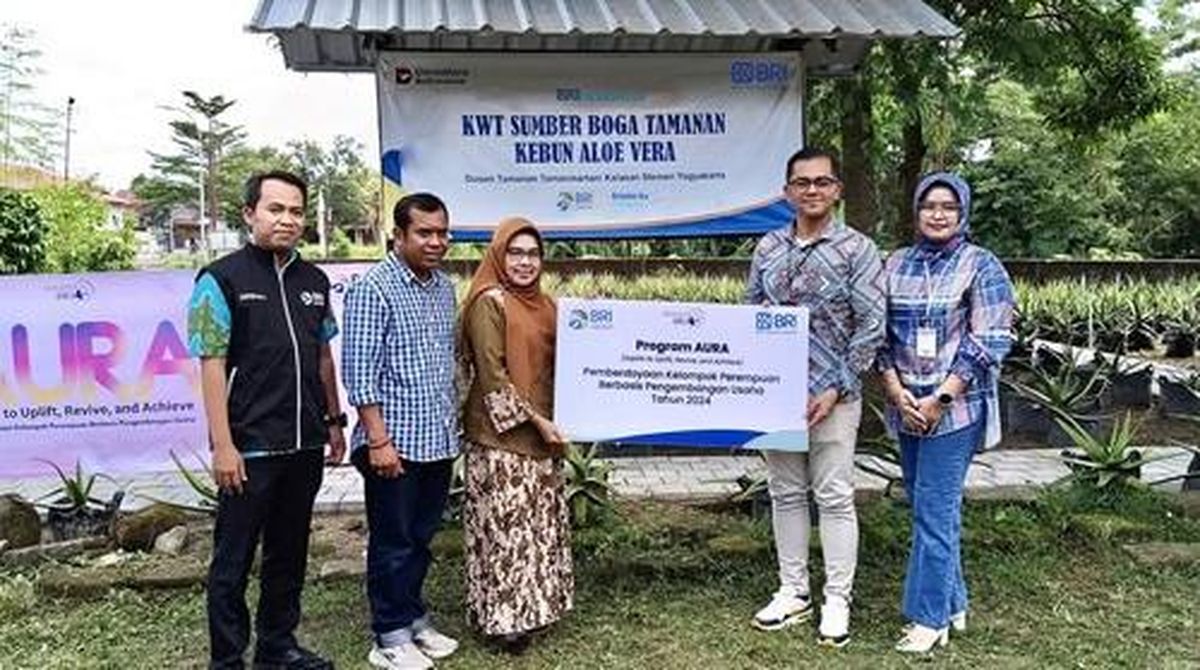
The vibrant spirit of economic empowerment is unmistakably evident among the women of Kelompok Wanita Tani (KWT) Sumber Boga Tamanan in Tamanmartani Village, Kalasan District, Yogyakarta. What began as a modest endeavor in aloe vera cultivation has blossomed into a remarkable success story, marked by innovative product development and the creation of new economic pathways for the surrounding community. This initiative stands as a testament to the transformative power of grassroots efforts, particularly when bolstered by strategic partnerships and targeted support from institutions like Bank Rakyat Indonesia (BRI), highlighting a robust model for inclusive growth in rural Indonesia.
The Genesis of Empowerment: From Household to Horticultural Hub
The journey of KWT Sumber Boga Tamanan commenced in 2018 with a clear, empowering vision: to mobilize and uplift the women of their village. Nurul Komariyah, the astute chairperson of KWT Sumber Boga Tamanan, recounts the early days of the group, emphasizing its core mission to empower local women, many of whom were primarily homemakers and small-scale farmers. "Our objective was to enable the women in our hamlet, predominantly housewives and farmers, to become more productive and contribute significantly to their families’ economic well-being," Nurul explained, underscoring the group’s foundational commitment to improving livelihoods and fostering economic independence among its members. This initial drive was crucial in overcoming the common challenges faced by rural women, such as limited access to income-generating activities and a lack of formal economic participation.
The strategic decision to focus on aloe vera (lidah buaya) as their primary crop was driven by its inherent advantages. Known for its resilience, adaptability to various soil conditions, and relatively low maintenance requirements, aloe vera presented an ideal starting point for the budding agricultural collective. Beyond its ease of cultivation, the plant boasts immense potential for diversification, lending itself to a wide array of value-added products, both culinary and cosmetic. This inherent versatility promised higher profit margins compared to simply selling raw produce, thus enhancing the group’s potential for sustainable growth. "In the first year, we cultivated aloe vera on a modest plot of land, spanning just 200-300 square meters," Nurul elaborated. "We also invested heavily in learning, attending various training sessions to foster our own innovation. While we encountered numerous setbacks and failures initially, we persevered, continuously learning until we were able to produce our own distinctive products." This early phase was critical, characterized by a spirit of experimentation, skill acquisition, and building collective resilience among the members, typical of nascent community enterprises navigating initial capital constraints, technical know-how gaps, and limited market access.
Scaling Up: Expanding Horizons and Product Diversification
Just one year after its inception, KWT Sumber Boga Tamanan witnessed substantial growth in its aloe vera cultivation. The burgeoning success necessitated an expansion of their agricultural footprint, as the number of plants steadily increased, reflecting the group’s dedication and effective cultivation practices. A pivotal moment arrived when the KWT secured a significant opportunity: access to a 1,000-square-meter plot of land belonging to a former Dutch hospital located within their region. This expansion was a game-changer, providing the much-needed space to scale their operations considerably. Today, this expanded plot hosts an impressive 900 to 1,000 aloe vera plants, meticulously cultivated by the KWT members, forming the backbone of their product development.
These abundant aloe vera plants now serve as the primary raw material for a diverse and expanding range of processed products, showcasing the group’s creativity and entrepreneurial acumen. Their innovative product portfolio includes refreshing aloe vera beverages, highly sought-after aloe vera chips – which have quickly become their best-selling item, demonstrating keen market insight – as well as various candies, and even aloe vera-infused soaps. This strategic diversification not only maximizes the value derived from each plant but also allows the KWT to cater to a broader market segment, significantly enhancing the group’s revenue streams and ensuring greater financial stability. The ability to transform a raw agricultural product into multiple finished goods is a hallmark of successful value chain development, which typically leads to increased income generation and builds resilience against potential market fluctuations for individual commodities.
The Strategic Partnership with BRI: Fueling Growth and Innovation
The trajectory of KWT Sumber Boga Tamanan’s growth received a significant, catalytic boost through its involvement with Bank Rakyat Indonesia (BRI), particularly through the "Klasterku Hidupku" (My Cluster, My Life) program. This crucial partnership began when Tamanmartani Village participated in BRI’s "Desa BRILiaN" program in 2024. Desa BRILiaN is a flagship initiative by BRI designed to foster independent, innovative, and sustainable village ecosystems across Indonesia by providing comprehensive support, including financial literacy, business development training, and crucial access to capital. The program aims to transform villages into self-sufficient economic hubs.
Through its active participation in Desa BRILiaN, KWT Sumber Boga Tamanan engaged in various empowerment activities, which in turn opened doors to broader, more substantial support from BRI. This collaboration extended far beyond mere financial assistance; the KWT gained access to crucial business financing, enabling them to invest in essential equipment, expand production capacities, and manage their working capital more effectively. Moreover, members benefited from a series of specialized training programs aimed at enhancing their capacities in vital areas such as advanced product development, effective marketing strategies, sound financial management, and stringent quality control. Such holistic support is absolutely vital for micro and small enterprises, which often lack the technical and managerial expertise necessary to scale up their operations sustainably and compete in a dynamic market.
Nurul Komariyah expressed profound gratitude for the multifaceted assistance from BRI. She highlighted that beyond direct funding and invaluable business mentorship, BRI, through its Corporate Social Responsibility (CSR) arm, BRI Peduli, provided essential operational equipment. "The CSR assistance from BRI has been instrumental in boosting KWT’s productivity," Nurul stated emphatically. She cited a prime example of this transformative support: "For instance, we allocated part of that assistance to implement an internet-based irrigation system that can be operated via a mobile phone. Now, no matter where I am, I can monitor the irrigation system because it’s accessible on my phone." This adoption of smart technology signifies a remarkable leap for a rural women’s farming group, demonstrating how targeted investment in innovation and digital solutions can dramatically improve efficiency, conserve precious resources, and empower individuals with greater control and oversight over their agricultural operations. It also underscores BRI’s commitment not just to finance but also to modernize and capacitate rural economic actors, fostering a more technologically adept agricultural sector.
BRI’s Vision for Inclusive Economic Growth Through Women’s Empowerment
Viviana Dyah Ayu R.K, BRI’s Deputy President Director, underscored the profound significance of KWT Sumber Boga Tamanan’s journey. She emphasized that the narrative of these determined women vividly illustrates how, with appropriate access to resources and effective empowerment initiatives, women can indeed become powerful drivers of economic progress within their communities. "Women’s empowerment is a critical component in the pursuit of inclusive economic growth," Viviana stated during a separate occasion, highlighting BRI’s strategic focus. She further elaborated on BRI’s unwavering commitment: "BRI consistently supports women’s access to financing and business mentorship, enabling them to enhance their capabilities and generate tangible positive impacts on their surrounding environment."
This statement reflects BRI’s broader strategic alignment with national development goals that prioritize gender equality and economic inclusion, recognizing the untapped potential within women-led enterprises. In Indonesia, women constitute a significant portion of the agricultural workforce and are frequently at the forefront of micro and small enterprises. However, they often encounter systemic barriers to accessing formal financial services, adequate training, and robust market opportunities. BRI’s comprehensive programs, like Klasterku Hidupku and Desa BRILiaN, are specifically designed to bridge these critical gaps, recognizing that investing in women’s economic potential yields substantial, far-reaching dividends for families, communities, and the national economy as a whole. This targeted approach is vital for ensuring that economic growth is not only robust but also equitable and sustainable.
Broader Implications and The Role of Women in Indonesia’s Economy
The success of KWT Sumber Boga Tamanan is not an isolated incident but rather a compelling example of a growing trend in Indonesia: the increasing recognition of women as pivotal economic agents, particularly in the agricultural and MSME sectors. According to recent data from the Indonesian Ministry of Agriculture, women comprise nearly 40% of the agricultural labor force, playing an indispensable role in food security and rural livelihoods. However, their contributions are often undervalued, and they frequently operate in informal or marginalized segments of the economy. Initiatives like KWTs, robustly supported by proactive financial institutions such as BRI, play a crucial role in formalizing these contributions, enhancing productivity, and ensuring equitable participation in the economic mainstream.
Micro, Small, and Medium Enterprises (MSMEs) are widely acknowledged as the backbone of the Indonesian economy, contributing over 60% to the national Gross Domestic Product (GDP) and employing a vast majority of the workforce. A significant portion of these vital MSMEs are led by women, who often demonstrate remarkable resilience and entrepreneurial spirit despite numerous challenges. By empowering groups like KWT Sumber Boga Tamanan, BRI is directly investing in the vitality and long-term sustainability of this critical sector. The provision of accessible financing not only addresses immediate capital needs but also significantly helps these businesses graduate from micro to small, and eventually to medium enterprises, fostering robust job creation and widespread wealth generation at the local level.
Moreover, the adoption of modern agricultural techniques, such as the internet-based irrigation system, positions KWT Sumber Boga Tamanan as a forward-thinking model for sustainable and technologically integrated farming practices. This innovation can lead to more efficient water usage, significantly reduced labor costs, and improved crop yields, all while minimizing environmental impact. Such advancements are crucial for the long-term sustainability and resilience of agricultural communities, especially in the face of escalating climate change challenges and increasing resource scarcity. The "smart farming" approach demonstrated by KWT is a highly scalable solution that can inspire and guide other rural communities across Indonesia to embrace technology for agricultural modernization and enhanced productivity.
Community Impact and Sustainable Development
The ripple effects of KWT Sumber Boga Tamanan’s success extend far beyond its immediate members, creating a profound positive impact on the broader community. The group’s vibrant activities have fostered a dynamic local economy, offering new income opportunities for a range of stakeholders, including suppliers of raw materials, local distributors, and related service providers. This increased economic activity helps to retain youth in rural areas by providing viable and attractive livelihoods, thereby countering the trend of urbanization often driven by a perceived lack of opportunities in villages. Furthermore, by developing diverse value-added products, the KWT helps to strengthen the local food system, promoting greater self-sufficiency and reducing reliance on external markets for processed goods, enhancing regional economic autonomy.
The comprehensive model presented by KWT Sumber Boga Tamanan, strategically supported by BRI, offers invaluable lessons for sustainable development initiatives across the archipelago. It powerfully demonstrates how community-led initiatives, when coupled with strategic external support and capacity building, can unlock latent potential, foster groundbreaking innovation, and build resilient, self-sufficient local economies. The unwavering focus on women’s empowerment ensures that the benefits of economic growth are distributed more equitably, leading to tangible improvements in crucial social indicators such as education levels, community health, and overall family well-being. When women are economically empowered, they tend to reinvest a larger portion of their income into their families and communities, thereby creating a virtuous cycle of sustained development and prosperity.
Looking ahead, the KWT Sumber Boga Tamanan’s journey serves as an inspiring and replicable blueprint for other rural communities across Indonesia. The effective blend of traditional agricultural practices with modern business acumen, coupled with crucial financial and technical backing, powerfully demonstrates that even the most humble beginnings can lead to significant socio-economic transformation. BRI’s ongoing commitment to these grassroots initiatives further reinforces its pivotal role as a leading institution for inclusive development, effectively bridging the gap between vast rural potential and national prosperity. The compelling story of these determined women and their innovative aloe vera venture is a powerful narrative of resilience, unwavering determination, continuous innovation, and the profound, far-reaching impact of collective action in shaping a brighter, more equitable economic future for all. The commitment to continuous learning, strategic adaptation, and leveraging strong partnerships like that with BRI ensures their sustained growth and influence as a beacon of rural empowerment and progress.
Related posts: