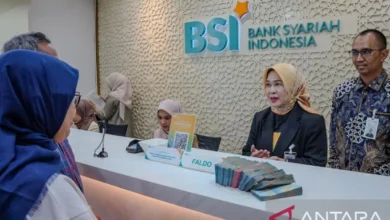
Otoritas Jasa Keuangan Revokes Licenses of 15 Banks in 2026 Following the Closure of BPRS Musyarakah Ummat Indonesia in Tangerang


The Indonesian Financial Services Authority (Otoritas Jasa Keuangan, or OJK) has officially revoked the business license of PT Bank Perekonomian Rakyat Syariah (BPRS) Musyarakah Ummat Indonesia, located in Tangerang, Banten. This regulatory action marks the 15th banking institution closure overseen by the financial watchdog throughout 2026, as part of a broader, continuous effort to clean up the national banking ecosystem, safeguard consumer interests, and reinforce public trust in the financial services sector.
The termination of BPRS Musyarakah Ummat Indonesia’s operational legality was formally enacted through the Decree of the Board of Commissioners of the OJK Number KEP-72/D.03/2026, dated September 25, 2026. Situated at Jalan KH. Hasyim Ashari Number 8 in the Karang Tengah sub-district of Tangerang City, the sharia rural bank ultimately failed to meet regulatory solvency thresholds despite prolonged oversight and interventions by regulatory authorities.
Chronology of Regulatory Interventions and Resolution
The downfall of BPRS Musyarakah Ummat Indonesia was not sudden; rather, it was the culmination of a protracted compliance and financial deterioration process monitored closely by the OJK. The regulatory trajectory began on December 10, 2025, when the OJK placed the institution under the special supervisory status known as a Bank Under Rehabilitation (Bank Dalam Penyehatan, or BDP). This decision was triggered by the bank’s Minimum Capital Adequacy Ratio (Kewajiban Penyediaan Modal Minimum, or KPMM) plummeting below the mandatory 12 percent threshold.
Under the BDP status, the bank’s management and controlling shareholders were granted a designated timeframe to formulate and implement a credible recovery plan designed to inject fresh capital, restructure assets, and restore financial viability in compliance with statutory provisions. However, despite the extended grace period, internal remediation efforts proved insufficient to resolve the profound structural capital deficits plaguing the institution.
As the institution’s financial condition continued to deteriorate without adequate remediation, the OJK escalated its supervisory posture. On September 11, 2026, the regulatory body reclassified the institution under the status of a Bank Under Resolution (Bank Dalam Resolusi, or BDR).
Following this designation, the handling authority transitioned to the Indonesia Deposit Insurance Corporation (Lembaga Penjamin Simpanan, or LPS), pursuant to the statutory framework governing systemic and non-systemic bank resolutions. On September 17, 2026, the LPS issued the Decree of the Board of Commissioners for the Deposit Insurance Program and Bank Resolution Sector Number 132/ADK3/2026, formally selecting liquidation as the definitive method for handling the resolution of BPRS Musyarakah Ummat Indonesia. Concurrently, the LPS formally requested that the OJK revoke the institution’s operating license, a regulatory formality executed on September 25, 2026.
Operational Cessation and the Role of the LPS
In strict compliance with statutory mandates, the revocation of BPRS Musyarakah Ummat Indonesia’s license triggers an immediate and total cessation of all commercial activities. Effective immediately as of the announcement date, all office locations associated with the institution have been permanently closed to the general public.
To ensure an orderly winding down of the institution’s affairs, the LPS has been tasked with executing its statutory functions regarding deposit insurance payouts and leading the formal liquidation process. A specialized Liquidation Team will be appointed by the LPS to inventory, manage, and distribute remaining assets while settling outstanding legal obligations and creditor claims.
To protect the integrity of the liquidation process and prevent the dissipation of remaining resources, the OJK has issued strict prohibitions targeting the institution’s former leadership. The Board of Directors, Board of Commissioners, Sharia Supervisory Board, and principal shareholders of the defunct bank are legally barred from executing any independent legal actions concerning the bank’s assets and liabilities. Any transactional or administrative measures regarding the bank’s remaining estate require explicit written authorization from the LPS.
Despite the closure, regulatory authorities have moved swiftly to calm market nerves and reassure depositors. The OJK has officially urged all active customers of BPRS Musyarakah Ummat Indonesia to remain calm, emphasizing that legitimate customer deposits are fully protected under the national deposit insurance scheme managed by the LPS. Detailed procedural guidelines concerning the verification and disbursement of insured claims, alongside liquidation updates, are scheduled to be published through official LPS communication channels.
A Comprehensive Overview of 2026 Banking Closures
The shuttering of BPRS Musyarakah Ummat Indonesia highlights an aggressive consolidation and clean-up campaign spearheaded by Indonesian regulators. Throughout 2026, the OJK has systematically targeted rural banks (BPR) and sharia rural banks (BPRS) that suffer from chronic capitalization deficiencies, corporate governance failures, or non-performing financing portfolios that outpace their loss-absorbing buffers.
By aggressively trimming insolvent institutions from the financial landscape, regulatory bodies aim to eradicate systemic vulnerabilities, elevate industry standards, and ensure that only financially resilient entities are permitted to collect public funds.
Below is the complete official ledger of banking institutions whose business licenses have been revoked by the OJK up to September 25, 2026:
- PT BPR Suliki Gunung Mas, Sumatra Barat — License revoked on January 7, 2026.
- PT BPR Prima Master Bank, Surabaya, Jawa Timur — License revoked on January 27, 2026.
- Perumda BPR Bank Cirebon, Jawa Barat — License revoked on February 9, 2026.
- PT BPR Kamadana, Bangli, Bali — License revoked on February 18, 2026.
- PT BPR Koperindo Jaya, Jakarta Pusat, DKI Jakarta — License revoked on March 9, 2026.
- PT BPR Pembangunan Nagari, Agam, Sumatra Barat — License revoked on March 31, 2026.
- PT BPR Sungai Rumbai, Kabupaten Dharmasraya, Sumatra Barat — License revoked on April 7, 2026.
- PT BPR Ceper Permata Artha, Klaten, Jawa Tengah — License revoked on June 25, 2026.
- PT BPR Dwicahaya Nusaperkasa, Batu, Jawa Timur — License revoked on July 3, 2026.
- PT BPR Mataram Mitra Manunggal, Yogyakarta — License revoked on July 7, 2026.
- PT BPR Syariah Hasanah Mandiri, Depok, Jawa Barat — License revoked on July 16, 2026.
- PT BPR Citra Bersada Abad, Bintara, Bekasi Barat, Kota Bekasi — License revoked on August 19, 2026.
- PT BPRS Gaido Indonesia, Kabupaten Cianjur, Jawa Barat — License revoked on September 1, 2026.
- PT BPR Pasarraya Kuta, Bali — License revoked on September 17, 2026.
- PT BPRS Musyarakah Ummat Indonesia, Tangerang, Banten — License revoked on September 25, 2026.
Industry Implications and Forward-Looking Analysis
The accumulation of 15 bank closures within less than nine months underscores the persistent structural challenges confronting the secondary tier of Indonesia’s banking sector. While commercial banking giants enjoy robust profitability and ample capital buffers, many smaller rural banks and sharia-compliant alternatives continue to struggle against intense market competition, localized economic shocks, elevated credit risks, and rising operational overhead.
Financial analysts note that the OJK’s uncompromising stance demonstrates a shift away from forbearance toward rigorous enforcement of prudential standards. While these closures inevitably generate localized anxiety among regional depositors, the swift and orderly intervention by the LPS serves to mitigate systemic contagion risks. By ensuring that insured funds are returned systematically, market confidence in the broader safety net remains stable.
Moving forward, industry observers anticipate that regulatory pressure will remain elevated. Smaller financial institutions lacking strong capital backers or sustainable business models will likely face mounting pressure to pursue mergers, acquisitions, or voluntary consolidations to survive the increasingly stringent capital and governance mandates enforced by Indonesian financial regulators.
Related posts: