Indonesian Petrochemical Sector Under Siege as Chinese Import Surge Triggers Domestic Crisis

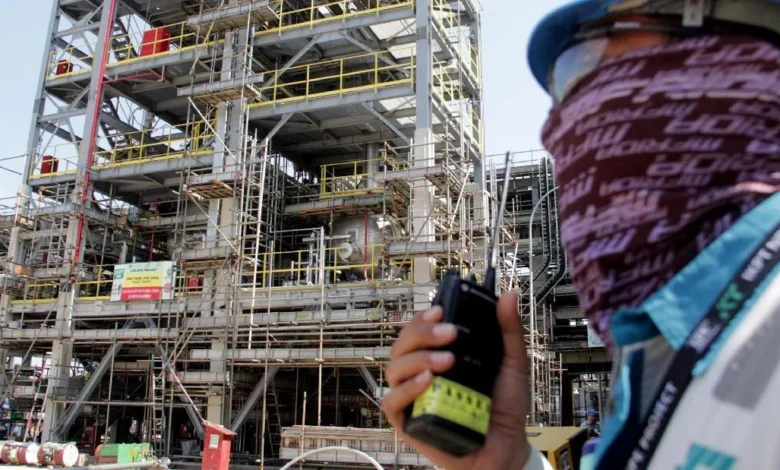
The Indonesian petrochemical industry is currently navigating a period of profound volatility as the domestic market faces an aggressive influx of low-cost products originating from China. This surge, driven by structural overcapacity within the Chinese manufacturing sector and a cooling of its internal demand, has placed significant downward pressure on local producers. For companies like Chandra Asri Group, the situation represents not merely a commercial challenge but a fundamental test of the resilience and competitiveness of Indonesia’s industrial backbone.
As Southeast Asia’s largest consumer market, Indonesia has become the primary destination for China’s excess petrochemical inventory. This development has forced domestic players to grapple with thin margins, market share erosion, and the urgent necessity for operational transformation to survive in an increasingly globalized and price-sensitive trade environment.
The Anatomy of China’s Overcapacity
The roots of this market saturation can be traced back to the post-pandemic economic shifts in China. Historically, China’s industrial output was propelled by GDP growth rates consistently hovering between 7% and 8%. However, recent data indicates that growth has moderated to the 5-6% range. This deceleration has created a stark imbalance: while China’s domestic petrochemical production capacity has continued to expand—fuelled by state-backed investment and aggressive industrial policy—local consumption has failed to keep pace.
According to Suryandi, Director of Human Resources and Corporate Affairs at Chandra Asri Group, this "structural overhang" leaves Chinese manufacturers with little choice but to offload their surplus into international markets. "When domestic demand in China is not strong enough to absorb the volume produced, the excess must be exported," Suryandi explained during a media briefing in Jakarta. "The logical destination for this surplus is the Southeast Asian region, where market accessibility is high and demand for plastic resins and chemical intermediaries remains steady."
Technological Edge and Cost Competitiveness
The competitive disadvantage faced by Indonesian producers is exacerbated by the technological and financial advantages enjoyed by Chinese firms. While many legacy petrochemical plants in Southeast Asia rely heavily on naphtha-based cracking, Chinese producers have made significant strides in diversifying their feedstock.
By leveraging ethane-based cracking technologies, Chinese manufacturers have effectively decoupled their production costs from the volatile global naphtha market. Ethane, often derived from natural gas, provides a much cheaper route to producing ethylene and its derivatives, such as Polyethylene (PE) and Polypropylene (PP). Furthermore, the prevalence of government-backed subsidies and integrated industrial zones allows Chinese petrochemical giants to operate at cost structures that are structurally lower than those of their ASEAN counterparts.
This price gap has made imported Chinese products significantly more attractive to local downstream manufacturers in Indonesia, who are themselves struggling to maintain competitiveness in a globalized market. Consequently, the reliance on imports for vital industrial raw materials continues to climb, despite efforts by the Indonesian government to encourage domestic production.
Chronology of the Crisis: From Pandemic to Present
The current state of the industry is the result of a multi-year shift in global supply chains:
- 2020-2021 (The Pandemic Era): Global supply chains were disrupted, leading to a temporary spike in prices and local manufacturing reliance on domestic supply.
- 2022 (The Reopening Phase): As global logistics normalized, Chinese production began to ramp up again, but internal consumer demand in China remained sluggish due to property sector cooling.
- 2023 (The Influx Begins): Indonesian trade data began showing a significant uptick in chemical imports from China, putting downward pressure on domestic producer prices.
- 2024 (Market Saturation): The trend solidified, with Indonesian producers reporting squeezed margins and calls for trade policy intervention.
- 2025-2026 (Strategic Realignment): Major domestic players like Chandra Asri have officially shifted their corporate strategies toward vertical integration and infrastructure development to survive the price war.
The Domestic Response: A Three-Pillar Strategy
Faced with this external pressure, Chandra Asri Group has articulated a three-pronged survival strategy designed to insulate its operations from global market shocks and strengthen its position within the Indonesian industrial ecosystem.
First, the company is prioritizing operational reliability. By minimizing "unplanned shutdowns," the company aims to ensure consistent availability of resins for local manufacturers. In an environment where import prices fluctuate, the ability to act as a reliable "base-load" supplier is seen as a key competitive advantage.
Second, the company is engaging in aggressive business diversification. Moving beyond the historically cyclical petrochemical sector, the group is expanding into energy, integrated infrastructure, and mobility solutions. This diversification is intended to create a buffer against the boom-and-bust cycles inherent to the chemical commodities market.
Third, the company is accelerating its investment in the Chlor-Alkali and Ethylene Dichloride (CA-EDC) plant in Cilegon. This project is of strategic national importance, as it serves the burgeoning nickel and alumina extraction industries—two sectors that are central to Indonesia’s ambitions to become a global hub for electric vehicle (EV) battery production. By anchoring itself to these high-growth sectors, the company hopes to secure long-term demand that is less susceptible to the volatility of general-purpose plastic markets.
Implications for the Indonesian Economy
The petrochemical sector serves as the "mother of all industries," providing the fundamental building blocks for packaging, automotive parts, construction materials, and consumer electronics. The current reliance on imports, which still accounts for nearly 40% to 50% of the supply for specific chemical products, poses a significant risk to Indonesia’s trade balance and industrial sovereignty.
Economic analysts suggest that without targeted intervention, the erosion of the local petrochemical base could lead to "deindustrialization," where Indonesia becomes a mere assembly point for imported raw materials rather than a producer of high-value goods.
"The government must ensure that domestic producers are not competing on an uneven playing field," says a senior industrial policy researcher. "While free trade is the objective, the reality of state-subsidized competition requires a nuanced approach, perhaps involving trade defense measures or incentives that prioritize local feedstock security."
Comparative Analysis: The ASEAN Context
Indonesia is not alone in this challenge. Singapore, Malaysia, Thailand, and Vietnam are all experiencing similar pressures. However, Indonesia’s unique demographic dividend and massive internal market make it both the biggest prize for foreign exporters and the most critical site for industrial protection.
In Singapore, the focus has shifted toward high-value-added specialty chemicals, while Thailand has invested heavily in the Eastern Economic Corridor (EEC) to create a more integrated petrochemical cluster. Indonesia’s progress in this regard has been slower, often hampered by infrastructure bottlenecks and higher energy costs.
Looking Ahead
The path forward for Indonesia’s petrochemical industry is fraught with challenges. The global market is currently witnessing a massive expansion of petrochemical capacity, particularly in the Middle East and China, which is expected to keep prices depressed for the foreseeable future.
For Indonesian companies, the strategy is no longer about competing solely on price against massive, state-supported Chinese conglomerates. Instead, the focus is shifting toward integration, supply chain security, and the creation of a "domestic loop" that connects raw material producers with the rapidly expanding EV battery and manufacturing sectors.
As Suryandi emphasized, the ultimate goal is to reach a level of industrial maturity where Indonesia can stand on its own. "We are not asking for protectionism that ignores market realities," he noted. "We are asking for a policy framework that allows our industry to grow and sustain itself against global giants. Our objective is to reach a point where Indonesia is a net producer rather than a net importer, ensuring that the value-add remains within our borders."
In the coming years, the success of these strategic shifts will determine whether Indonesia can successfully navigate the global petrochemical glut or if it will remain a vulnerable market, susceptible to the shifting economic tides of its neighbors. The resilience of the domestic industry is not just a corporate concern; it is a vital component of the nation’s long-term economic prosperity and its ambition to transition into a developed, industrial-led economy.