Kebumen hosts immersive Wayang Golek Menak educational initiative to revitalize local heritage and cultural literacy

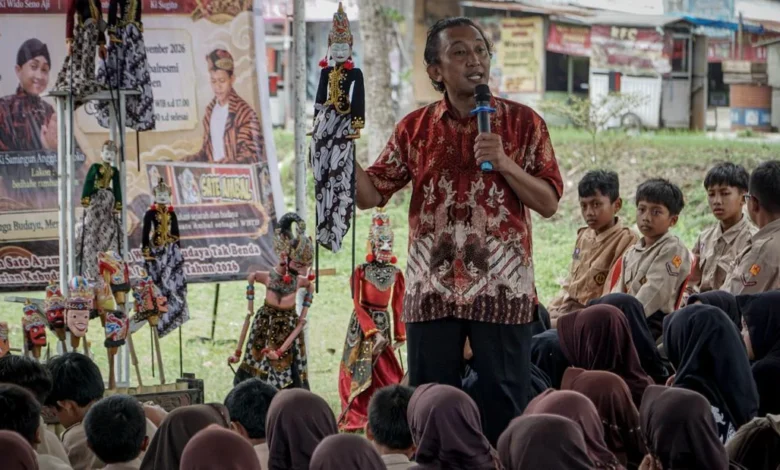
The town of Kebumen, located in the Central Java province of Indonesia, recently served as the epicenter for a comprehensive educational initiative focused on the art of Wayang Golek Menak. This cultural program was meticulously designed to bridge the generational gap, providing local students and the wider community with an in-depth understanding of the historical significance, philosophical depth, and intricate craftsmanship associated with this traditional puppet performance. By blending pedagogical approaches with live artistic demonstrations, the event sought to move beyond mere entertainment, positioning Wayang Golek Menak as a vital repository of Indonesian history and moral philosophy.
The Historical Significance of Wayang Golek Menak
To understand the weight of this educational initiative, one must first appreciate the unique lineage of Wayang Golek Menak. Unlike the traditional Wayang Purwa, which draws its narratives primarily from the Hindu epics of the Mahabharata and Ramayana, Wayang Golek Menak is rooted in the Islamic tradition. These stories, known as the Serat Menak, chronicle the adventures of Amir Hamzah, the uncle of the Prophet Muhammad, and his quest to spread the teachings of Islam across various kingdoms.
The art form emerged during the era of the Mataram Sultanate, serving as a medium for both entertainment and religious proselytization. Its arrival in Java represented a syncretic blend of indigenous artistic expression and Middle Eastern literary influence. The puppets themselves are distinct; they are carved with specific stylistic markers—often more robust and realistic in their facial features—that distinguish them from the more ethereal and stylized Hindu-themed puppets. In Kebumen, the preservation of this specific branch of puppetry is seen as a defense against the erosion of regional identity in an era of rapid digital globalization.
Chronology of the Educational Event
The initiative in Kebumen was structured as a multi-day cultural symposium, moving through several phases to ensure maximum engagement and knowledge retention.
The first phase, held on the inaugural morning, focused on the technical aspects of puppet manipulation and construction. Local masters, or dalangs, conducted workshops where participants were introduced to the various types of wood—typically Albasia or Pule—used for carving. They explained the meticulous process of painting and costume design, which utilizes traditional batik patterns to indicate the social status and moral alignment of each character.
The second phase transitioned into the narrative history. Historians and cultural observers led seminars that contextualized the stories of Amir Hamzah within the broader scope of Southeast Asian history. These sessions were aimed at secondary school students, who analyzed the literary texts and discussed the ethical dilemmas faced by the protagonists.
The final phase concluded with a grand performance, which served as a practical application of the knowledge imparted throughout the workshops. By allowing the attendees to witness the interplay between the dalang, the gamelan orchestra, and the puppets, the organizers successfully transformed abstract historical lessons into a tangible, multisensory experience.
Supporting Data and Cultural Context
Indonesia’s commitment to preserving its intangible cultural heritage is backed by a robust framework of national policies. According to data from the Ministry of Education, Culture, Research, and Technology, there are over 1,500 forms of traditional performing arts registered across the archipelago. However, the UNESCO Convention for the Safeguarding of the Intangible Cultural Heritage notes that traditional puppetry forms, including Wayang Golek, face significant threats from declining interest among the youth and the high cost of maintaining performance troupes.
In Kebumen, the demographic shift is particularly pronounced. With a youth population increasingly oriented toward digital media, traditional arts have struggled to maintain a consistent audience. The recent educational event was prompted by internal studies suggesting that fewer than 15% of high school students in the region could identify the core themes of the Serat Menak. By integrating these lessons into the local educational discourse, organizers hope to reverse this trend, utilizing the classroom as a gateway to the wider world of Javanese performing arts.
Perspectives from Stakeholders and Experts
The initiative garnered support from a diverse coalition of cultural preservationists and local government officials. Dr. Aris Subagyo, a researcher in Javanese literature, noted during the proceedings that "the strength of Wayang Golek Menak lies in its ability to adapt to changing social values while maintaining its core ethical teachings." According to Dr. Subagyo, the program in Kebumen is not merely about preserving a relic, but about keeping a living language of morality alive for the next generation.
Local government representatives emphasized the economic potential of such programs. Beyond the cultural impact, there is an acknowledgment that a vibrant arts scene bolsters tourism and strengthens community cohesion. A representative from the local Department of Culture remarked, "When we invest in these educational workshops, we are investing in the social fabric of Kebumen. A community that understands its roots is better equipped to navigate the complexities of the future."
Participants, ranging from primary school students to local artisans, expressed a newfound appreciation for the complexity of the craft. One student remarked that they had previously viewed the puppets as simple toys, but through the workshop, they discovered the "meticulous labor and deep historical research" required to bring a single character to life.
Implications for Cultural Preservation
The implications of the Kebumen initiative are far-reaching. By creating a standardized, accessible curriculum for Wayang Golek Menak, the organizers have provided a blueprint that could be adopted by other regions across Central and West Java. This shift from passive observation to active education is a critical strategy for the survival of traditional arts in the 21st century.
However, challenges remain. Financial sustainability is the primary hurdle for most traditional troupes. While educational grants can fund specific events, the long-term viability of Wayang Golek Menak requires a consistent stream of patronage, whether through government subsidies, private sector investment, or the development of sustainable cultural tourism models.
Furthermore, the integration of technology into the performance space—such as digital projection or interactive apps that explain the characters during a live show—could serve as a bridge for the digital-native generation. Experts suggest that the future of Wayang Golek Menak lies in a hybrid model where traditional aesthetics are preserved, but the delivery methods are updated to remain relevant in a globalized, fast-paced world.
Conclusion: A Sustained Commitment
The Wayang Golek Menak educational program in Kebumen stands as a testament to the resilience of Indonesian traditional culture. It proves that when history is framed through the lens of education and community involvement, it can compete with the distractions of modern entertainment. The success of this initiative is not measured by the number of puppets sold or the duration of the performances, but by the number of young people who now perceive these wooden figures as vessels of their own history.
As the program concludes, the focus now shifts to the sustainability of these efforts. Organizers have signaled an intent to incorporate these workshops into the regional extracurricular syllabus, ensuring that the legacy of the Serat Menak remains a foundational element of the Kebumen educational experience. By fostering a deep, informed connection to the past, the people of Kebumen are ensuring that their cultural identity remains distinct, robust, and capable of weathering the pressures of an ever-changing global landscape. The story of Wayang Golek Menak, therefore, is not merely a chapter from the past; it is an ongoing narrative of cultural survival that continues to unfold in the heart of Central Java.