Indonesia and European Union Sign Landmark IEU-CEPA After Decade of Negotiations to Boost Trade and Investment

Jakarta, Indonesia — In a historic diplomatic milestone for Southeast Asia’s largest economy, Indonesia and the European Union have officially signed the Indonesia-European Union Comprehensive Economic Partnership Agreement (IEU-CEPA). The landmark trade pact, formalized in Brussels, Belgium, marks the culmination of nearly a decade of complex negotiations and opens a transformative chapter in bilateral economic relations.
The agreement is designed to dismantle long-standing tariff barriers, enhance market access, and foster deeper regulatory cooperation across a wide spectrum of sectors, ranging from traditional commodities to advanced digital services and renewable energy. As governments on both sides look toward post-pandemic economic recovery and sustainable growth, the IEU-CEPA stands out as one of the most comprehensive and modern trade agreements ever undertaken by Jakarta.
Immediate Tariff Elimination and Market Access
At the core of the IEU-CEPA is a sweeping liberalization of merchandise trade. According to details released by the Indonesian Ministry of Trade, an overwhelming 90.4 percent of European Union tariff lines will immediately drop to zero percent the moment the agreement officially enters into force. This immediate elimination encompasses critical Indonesian export pillars, including palm oil and its derivative products, rubber, footwear, textiles, and textile products.
Beyond the immediate cuts, an additional 7.92 percent of EU tariff lines will be phased out gradually over a transition period spanning three to 15 years. When fully implemented, the agreement will cover a staggering 98.35 percent of all EU tariff lines, granting Indonesian exporters preferential access to a lucrative market comprising hundreds of millions of affluent consumers.
Indonesian Trade Minister Budi Santoso emphasized the profound impact these reductions will have on the competitiveness of Indonesian goods abroad. "More than 98 percent of EU tariff lines will provide market access with preferential tariffs for Indonesia’s leading export products, such as palm oil and its derivatives, footwear, textiles, fishery products, rubber, furniture, and various other manufactured goods," Budi stated in an official release from Jakarta.
By leveling the playing field against competitors in other developing nations, the zero-tariff and low-tariff structures will allow Indonesian enterprises to significantly expand their footprint within the European market. Analysts note that sectors like furniture and footwear, which have historically faced stringent regulatory hurdles in Europe, stand to gain substantial market share as compliance pathways become streamlined under the framework of the CEPA.
Beyond Merchandise Trade: A Modern, Comprehensive Framework
While tariff reductions on physical goods form the most visible aspect of the IEU-CEPA, policymakers and trade experts emphasize that the agreement is fundamentally modern in its scope. Unlike traditional free trade agreements that focus primarily on customs duties, the IEU-CEPA establishes binding rules and cooperative frameworks across a multidimensional matrix of economic activities.
The agreement comprehensively addresses trade in services, foreign direct investment (FDI), intellectual property rights (IPR), government procurement, competition policy, and sustainable development. By locking in transparent rules for service providers and investors, the pact provides a predictable legal environment that mitigates regulatory risks for businesses operating across borders.
Minister Budi described the agreement as the most modern and comprehensive trade pact in Indonesia’s history, setting a new benchmark for both the breadth of its coverage and the depth of its economic commitments. The inclusion of robust provisions on sustainable development is seen as particularly vital, addressing European consumer demands for ethical sourcing while supporting Indonesia’s domestic transition toward environmentally responsible production standards.
Furthermore, the framework explicitly incorporates provisions for economic inclusivity. Designed with the needs of micro, small, and medium-sized enterprises (MSMEs) and young entrepreneurs in mind, the agreement aims to lower the administrative and financial barriers that typically prevent smaller domestic players from engaging in international trade.
Strategic Investment and Domestic Industrial Upgrading
In addition to boosting exports, the Indonesian government anticipates that the IEU-CEPA will act as a powerful catalyst for inbound foreign direct investment from the European Union. Strategic sectors targeted for European capital and technological collaboration include advanced manufacturing and processing industries, the automotive sector, renewable energy infrastructure, and the burgeoning digital economy.
Jakarta has increasingly prioritized downstream processing—the policy of adding value to raw materials domestically rather than exporting them in their raw form—as a cornerstone of its national economic strategy. The partnership with the EU is expected to accelerate this industrial upgrading by attracting European green technologies, engineering expertise, and venture capital. Enhanced legal certainty and transparency embedded in the agreement are expected to instill greater confidence among European multinational corporations seeking resilient, diversified supply chains outside of traditional hubs.
A Ten-Year Odyssey: The Chronology of Negotiations
The signing ceremony in Brussels on Saturday represents the culmination of a tortuous diplomatic journey that spanned nearly ten years. The negotiation process for the IEU-CEPA was formally launched in July 2016, following years of preliminary exploratory talks.
Over the subsequent decade, negotiating teams from Jakarta and Brussels navigated approximately 19 formal rounds of talks, alongside numerous interimintersessional meetings and technical consultations. The path to consensus was frequently complicated by divergent regulatory philosophies, particularly regarding environmental standards, deforestation policies, agricultural subsidies, and intellectual property protections.
Despite these structural hurdles, political momentum steadily accelerated in recent years as both sides recognized the strategic imperative of diversifying trade partnerships amidst shifting geopolitical dynamics. The conclusion and signing of the agreement under the administration of Indonesian President Prabowo Subianto mark a major diplomatic triumph for his newly established government, signaling policy continuity and an unyielding commitment to open, rules-based international trade.
High-Level Formalities in Brussels
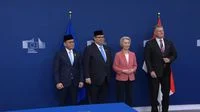
The formal signing ceremony took place in the heart of the European Union’s institutional capital. Indonesian Trade Minister Budi Santoso signed the voluminous treaty text alongside Maros Sefcovic, the European Commissioner for Trade and Economic Security, Interinstitutional Relations, and Transparency.
The historic event was witnessed by European Commission President Ursula von der Leyen, underscoring the political gravity attached to the partnership by the highest levels of EU leadership. For the European Union, the agreement represents a vital strategic anchor in Southeast Asia, cementing economic ties with one of the region’s most dynamic democracies and fastest-growing economies.
Next Steps: Ratification and Domestic Implementation
With the ink now dry on the foundational text, attention shifts rapidly from diplomacy to domestic legislation and administrative execution. The Indonesian government has announced that it will expedite the formal ratification process to ensure that the IEU-CEPA can transition from paper to practice as swiftly as possible.
The ratification process will require parliamentary engagement and extensive coordination across various Indonesian ministries to align domestic regulations with the commitments outlined in the treaty. Similarly, the European Union will advance its internal approval procedures, involving the European Parliament and member state deliberations, before the agreement can formally enter into force.
Once fully implemented, the IEU-CEPA is expected to fundamentally reshape the economic landscape for both trading partners. By bridging two major global economies through predictable rules, preferential market access, and a shared commitment to sustainable development, the agreement sets a robust foundation for decades of shared prosperity, employment generation, and industrial modernization.