Depok Mayor Announces End of Free Rides for BisKita Trans Depok Route as Budget Shifts to Expand Public Transit Network

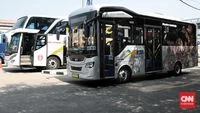
The public transportation landscape in Depok, West Java, is undergoing a significant transition as local authorities prepare to phase out complimentary services for the city’s premier modern bus network. Starting next year, commuters utilizing the BisKita Trans Depok service along the Terminal Depok to Harjamukti LRT Station route will no longer enjoy free rides, a policy adjustment driven by the urgent need to expand municipal transit infrastructure to previously underserved regions.
According to Depok Mayor Supian Suri, the decision to implement a fare system on the maiden corridor is a strategic move designed to reallocate critical municipal subsidies. By ending the zero-fare pilot program on the existing route, the city government can redirect its financial resources toward subsidizing a newly established corridor connecting Bojong Sari to the Depok Terminal. This restructuring reflects the delicate balancing act local governments face as they attempt to modernize urban mobility while managing constrained regional budgets.
The policy shift underscores the ongoing evolution of Greater Jakarta’s integrated transportation ecosystem, where municipalities are increasingly adopting modern, feeder-bus systems to connect residential suburbs with high-capacity transit hubs such as the Jabodebek LRT. However, the financial sustainability of these initiatives remains a central challenge for city administrators who must weigh the benefits of accessible public transport against the realities of operational expenditures.
Financial Realities and Budgetary Constraints
The primary driver behind the termination of the free-ride policy is the substantial cost of maintaining daily operations. Municipal data indicates that the operational expenses required to sustain the BisKita Trans Depok service for the year 2026 will reach approximately IDR 19 billion. This financial burden is currently borne largely by the city budget to encourage initial public adoption and habituate commuters to the new service.
Mayor Supian Suri explained that maintaining complimentary service across multiple concurrent routes is financially unsustainable for the municipal government. Covering the operational costs for both the existing Harjamukti corridor and the upcoming Bojong Sari route simultaneously would severely strain the city’s fiscal capacity.
"If the service remains free today, it will become a paid service at the beginning of next year because the free allocation will be redirected to the second corridor of BisKita Trans Depok, spanning from the Bojong Sari area to the Depok Terminal," Suri stated during a public briefing late last month, referencing data from the official Depok City Government portal.
He further elaborated on the mathematical impossibility of sustaining simultaneous subsidies while network expansion is underway. "Meanwhile, on the other hand, we already have to prepare for additional routes, specifically corridor two from the Depok Terminal area all the way to Bojong Sari. If both operate and both remain free, it becomes too heavy for us to cover this. Therefore, we must prepare corridor two, and corridor one must transition to a paid system."
Structured Fare Categories and Affordability Measures
To mitigate the impact of the fare implementation on vulnerable demographics, the Depok City Government has established a tiered pricing structure designed to protect students, senior citizens, and regular commuters alike. While the subsidy is shifting geographically, the government has ensured that the cost of travel remains regulated and accessible.
Under the newly announced tariff scheme, the standard fare for the Terminal Depok–Harjamukti LRT Station route will be set at IDR 6,000 per trip. This rate applies broadly to the general public, as well as university students who utilize the corridor for daily commuting purposes.
In contrast, special concessionary rates have been introduced for specific segments of the population. Senior citizens aged 60 and above, alongside school-aged students, will benefit from a discounted fare of IDR 4,000 per journey. This represents a two-thousand rupiah differential compared to the standard rate, aimed at supporting educational access and ensuring mobility for elderly residents who rely on fixed incomes.
"So there is a difference of IDR 2,000 compared to the general public. The general public and university students pay IDR 6,000," Suri noted, outlining the municipality’s commitment to equitable transit pricing.
Background and Evolution of BisKita Trans Depok
The introduction of BisKita Trans Depok represents a localized adaptation of the successful Buy the Service (BTS) program initiated by Indonesia’s Ministry of Transportation through the Directorate General of Land Transportation. The BTS scheme is designed to overhaul urban mass transit across major Indonesian cities by partnering with private bus operators, guaranteeing them a standard operational cost reimbursement while requiring them to meet strict service level agreements (SLAs), including punctuality, safety standards, and fleet maintenance.
Depok was integrated into this national modernization framework to alleviate chronic traffic congestion along major arterial roads and to provide a reliable, safe feeder service to the newly operational Jabodebek Light Rail Transit (LRT) system. The Harjamukti route was selected as the inaugural corridor due to its high volume of commuters traveling from Depok into Jakarta and surrounding economic centers daily.
Since its launch, the service has enjoyed high load factors, largely attributed to the initial promotional period where rides were provided free of charge. This strategy successfully familiarized the public with the comfort, reliability, and predictability of modern bus rapid transit, contrasting sharply with traditional, unregulated microbuses (angkot) that have historically dominated the city’s transport sector.
Chronology of Transit Development in Depok
The rollout of modern public transportation in Depok follows a carefully mapped municipal timeline aimed at phasing out outdated transit models and introducing integrated, high-standard alternatives:
- Phase One Planning and Agreement (2022–2023): The Depok City Government entered discussions with the Ministry of Transportation to secure the implementation of the Buy the Service program, identifying critical commuter bottlenecks and mapping out potential high-demand corridors.
- Inauguration of Corridor One (Late 2023–2024): The Terminal Depok to Stasiun LRT Harjamukti route was officially launched. To stimulate demand and ease the transition for daily commuters, the central and local governments subsidized the service, making it entirely free of charge for passengers.
- Operational Evaluation and Expansion Mapping (2025): As ridership stabilized, municipal planners evaluated the financial sustainability of the program. With annual operational costs scaling toward IDR 19 billion, authorities recognized the fiscal impossibility of expanding the network without introducing passenger tariffs.
- Policy Announcement for Tariff Implementation (Late 2025): Mayor Supian Suri formally announced that the Harjamukti route would transition to a paid model, setting the standard fare at IDR 6,000 and concessionary rates at IDR 4,000.
- Scheduled Network Expansion (2027): The financial surplus recovered from the cessation of subsidies on Corridor One will be directly funneled into launching and subsidizing Corridor Two, connecting Bojong Sari directly to the Depok Terminal, thereby extending modern transit benefits to the city’s western sectors.
Implications for Commuters and Urban Mobility
The transition from a complimentary service to a paid fare model carries several important implications for urban mobility, economic planning, and public trust in Depok’s transportation infrastructure.
On one hand, introducing a fare is a vital step toward the long-term economic viability of the transit system. Relying indefinitely on municipal budget allocations is fiscally perilous, as economic downturns or shifts in central government transfer funds could jeopardize public transport operations. By establishing a reliable revenue stream through passenger fares, the system moves closer to self-sustainability, ensuring that services can be maintained consistently without facing sudden budgetary freezes.
Furthermore, the reallocation of funds to the Bojong Sari corridor addresses a significant geographic equity issue. Residents in western Depok have long advocated for better public transport integration, as the city’s rapid population growth has outpaced transit development outside the main Jakarta-Bogor highway corridor. By shifting the promotional subsidy to Corridor Two, the city government demonstrates a commitment to equitable infrastructure distribution, allowing new cohorts of residents to experience modern, reliable bus services.
However, transportation analysts note that the introduction of fares may cause a temporary dip in ridership as cost-sensitive commuters re-evaluate their travel expenses. While IDR 6,000 remains competitive when compared to online ride-hailing services or private fuel costs, it represents an additional fixed monthly expenditure for regular workers and students. The success of the transition will heavily depend on maintaining high service quality—specifically regarding bus frequency, passenger safety, and schedule adherence—to justify the financial cost to the consumer.
Additionally, the integration of BisKita Trans Depok with the broader cashless payment ecosystem in Indonesia will be crucial. Seamless ticketing interoperability between the bus network, the Jabodebek LRT, and KRL Commuterline will determine whether commuters view the integrated system as a unified, frictionless travel experience or as a collection of disjointed fare gates.
As the 2027 deadline approaches, municipal authorities face the dual task of upgrading physical infrastructure along the Bojong Sari corridor while preparing public awareness campaigns to ensure a smooth, transparent transition for daily riders on the Harjamukti line. The success of this dual-track strategy will serve as a critical benchmark for secondary cities across Indonesia attempting to modernize their public transit frameworks within strict fiscal boundaries.