Electric Vehicle Battery Subscription Models Transforming Ownership Dynamics in the Indonesian Automotive Market

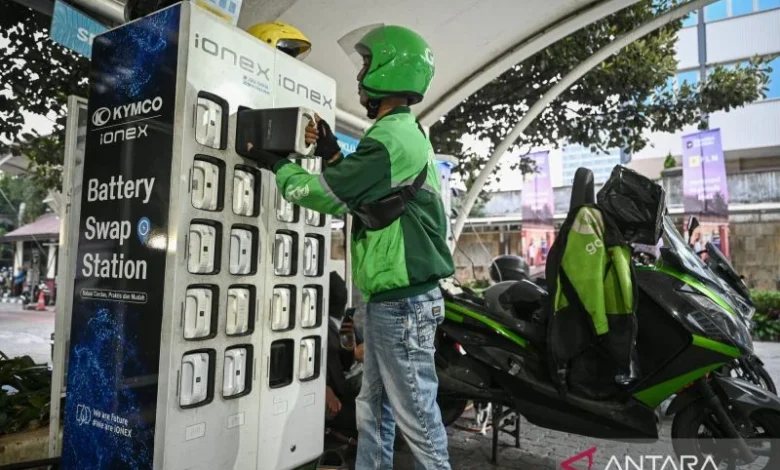
The Indonesian electric vehicle (EV) landscape is undergoing a fundamental shift as manufacturers increasingly adopt battery subscription models to accelerate market penetration and reduce the total cost of ownership for prospective buyers. By decoupling the battery—the most expensive component of an electric motorcycle—from the vehicle chassis, automotive companies are effectively lowering the initial barrier to entry. As of September 2026, the market offers a diverse array of leasing schemes, with monthly subscription fees ranging from as low as Rp84,000 to Rp250,000, depending on the brand, model, and service agreement.
The Strategic Rationale Behind Battery-as-a-Service (BaaS)
The primary motivation for the proliferation of battery subscription models is the high manufacturing cost of lithium-ion battery packs. In traditional internal combustion engine (ICE) vehicles, the engine is a depreciating asset, but the chassis represents the majority of the value. In contrast, the battery in an electric motorcycle can account for 30% to 50% of the total vehicle price. By offering a subscription model, manufacturers such as VinFast, Polytron, and ALVA allow consumers to purchase the motorcycle unit at a significantly discounted "chassis-only" price, effectively shifting the capital expenditure burden from the consumer to the manufacturer’s operational financing model.
This strategy serves two purposes: it makes EVs more price-competitive against traditional gasoline-powered motorcycles and alleviates consumer anxiety regarding battery degradation. Since the battery remains the property of the manufacturer under these agreements, the burden of maintenance, health monitoring, and eventual recycling is largely managed by the provider, not the end user.
Competitive Landscape: Current Subscription Offerings
The following breakdown highlights the primary players currently dominating the Indonesian battery subscription market as of late 2026.
VinFast: Setting the Floor for Entry-Level Costs
VinFast has emerged as a leader in cost-efficiency for the budget-conscious consumer. Their subscription model applies to the Evo, Feliz II, and Viper models. The pricing structure is segmented by battery capacity:
- Single-battery setup: Rp84,000 per month.
- Dual-battery setup: Rp144,000 per month.
These models utilize a dual-slot configuration located beneath the seat, facilitating rapid battery swapping—a critical feature for riders who rely on high daily mileage, such as courier services and ride-hailing drivers.
Polytron: Balancing Performance and Maintenance
Polytron has tailored its subscription fees to reflect the performance capabilities of its specific models. Their tiered pricing includes:
- Fox 200: Rp125,000 per month.
- Fox 500 and Fox R: Rp200,000 per month.
Polytron differentiates its offering through a specific health guarantee: the company commits to replacing the battery if its State of Health (SoH) drops below 85% under normal operating conditions. This provides a long-term safety net for owners, mitigating the risk of performance loss over time.
ALVA: Premium Subscription and Service Integration
ALVA, targeting the mid-to-high-end segment with its N3 and CERVO models, utilizes its "BEBAS" (Berlangganan Baterai Sewa) program. The structure is transparent and inclusive of taxes:
- ALVA N3 (Single Battery): Rp150,000 per month.
- ALVA N3 (Dual Battery): Rp250,000 per month.
- ALVA CERVO (Dual Battery): Rp250,000 per month.
ALVA’s model is positioned as a comprehensive service package, ensuring that the battery remains under professional oversight throughout the duration of the subscription, which appeals to users who prioritize reliability and technical support.
Economic and Environmental Implications
The rise of the subscription model is not merely a marketing tactic; it is an economic necessity for the Indonesian government’s goal of electrifying the two-wheeler sector. With the government continuing to push for the expansion of the EV ecosystem, reducing the upfront purchase price is considered the most effective lever to encourage mass adoption.
Recent data from the Ministry of Industry indicates that the total population of electric motorcycles in Indonesia has reached approximately 280,000 units. While this represents significant growth, it remains a fraction of the total national motorcycle fleet, which exceeds 120 million units. Analysts suggest that for the market to scale into the millions, the subscription model must become standard across all manufacturers to normalize EV ownership for the average commuter.
Furthermore, the environmental impact is substantial. By controlling the battery life cycle, manufacturers can ensure that batteries are properly decommissioned, repurposed for stationary energy storage, or recycled, preventing hazardous waste from entering landfills. This closed-loop system is essential for the long-term sustainability of the EV industry in Indonesia.
Challenges and Consumer Considerations
Despite the clear benefits, potential buyers must perform a thorough cost-benefit analysis. A subscription fee is a recurring operational expense that, over the course of five to seven years, may exceed the cost of purchasing a battery outright. Consumers must consider:
- Usage Patterns: High-mileage users who require frequent battery swaps or charging cycles benefit most from the subscription model, as they consume the battery’s lifespan faster than casual riders.
- Long-Term Commitment: Subscription agreements often come with specific contract durations and cancellation fees.
- Total Cost of Ownership (TCO): Beyond the subscription fee, users must account for electricity costs, routine maintenance of the chassis, braking systems, tires, and mandatory registration taxes.
The Ministry of Transportation and the Ministry of Industry have both expressed support for these schemes, viewing them as a bridge to overcome the "price gap" between ICE and electric motorcycles. Furthermore, the push from the House of Representatives (DPR RI) to accelerate the national battery industry suggests that as domestic production of battery cells increases, the cost of these subscriptions may decrease, further incentivizing adoption.
Official Perspectives and Future Outlook
Industry observers note that the success of these programs depends heavily on the robustness of the battery-swapping infrastructure. If a user pays for a subscription but faces long wait times or limited availability at swap stations, the value proposition diminishes.
"The government remains committed to supporting the EV ecosystem through various incentives," a spokesperson for the Ministry of Industry noted in recent discussions regarding the 2026 fiscal budget. "While direct subsidies on unit prices are a primary tool, the evolution of business models like battery subscriptions is a positive market-led development that we monitor closely to ensure consumer protection."
As the market approaches 2027, it is expected that more manufacturers will enter the fray, potentially leading to a "price war" on battery subscription fees. This competition will likely benefit the consumer, potentially driving monthly costs lower while forcing companies to offer more robust battery health guarantees and wider network coverage.
Conclusion
The shift toward a subscription-based battery model in Indonesia represents a maturation of the electric motorcycle market. By decoupling the most volatile and expensive asset from the vehicle, manufacturers are effectively lowering the barrier to entry, de-risking the ownership experience, and aligning themselves with the government’s broader green energy mandate.
For the prospective buyer, the choice between purchasing a battery and subscribing is a choice between a higher upfront cost with full ownership and a lower entry price with a recurring monthly operational commitment. As technology advances and the domestic battery supply chain strengthens, the subscription model is poised to remain a cornerstone of the Indonesian transition to electric mobility, providing a scalable path toward a cleaner, more efficient transportation future. Consumers are advised to review the specific terms of each manufacturer’s subscription agreement carefully, paying close attention to the conditions for battery replacement and the total cost of ownership over the intended life of the motorcycle.
Related posts: