Cristiano Ronaldo Leaves Portugal National Team Camp Ahead of UEFA Nations League Clash Against Denmark Amid Tactical Disputes

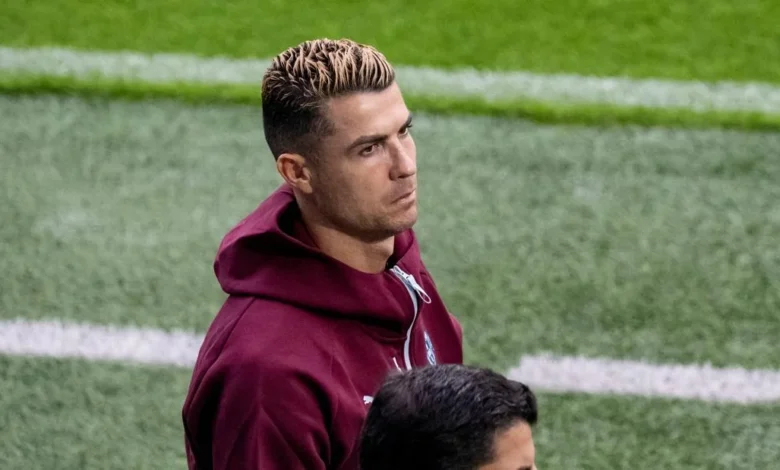
COPENHAGEN — The Portuguese national football team has been plunged into a state of high tension following a dramatic development in the Danish capital. Cristiano Ronaldo, the veteran captain and all-time leading scorer in international men’s football, has reportedly departed the national team’s training camp in Copenhagen. The sudden exit comes just days before Portugal’s crucial UEFA Nations League encounter against Denmark at the Parken Stadium, throwing the squad’s preparations and tactical framework into disarray.
According to exclusive reports from Portuguese broadcaster SIC Noticias, Ronaldo opted to leave the team hotel and head directly to Copenhagen Airport, where his private jet was waiting to transport him back to his residence in Madrid. The unexpected departure has sent shockwaves through the Portuguese Football Federation (FPF) and intensified widespread media speculation regarding an escalating rift between the 41-year-old superstar and newly appointed national team head coach Jorge Jesus.
The Context of the UEFA Nations League Campaign
The reigning champions of Europe are currently in Denmark to finalize preparations for matchday three of Group 4 in UEFA Nations League A, scheduled for Friday, October 2, 2026. The fixture is regarded as a pivotal contest in the group stage, with Portugal vying for supremacy against a formidable Danish side in front of a hostile and sold-out crowd at the Parken Stadium.
As is customary for visiting teams ahead of high-stakes international fixtures, the Portuguese delegation scheduled an official training session at the match venue to allow players to acclimate to the pitch conditions, lighting, and stadium atmosphere. However, media observers and officials immediately noted a glaring omission during the workout: Cristiano Ronaldo was entirely absent from the pitch. While his teammates went through tactical drills and light conditioning under the watchful eye of Jorge Jesus and his coaching staff, the talismanic forward was already airborne, heading south toward Spain.
Chronology of Escalating Tensions
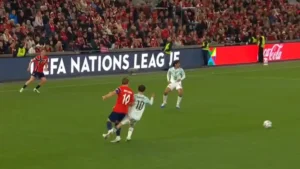
The seeds of the current crisis were sown during Portugal’s previous international outing last week. In their away fixture against Norway, Portugal secured a hard-fought 2-1 victory, keeping their momentum alive in the group stage. However, the post-match headlines were dominated not by the scoreline, but by the startling omission of Cristiano Ronaldo from the starting lineup and his subsequent failure to log a single minute of playing time.
For a player who has historically been the undisputed focal point of the Seleção, remaining glued to the bench for the entirety of a competitive fixture was an unprecedented indignity. In the aftermath of that match, head coach Jorge Jesus addressed the media in the post-match press conference, downplaying any personal animosity and insisting that his decision was made strictly on tactical grounds. Jesus defended his approach by explaining that contemporary opponents demand high-intensity defensive pressing and fluid transitions that require a specific physical profile.
Despite the manager’s diplomatic assurances, analysts and insiders immediately pointed out that the relationship between the veteran player and the coaching staff was entering dangerous territory. The situation deteriorated further when reports emerged within the Portuguese camp indicating that Jesus was prepared to leave Ronaldo out of the starting lineup once again for the upcoming clash against Denmark, and potentially even for the return fixture against Norway scheduled for October 5, 2026, in Lisbon.
Unwilling to accept a diminished squad role or a permanent place among the substitutes, Ronaldo appears to have taken matters into his own hands, choosing to abandon the delegation rather than endure another match on the sidelines.
Tactical Evolution and the Age Factor
At 41 years of age, Cristiano Ronaldo occupies a unique, highly scrutinized position in world football. Having defied the conventional biological limits of professional athletes by playing at the highest level well into his fourth decade, his career has nevertheless entered its final chapter.
When Jorge Jesus assumed leadership of the Portuguese national team, he inherited a squad blessed with immense young talent across Europe’s top leagues, alongside the iconic figure of Ronaldo. Jesus, known for his rigorous tactical discipline, high-pressing defensive structures, and demand for relentless off-the-ball work rate from his forwards, has seemingly concluded that the current tactical blueprint cannot accommodate a static, albeit prolific, central striker.
Modern international football has evolved significantly toward collective defensive blocks and rapid counter-pressing. While Ronaldo remains lethal inside the penalty box, his ability to press central defenders and track back over ninety minutes has naturally waned. Jesus’s calculated gamble—prioritizing a dynamic, high-mobility tactical system over the individual aura and commercial weight of his captain—has triggered a clash between institutional authority and individual legacy.
The Portuguese Football Federation (FPF) has thus far maintained a cautious silence regarding the incident. As of late Thursday evening, no official communique has been issued by the governing body to confirm, deny, or contextualize Ronaldo’s departure from Copenhagen. This administrative vacuum has allowed speculation to run rampant across European sports media, raising questions about whether Ronaldo’s international career has now reached an abrupt and unceremonious conclusion.
Broader Implications for the Seleção
The timing of this crisis could scarcely be worse for Portugal. Entering a crucial double-header in the UEFA Nations League, the team now faces an intense media distraction and the psychological impact of losing their historic leader mid-campaign.
From a sporting perspective, Jorge Jesus must now rally a squad that is acutely aware of the drama unfolding behind closed doors. The absence of Ronaldo removes a proven match-winner from the roster, placing additional pressure on younger attacking options to deliver goals against robust opponents like Denmark and Norway. Moreover, the manager’s authority will be severely tested; backing down in the face of a player mutiny would undermine Jesus’s tactical framework, whereas officially sanctioning or sidelining the nation’s greatest footballing icon risks alienating a significant portion of the fanbase.
As the Portuguese squad completes its final preparations at the Parken Stadium without their famous number 7, the football world watches closely. Whether this episode represents the definitive end of Cristiano Ronaldo’s storied international journey with Portugal or merely the most volatile chapter in a long-running saga, the repercussions will be felt throughout the remainder of the UEFA Nations League campaign and beyond.
Related posts: