Evaluating the Opening Ten Matches of Manchester City Managers in the Premier League Era Under the Abu Dhabi Ownership

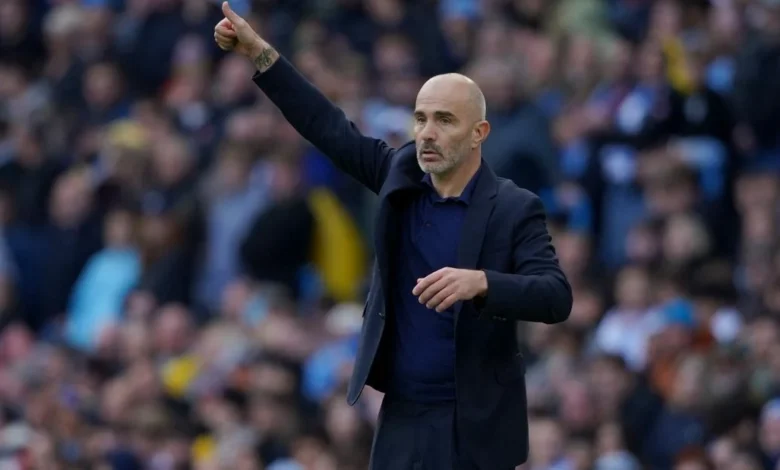
The opening chapter of any managerial tenure at a football club of elite stature serves as a critical barometer for future success, and at Manchester City, this scrutiny is amplified tenfold. Following the transformative era defined by unprecedented domestic and continental dominance, the spotlight has invariably fallen upon the club’s leadership transition. As Enzo Maresca navigates the demanding landscape of the English Premier League, managing his initial sequence of ten fixtures at the helm of the Etihad Stadium outfit, his early performances invite a comprehensive comparative analysis. Placed alongside the foundational milestones achieved by his illustrious predecessors—Pep Guardiola, Manuel Pellegrini, and Roberto Mancini—Maresca’s opening ten-game trajectory offers fascinating insights into the expectations, structural demands, and historical patterns that govern modern managerial trajectories in East Manchester.
To fully understand the weight of these opening ten matches, it is essential to contextualize the unique environment cultivated under the ownership of the Abu Dhabi United Group. Since transforming Manchester City into a global footballing superpower, the club’s hierarchy has maintained a clear strategic vision: sustainable competitiveness, tactical innovation, and a relentless pursuit of silverware. Each managerial appointment during this era has arrived with a distinct tactical philosophy and a unique set of circumstances, yet all share the universal mandate of contending for the Premier League title from the outset.
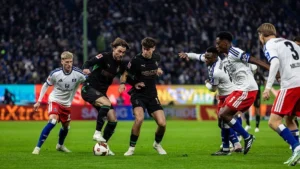
Examining the statistical ledger of Enzo Maresca’s first ten Premier League fixtures reveals a narrative of two distinct halves. The Italian tactician initially enjoyed a blistering start to his campaign, orchestrating a remarkable sequence of seven consecutive victories that established Manchester City near the summit of the table. However, this early momentum encountered a sudden turbulence, characterized by consecutive defeats in the subsequent three outings. This fluctuation leaves Maresca presiding over 21 accumulated points from his first 30 available, positioning the team firmly in third place in the provisional league standings. While the points tally reflects a competitive start that keeps the team within striking distance of the league leaders, the late stumble introduces questions regarding squad depth, tactical adaptability during congested periods, and the inevitable growing pains associated with implementing a demanding stylistic framework.
The historical precedent set by Pep Guardiola upon his arrival at Manchester City in the summer of 2016 provides a compelling benchmark for modern managerial debuts. Guardiola, who would go on to secure an astonishing haul of 20 major trophies and redefine the tactical lexicon of English football, experienced a similarly ambitious introduction. In his first ten Premier League matches during the 2016-17 season, the Catalan manager secured seven victories, two draws, and suffered a solitary defeat, accumulating 23 points. This return was sufficient to propel City to the top of the table in the nascent stages of the campaign. Yet, Guardiola’s debut season serves as a vital reminder that early supremacy does not automatically guarantee a championship crown; despite the strong start, tactical adjustments, defensive vulnerabilities, and fierce competition eventually saw City finish that transitional campaign in third place. For Maresca, following in the footsteps of a managerial titan who established such a towering legacy creates an unprecedented psychological and professional burden, turning every tactical decision into a point of intense comparison.
Diving further back into the archives of the Abu Dhabi era reveals contrasting paths to domestic glory, best exemplified by Manuel Pellegrini’s tenure during the 2013-14 campaign. Pellegrini adopted a squad brimming with talent but needing structural unification following the departure of Roberto Mancini. In his opening ten Premier League matches, the Chilean manager registered a comparatively modest return of 19 points, a statistic that initially caused concern among supporters accustomed to relentless dominance. Yet, Pellegrini’s calm demeanor, emphasis on fluid attacking football, and adept man-management bore fruit as the season progressed. Crucially, the slow start did not preclude ultimate success; Pellegrini famously steered Manchester City to the Premier League title at the conclusion of that campaign, demonstrating that an explosive start is not the sole prerequisite for lifting the trophy in May. Maresca’s current tally of 21 points actually surpasses Pellegrini’s initial ten-game output, offering a statistical foundation that suggests a title challenge remains well within the realm of possibility.
The tenure of Roberto Mancini offers yet another distinct chronological blueprint. Unlike Guardiola, Pellegrini, or Maresca, who all assumed control during the pre-season preparatory window, Mancini was appointed in the middle of the 2009-10 campaign as a mid-season replacement for Mark Hughes. Inheriting a squad mid-stream presents unique challenges, yet the Italian manager managed to accumulate 20 points from his first ten Premier League fixtures at the helm. Mancini’s steadying influence successfully altered the trajectory of the club’s season, culminating in a fifth-place finish in the league table—an upward movement of three positions from the moment he walked through the door. This mid-season stabilization laid the vital structural groundwork for City’s historic title victory two years later. When evaluated against Mancini’s mid-season rescue mission, Maresca’s pre-season integration and 21-point haul represent a solid, if imperfect, continuation of competitive standards.
Analyzing the broader implications of these statistics involves looking beyond mere numerical tallies to examine the structural evolution of the Premier League itself. The contemporary English top-flight is characterized by unprecedented tactical sophistication, financial parity among mid-table contenders, and an intensely congested fixture calendar driven by expanded European competitions. Consequently, managers entering elite clubs face an exponentially compressed timeline to implement their philosophies. A sequence of three consecutive defeats, such as the one recently experienced by Maresca, would have previously been viewed as a minor bump in a long marathon; in the modern era, it instantly triggers heightened media scrutiny and tactical dissection regarding the manager’s long-term viability.
Official commentary and internal reactions from the club hierarchy, while remaining publicly supportive, invariably emphasize patience coupled with accountability. Insiders note that leadership transitions at this level require a balancing act between preserving the winning culture established by predecessors and introducing fresh tactical nuances. Maresca’s background—deeply rooted in rigorous positional play and extensive experience within elite youth and senior setups—was viewed by the board as an ideal alignment with the club’s long-term strategic vision. However, the club’s stringent Key Performance Indicators (KPIs) dictate that historical pedigree and tactical intelligence must swiftly translate into tangible on-field results, particularly when competing against fiercely ambitious rivals for domestic supremacy.
The immediate analytical challenge facing Maresca lies in diagnosing and rectifying the defensive frailties and offensive predictability that contributed to his recent three-match losing streak. Football analysts point out that opponents have increasingly adapted to build-up structures, employing coordinated high presses and compact mid-blocks designed to disrupt the rhythm of Maresca’s tactical machine. To maintain a credible title challenge from their current third-place position, the team must demonstrate tactical flexibility, improving their defensive transition phases and optimizing squad rotation to cope with fatigue. The ability of the manager to pivot during matches and find pragmatic solutions when plan A encounters staunch resistance will ultimately define the success of his debut season.
As the campaign progresses past the foundational ten-match milestone, the overarching narrative shifts from initial impressions to sustained execution. The historical precedents established by Guardiola, Pellegrini, and Mancini demonstrate that the opening ten games are merely the prologue to a complex, demanding narrative. Whether Maresca can emulate Pellegrini by converting a solid, albeit imperfect, start into a championship-winning campaign in his maiden year remains one of the most compelling storylines of the current football season. With 21 points on the board and the squad positioned within striking distance of the summit, the foundations are undeniably present. The definitive verdict on Maresca’s tenure, however, will be written not by the statistics of October and November, but by the resilience, adaptability, and silverware secured when the Premier League curtain falls at the end of the season.