Borussia Monchengladbach Deepened in Crisis After 1-3 Defeat to Hamburg as Indonesian Defender Kevin Diks Fails to Spark Comeback

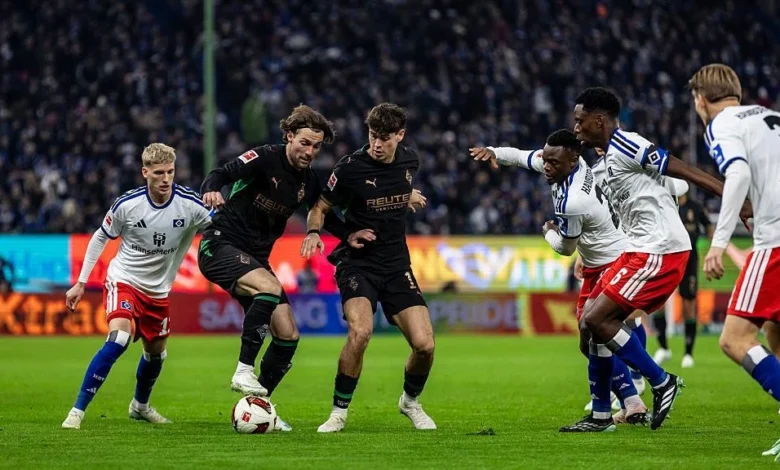
The ongoing struggles of Borussia Monchengladbach in the German Bundesliga took another painful turn on Saturday morning, as Die Fohlen suffered a comprehensive 1-3 defeat at the hands of a determined Hamburg side. Hosted at the historic Volksparkstadion in front of an electrified crowd on Saturday, November 7, 2026, the fixture showcased a game of shifting momentum, tactical discipline, and ultimate heartbreak for the visitors. With this latest setback, Borussia Monchengladbach remains rooted firmly to the foot of the Bundesliga table, compounding mounting pressure on the coaching staff and the entire squad as the winter stretch of the season approaches.
For the traveling Borussia Monchengladbach supporters, the match offered a microcosm of their entire 2025/2026 campaign: flashes of tactical resilience undermined by defensive lapses, disciplinary issues, and a lack of clinical execution in the final third. Meanwhile, Hamburg continued their impressive resurgence under their current technical setup, climbing up to the eighth position in the league standings and cementing their status as a competitive force in the German top flight.
Early Dominance and Tactical Setup
The atmosphere inside the Volksparkstadion was palpable long before the referee blew the opening whistle. Hamburg entered the fixture aiming to capitalize on their strong home form, deploying an aggressive 4-3-3 formation designed to press high up the pitch and disrupt Monchengladbach’s build-up play from the back. Managerial instructions were clear: exploit the wide areas and starve Monchengladbach’s midfield of possession.
Die Fohlen, lining up in a flexible formation that sought to absorb pressure and hit on the counter, found themselves on the back foot almost immediately. Hamburg’s midfield engine room, marshaled brilliantly by Albert Sambi Lokonga, dictated the tempo of the game during the opening exchanges. Lokonga’s vision and spatial awareness quickly proved to be too much for the visitors to handle.
The breakthrough for the hosts arrived in the 11th minute of the match. Following a sustained period of pressure that pinned Monchengladbach deep inside their own half, Sambi Lokonga picked up a loose ball in the center of the park. Spotting the overlapping run of Miro Muheim down the left flank, Lokonga delivered a precise, defense-splitting through-ball. Muheim took a touch to steady himself before unleashing a blistering low shot past the outstretched arms of Monchengladbach goalkeeper. The early strike sent the home supporters into raptures and forced Monchengladbach to completely abandon their cautious tactical approach.
The Response and the Turning Point
Despite falling behind early, Monchengladbach showed signs of life as the first half progressed. Slowly clawing their way back into the contest, the visitors began to find pockets of space between Hamburg’s midfield and defensive lines. Joe Scally, operating effectively down the right flank, became increasingly influential in providing attacking width.
Just as the first half seemed destined to conclude with Hamburg holding a slender lead, Monchengladbach struck. In the 44th minute, right on the stroke of halftime, Scally delivered a pinpoint cross into the penalty area. Forward Robin Hack demonstrated exceptional composure, escaping his marker to meet the delivery and steer a clinical finish past the Hamburg goalkeeper. The equalizer injected a massive dose of confidence into the visiting dressing room as both teams headed into the tunnel for the interval.
However, any tactical adjustments made during the halftime team talk by the Monchengladbach coaching staff were thrown into complete disarray shortly after the restart. In the 49th minute, central defender Ko Itakura, who had already received a yellow card earlier in the match, lunged into a reckless challenge on Hamburg’s Albert Gronbaek. The referee had no hesitation in producing a second yellow card, followed inevitably by the red.
Reduced to 10 men with more than an entire half still to play, Monchengladbach’s defensive structural integrity was severely compromised. Recognizing the immediate danger, the visiting bench was forced into a tactical reshuffle.
Kevin Diks Enters the Fray
In a bid to patch up the fractured backline, Monchengladbach manager turned to the bench and introduced Indonesian national team star Kevin Diks in the 56th minute. Diks, known for his versatility, defensive tenacity, and composure under pressure, was brought on to replace goalscorer Robin Hack, shifting the team into a more conservative defensive shape designed to weather the impending storm.
The inclusion of the Indonesian defender marked another notable chapter in his career journey within European club football, thrusting him into the high-stakes environment of a Bundesliga relegation dogfight. Tasked with organizing a depleted defensive unit alongside his new teammates, Diks faced an immediate baptism of fire against a rampaging Hamburg attack that sensed blood in the water.
Despite Diks’ introduction and his efforts to stabilize the left side of the defense, Hamburg’s numerical advantage quickly told. Just four minutes after Diks stepped onto the pitch, the hosts regained the lead. In the 60th minute, Shafiq Nandja found himself with time and space inside the penalty box after a well-worked team move. Nandja unleashed an unstoppable, ferocious drive that rocketed into the back of the net, leaving the Monchengladbach goalkeeper with zero chance of salvation and restoring Hamburg’s advantage at 2-1.
Hamburg Seals the Victory
With a man advantage and a goal to the good, Hamburg completely dominated possession, pinning Monchengladbach deep into their own defensive third and probing for the killer blow. The relentless pressure finally bore fruit in the 70th minute.
Albert Gronbaek, who had been a thorn in Monchengladbach’s side all afternoon, capped off a stellar individual performance with a goal of his own. Capitalizing on confusion within the overworked Monchengladbach penalty area, Gronbaek reacted quickest to bundle the ball home, extending Hamburg’s lead to 3-1.
The third goal effectively ended any realistic hopes of a Monchengladbach comeback. Although the visitors fought valiantly to limit the damage, the numerical disadvantage and physical fatigue proved insurmountable. Diks and his defensive colleagues worked tirelessly to block subsequent efforts, but the attacking fluency of Hamburg ensured that the scoreline remained unchanged until the final whistle.
Match Statistics and Lineups
A detailed look at the statistical breakdown of the encounter highlights Hamburg’s dominance, particularly following the red card issued to Itakura. The hosts controlled over 60 percent of possession, registered nearly double the number of shots on target, and won the vast majority of their defensive duels in the second half.
The official starting lineups and substitutions for both clubs reflected their respective tactical approaches:
Hamburg Starting XI:
- Goalkeeper: Heuer Fernandes
- Defenders: El Ouahdi, Shafiq Nandja, Sebastiaan Bornauw, Omar Omari, Moller Wolfe
- Midfielders: Albert Sambi Lokonga, Miro Muheim, Adeline
- Forwards: Albert Gronbaek, Daka
Borussia Monchengladbach Starting XI:
- Goalkeeper: Batz
- Defenders: Joe Scally, Sander, Ko Itakura, Chiarodia, Ullrich
- Midfielders: Uno, Neuhaus, Mohya, Machino
- Forwards: Robin Hack (substituted for Kevin Diks, 56′)
Post-Match Analysis and Broader Implications
The ramifications of this fixture extend far beyond the routine collection of three points for Hamburg and a disappointing afternoon for Monchengladbach. For Hamburg, the victory validates their steady progress under their current technical project. Climbing to eighth place with 12 points from their opening fixtures, the club from northern Germany is beginning to look like a stable mid-table side capable of challenging for higher European qualification spots if their current momentum is sustained.
Conversely, Borussia Monchengladbach finds itself in an alarming sporting crisis. Sitting dead last in the Bundesliga standings with a paltry three points accumulated so far, the spectre of a genuine relegation battle is looming large over the club. The defensive frailties exposed by Hamburg—coupled with a recurring inability to maintain discipline across 90 minutes—suggest that structural changes and urgent reinforcements will be required during the upcoming transfer window if the club hopes to secure its top-flight status.
For Kevin Diks and the defensive department, the immediate focus shifts toward damage control and recovery ahead of their next fixture. While Diks’ introduction was born out of tactical necessity following Itakura’s dismissal, the Indonesian defender will need to absorb the lessons from this high-intensity encounter quickly. As a key figure for his national team and an aspiring regular in European club football, performances under pressure in hostile environments like the Volksparkstadion will ultimately define his tenure in the Bundesliga.
As the German top flight pauses momentarily to evaluate the weekend’s results, Borussia Monchengladbach’s technical staff faces profound questions. The margin for error is shrinking rapidly, and unless Die Fohlen can translate moments of individual brilliance into collective defensive solidity and consistent results, the historic club faces an increasingly arduous battle for Bundesliga survival.