Jakarta, Indonesia – Petanque, an engaging sport originating from France, often gives the impression of a leisurely pastime involving the simple act of throwing metal balls on a sandy or gravel surface. However, beneath its seemingly relaxed exterior lies a demanding discipline that hinges on intricate strategy, pinpoint precision, and unshakeable composure. Far from a mere recreational activity, competitive Petanque requires players to possess a deep understanding of its fundamental rules and advanced techniques, governed by the Fédération Internationale de Pétanque et Jeu Provençal (FIPJP), the sport’s global governing body. This article delves into the origins, rules, strategic depth, and growing international footprint of Petanque, offering insights into what makes this sport a captivating blend of physical skill and mental acumen.
The Genesis and Evolution of Petanque
The story of Petanque begins in the picturesque town of La Ciotat, near Marseille, France, in 1907. Legend has it that the sport was invented by Jules Lenoir, a local champion of jeu provençal (a precursor to Petanque that involved a running start before throwing) who was unable to play due to rheumatism. To accommodate him, a friend suggested he throw the boules from a stationary circle, with his feet firmly planted on the ground. This improvised game quickly caught on, giving birth to the term "pieds tanqués," meaning "feet planted," which eventually evolved into the name "Petanque." This origin story underscores the sport’s inherent accessibility, allowing individuals of varying physical conditions to participate.
From its humble beginnings, Petanque rapidly spread throughout France, becoming a beloved national pastime played in village squares, parks, and dedicated boules courts. Its popularity was fueled by its straightforward objective, low barrier to entry, and the social camaraderie it fostered. As French culture expanded globally, so too did Petanque, finding new enthusiasts across continents. The formalization of the sport began with the establishment of the FIPJP in 1958, which was crucial for standardizing rules, organizing international competitions, and promoting Petanque as a legitimate competitive sport worldwide. Today, the FIPJP boasts affiliations with over 100 national federations, a testament to Petanque’s remarkable global reach.
Understanding the Core: What is Petanque?
At its heart, Petanque is a game where players aim to throw hollow metal balls, known as "boules," as close as possible to a smaller wooden or synthetic target ball called the "jack" or "cochonnet." The game can be played on virtually any flat, open terrain, including sand, gravel, packed earth, or even grass, though official competitions typically take place on prepared courts. The versatility of playing surfaces adds an element of adaptability and strategy, as different terrains influence how the boules roll and react upon landing.
The objective is simple: score points by having your team’s boules closer to the jack than your opponent’s boules at the end of each round, or "end." The first team to accumulate a predetermined number of points, typically 13, wins the game. This straightforward objective belies the complex decision-making involved in every throw, as players must consider not only their own placement but also how to disrupt their opponents’ positions.
The Arsenal: Equipment Specifications
Precision and regulation are key in competitive Petanque, and this extends to the equipment used:
- Boules: These hollow metal spheres are typically made of steel alloys, ensuring durability and a specific weight distribution. According to FIPJP regulations, boules must have a diameter between 7.05 cm and 8.0 cm and weigh between 650 grams and 800 grams. Professional players often choose boules based on their playing style: "pointers" might opt for smaller, heavier boules for better control and stability, while "shooters" (players who aim to knock away opposing boules) might prefer larger, lighter boules for greater impact. Unlike the jack, boules are magnetic, but this property is irrelevant to gameplay.
- Jack (Cochonnet): The target ball is significantly smaller, made of wood or synthetic material, with a diameter of 30 mm and a weight ranging from 10 to 18 grams. A crucial regulation is that the jack must not be magnetic, ensuring fair play and preventing any manipulation with magnetic tools. Its small size makes it a challenging target, emphasizing the need for acute accuracy.
The Battlefield: Area and Team Composition
The official playing area for Petanque, known as a "boulodrome," typically measures a minimum of 12 meters in length and 3 meters in width, though informal games can adapt to available space. Boundary lines, often marked by string or nails, define the playing field. Any boule or jack that goes out of bounds is considered "dead" and is removed from play, impacting the strategic flow of the round.
Petanque can be played in various team formats, each requiring different strategic approaches:
- Singles (Tête-à-tête): One player per team, each using three boules. This format emphasizes individual skill and strategic independence.
- Doubles: Two players per team, each using three boules. This requires coordination and communication between partners.
- Triples: Three players per team, each using two boules. This is the most common competitive format, demanding sophisticated teamwork, role specialization (pointer, shooter, middle player), and advanced strategic planning.
The FIPJP’s structured team compositions ensure balanced competition and foster different dynamics within the game, from intense individual duels to complex team strategies.
The Rules of Engagement: A Step-by-Step Guide
A detailed understanding of the rules is paramount for both competitive play and appreciating the strategic depth of Petanque:
- The Throwing Circle (Cercle de Lancement): Players must throw their boules from within a designated circle. This circle has a diameter of 35-50 cm. If a prefabricated circle is used, the diameter is typically 50 cm. Crucially, the circle must be placed at least 1 meter away from any obstacles, ensuring a clear throwing zone.
- Player’s Stance: Adhering to the "pieds tanqués" principle, both of the player’s feet must remain fully inside the throwing circle and on the ground until the thrown boule touches the playing surface. This rule prevents players from gaining an unfair advantage through momentum or excessive reach, reinforcing the sport’s emphasis on precision from a static position.
- Throwing the Jack: The game begins with a coin toss, with the winning team earning the right to throw the jack first. For a jack throw to be valid, it must land within a specific distance range (typically 6 to 10 meters from the throwing circle) and be at least 1 meter away from any obstacles. If the jack throw is invalid, the opposing team gets a chance. If they also fail, the first team gets another attempt, or the jack is placed at a valid position by agreement.
- Throwing the Boules: Once the jack is in a valid position, the team that threw the jack makes the first boule throw. This boule then becomes the "leading boule." The opposing team then takes its turn. The fundamental rule of play dictates that the team whose boule is currently farthest from the jack must continue throwing until they succeed in placing a boule closer to the jack than any of the opponent’s boules, or until they run out of boules. This iterative process continues until all players have thrown all their boules.
- Scoring an End: At the conclusion of each "end" (round), the team with the boule closest to the jack wins the end. Points are then awarded based on how many of the winning team’s boules are closer to the jack than the closest boule of the opposing team. For instance, if Team A has two boules closer to the jack than Team B’s closest boule, Team A scores two points. Official measurement tools are used for precise determination, and the opposing team always has the right to verify measurements.
- Progressing to the Next End: The team that won the previous end earns the right to throw the jack to start the new round. The new throwing circle is usually drawn around the spot where the jack came to rest at the end of the previous round, maintaining continuity and sometimes creating new strategic challenges on different parts of the terrain.
- Winning the Game: A Petanque match is won by the team that first reaches a cumulative score of 13 points. This requires not only consistent performance but also strategic accumulation of points across multiple ends.
Beyond the Basics: Strategy and Mental Fortitude
While the rules are straightforward, mastering Petanque involves a complex interplay of strategy and mental discipline. Players must decide whether to "point" (throw a boule to land close to the jack) or "shoot" (throw a boule to hit and displace an opponent’s boule or even the jack itself).
- Pointers require exquisite touch and control, aiming to gently roll or loft their boules into optimal positions. They must consider the terrain, potential obstacles, and the desired trajectory to nestle their boule closest to the jack.
- Shooters need power, accuracy, and nerve. A successful "carreau" (a shot where the thrown boule hits an opponent’s boule and stays in its place) is one of the most celebrated and impactful plays in Petanque, instantly changing the dynamic of an end.
Team strategy involves coordinating these roles. Should the team prioritize defensive pointing, creating a blockade around the jack, or take aggressive shooting risks to clear the path? The decision often depends on the current score, the number of boules remaining for each team, and the specific layout of the terrain. The psychological aspect is equally vital; maintaining focus, managing pressure, and adapting to unforeseen circumstances are hallmarks of elite Petanque players. A moment of lost concentration can lead to a missed throw that shifts momentum entirely.
Petanque on the Global Stage: A Sport for All
The FIPJP has been instrumental in elevating Petanque’s status from a recreational game to a serious competitive sport. World Championships for men, women, and youth are held regularly, drawing top talent from around the globe. Petanque is also a staple at multi-sport events like the World Games and has a significant presence in regional championships, notably the Southeast Asian (SEA) Games.
In Southeast Asia, Petanque has experienced a boom in popularity, with countries like Thailand, Vietnam, Cambodia, Laos, Malaysia, and Indonesia boasting strong national teams and enthusiastic player bases. The sport’s accessibility, requiring relatively simple equipment and adaptable playing fields, makes it particularly suitable for development in diverse regions. Its inclusion in prestigious events like the SEA Games has further boosted its profile, inspiring new generations of players and attracting government support for training and infrastructure.
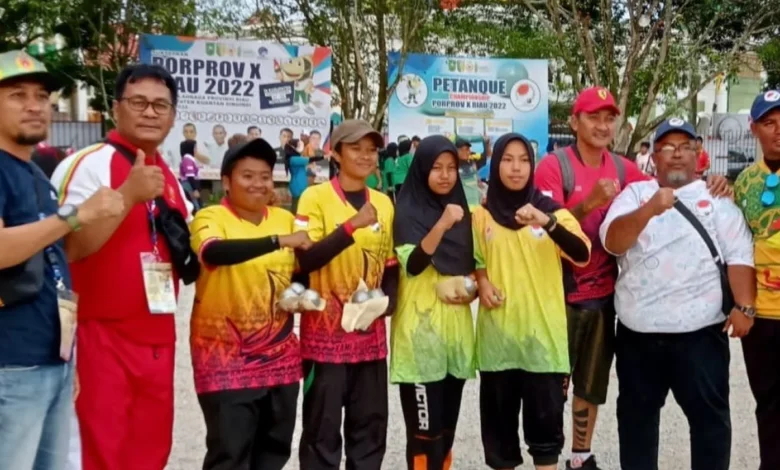
Indonesia, for example, has seen significant growth in Petanque. The references in the original article to teams advancing to finals, Aceh winning the overall championship at the National Sports Week (PON), and Sumatran teams securing medals highlight the sport’s burgeoning competitive landscape within the archipelago. Organizations like the Federasi Olahraga Petanque Indonesia (FOPI) are actively working to promote the sport, organize national competitions, and train athletes for international representation. This local success contributes to Petanque’s broader narrative of global expansion and diversification.
Cultural Significance and Community Impact
Beyond its competitive aspects, Petanque retains a strong cultural and social significance, particularly in its homeland of France and other European countries. It is a quintessential social activity, bringing together families, friends, and communities in parks and village squares. Its inclusive nature, allowing people of all ages and physical abilities to play together, fosters intergenerational connections and promotes active outdoor lifestyles.
In many communities, Petanque clubs serve as vital social hubs, offering not only opportunities for play but also fostering a sense of belonging and camaraderie. The game’s gentle pace, interspersed with intense moments of strategy, encourages conversation, laughter, and shared experiences, making it a powerful tool for community building.
The Future Outlook: Olympic Ambitions
The FIPJP harbors a long-term ambition for Petanque to be included in the Olympic Games. Gaining Olympic recognition would be a transformative step, significantly raising the sport’s global profile, attracting greater funding, and inspiring even more aspiring athletes worldwide. The FIPJP has actively engaged with the International Olympic Committee (IOC), highlighting Petanque’s global reach, gender equality, accessibility, and spectator appeal. While the path to Olympic inclusion is challenging, the continuous growth of Petanque, especially in diverse regions, strengthens its case.
Inferred statements from FIPJP officials often emphasize Petanque’s embodiment of fair play, precision, and camaraderie, positioning it as a universal sport accessible to all. Players and coaches frequently attest to the sport’s unique blend of physical skill and mental challenge, noting that while it appears casual, competitive Petanque demands intense concentration, strategic foresight, and unwavering calm. Every throw is a calculated risk, making mastery of the game incredibly rewarding.
As Petanque continues to grow, both as a competitive sport and a beloved social activity, its appeal lies in this delicate balance: a simple objective masking profound strategic depth, a relaxed atmosphere punctuated by moments of intense precision, and a global presence rooted in local community spirit. From the dusty squares of La Ciotat to the international arenas of the SEA Games, Petanque remains a testament to the enduring human fascination with skill, strategy, and the joy of shared competition.
Related posts: