Toyota Motor Manufacturing Indonesia Focuses Domestic Market for Veloz Hybrid Amid Surging Local Demand


KARAWANG, INDONESIA — PT Toyota Motor Manufacturing Indonesia (TMMIN), one of the nation’s leading automotive manufacturing powerhouses, has officially announced that the production of its highly anticipated electrified multi-purpose vehicle, the Veloz Hybrid, is currently being channeled entirely toward satisfying domestic market demand. This strategic decision underscores the rapidly shifting consumer preferences within Southeast Asia’s largest automotive market, where buyers are increasingly gravitating toward eco-friendly yet practical family vehicles.
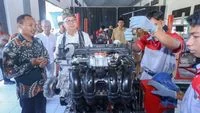
The announcement was made during a media gathering and factory tour in Karawang, West Java, shedding light on the company’s operational priorities, production milestones, and long-term electrification roadmap in Indonesia. While export markets have traditionally been a significant pillar for Toyota’s Indonesian manufacturing footprint, the unprecedented enthusiasm from local consumers has necessitated a temporary, deliberate prioritization of domestic distribution.
Production Milestones and Local Market Dynamics
According to official figures disclosed by I Nyoman Winaya, Vice President Director of PT TMMIN, the automotive giant has already manufactured a substantial volume of electrified models to keep pace with the influx of orders. From the commencement of production up to the end of August, TMMIN successfully rolled out 15,737 units of the Veloz Hybrid.
"For the production capacity at TMMIN, our fundamental approach is to follow the demands of the consumer," Nyoman stated during the briefing in Karawang. "We constantly strive to align our manufacturing capabilities with the specific needs of our customers. Regarding the Veloz HEV, from the very beginning of its production cycle through the end of August, we have manufactured a total of 15,737 units. Looking ahead at Toyota Indonesia’s production projections, we naturally hope to maintain this upward growth trajectory."
The remarkable uptake of the Veloz Hybrid reflects a broader paradigm shift in the Indonesian automotive landscape. For decades, the traditional Internal Combustion Engine (ICE) vehicles dominated the roads, particularly in the multi-purpose vehicle (MPV) segment—a vehicle category deeply engrained in the lifestyle and transportation needs of Indonesian families. However, rising environmental awareness, coupled with government incentives and expanding charging and refueling infrastructure, has accelerated the adoption of Hybrid Electric Vehicles (HEVs).
By focusing entirely on the domestic market for the Veloz Hybrid, Toyota aims to shorten waiting lists for local buyers, ensuring that the transition toward low-emission mobility remains smooth and accessible. Industry analysts note that securing domestic supply first is a calculated move to capture market share in the burgeoning electrified segment before facing intense competition from incoming regional rivals, particularly Chinese and South Korean manufacturers aggressively introducing affordable electric and hybrid options into the Indonesian archipelago.
Export Strategy and the Enduring Dominance of Avanza and Veloz
Despite the heavy domestic focus on the hybrid variant, TMMIN remains an export-oriented manufacturing hub that supplies vehicles to dozens of countries across Asia, the Middle East, Latin America, and Africa. When questioned regarding the potential export timeline for the Veloz Hybrid, Nyoman emphasized that the company is exercising caution and avoiding any rushed decisions.
"At present, the Veloz Hybrid remains focused on fulfilling the needs of the Indonesian market," Nyoman explained. "Moving forward, we remain entirely open to exploring export opportunities, naturally while carefully considering the specific requirements, market characteristics, and demand profiles in each respective destination country."
The export portfolio of Toyota Indonesia continues to rely heavily on its core gasoline-powered and multi-purpose models. Nyoman pointed out that the Avanza and Veloz nameplates, in their various configurations, continue to act as the foundational pillars driving Toyota’s export volume from Indonesian soil.
Up to August of this year, TMMIN’s export manifest featured a diverse lineup of vehicles proudly bearing the "Made in Indonesia" badge. These include the Toyota Avanza, Veloz, Raize, Yaris Cross, Fortuner, and the entry-level Agya (known internationally in certain markets as the Wigo). Among these globally distributed models, the Avanza and Veloz combination consistently accounts for the highest volume of exported units, demonstrating that Indonesian-built family cars maintain a stellar reputation for durability, reliability, and value in international markets.
The delicate balance between supplying domestic consumers hungry for electrification and maintaining robust export quotas requires meticulous supply chain management. TMMIN’s ability to scale operations will determine how quickly the company can eventually internationalize its hybrid offerings without compromising local delivery timelines.
Expanding Industrial Infrastructure and Battery Production
To support the escalating volume requirements of its vehicle assembly lines and to seamlessly integrate the electrification ecosystem within its domestic operations, TMMIN is actively implementing strategic infrastructural upgrades. A core component of this industrial evolution involves expanding the production capacity of critical high-tech components, most notably the battery packs required for Hybrid Electric Vehicles.
Currently, the manufacturing of HEV batteries is concentrated within a single operational zone inside the company’s sprawling facility network. However, anticipated demand spikes necessitate a decentralized and enlarged manufacturing footprint.
"At present, HEV battery production remains focused at Plant 2," Nyoman noted, outlining the company’s industrial expansion plans. "However, moving forward, to adequately support our vehicle production quotas, we will undoubtedly execute a capacity enhancement initiative. One of the primary pathways we are currently studying is the development of an dedicated HEV Battery Production Line at Plant 1."
This localized battery manufacturing strategy aligns closely with the Indonesian government’s ambitious downstream industrialization mandates. For several years, Jakarta has pushed aggressively to position the country as a global hub for electric vehicle supply chains, leveraging its massive domestic nickel reserves—a crucial mineral for lithium-ion battery chemistry. By investing in on-site or localized battery assembly lines, TMMIN is not only reducing logistical vulnerabilities and import dependencies but also actively contributing to the transfer of advanced technological skills to the local workforce.
The decision to study and potentially deploy a second battery production line at Plant 1 signals that Toyota’s electrification strategy in Indonesia is entering a mature, scaling phase. It transitions from introductory assembly trials to high-volume industrial execution.
Broader Implications for Indonesia’s Automotive Ecosystem
The trajectory of the Veloz Hybrid and TMMIN’s broader manufacturing adjustments carry profound implications for the Indonesian automotive sector at large. Indonesia aims to achieve significant carbon emission reductions under its enhanced Nationally Determined Contributions (NDC) and has set a long-term goal of achieving net-zero emissions by 2060 or sooner.
The transportation sector is a critical battleground in this environmental crusade. While Battery Electric Vehicles (BEVs) receive significant media attention, hybrid electric vehicles often serve as a pragmatic bridge for emerging economies. Hybrids do not rely heavily on an extensive, nationwide public charging infrastructure—which remains a developmental challenge across Indonesia’s thousands of inhabited islands—yet they deliver substantial fuel economy improvements and tailpipe emission reductions compared to conventional internal combustion engines.
By dedicating its initial Veloz Hybrid production runs entirely to domestic consumers, Toyota is effectively testing the appetite for electrified family transport in real-world conditions. The feedback gathered from these tens of thousands of users will likely influence future iterations, pricing strategies, and local component sourcing percentages. Furthermore, as local content requirements (Tingkat Komponen Dalam Negeri / TKDN) become increasingly stringent for automotive manufacturers operating in Indonesia, TMMIN’s investments in domestic battery assembly lines will help secure vital regulatory compliance and government tax incentives.
As the year progresses toward its final quarter, all eyes will remain on Karawang. The success of the Veloz Hybrid in local driveways will likely serve as a litmus test for the broader commercial viability of electrified MPVs in developing markets. If demand remains robust and industrial expansions proceed according to plan, TMMIN may soon find itself not only satisfying local eco-conscious families but also preparing to export a new generation of Indonesian-built green technology to the global stage.