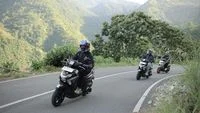
Navigating multi-island journeys has historically presented formidable challenges for two-wheeled vehicles, particularly commuter-focused automatic motorcycles. However, these preconceived limitations were definitively dismantled during the intensive GEAR ULTIMATE RIDE Celebes Expedition. Spanning an impressive total distance of 2,740 kilometers over a rigorous 20-day itinerary, this trans-regional automotive journey traversed four distinct provinces, seven major cities, and 23 regencies. Beginning in South Sulawesi, the expedition pressed northward through Central Sulawesi and Gorontalo, ultimately concluding in North Sulawesi. This extensive trial served as a definitive validation of the durability, adaptability, and mechanical resilience of the Yamaha GEAR ULTIMA, positioning the multi-functional scooter not merely as an urban commuter, but as a robust mobility solution capable of conquering demanding topography.
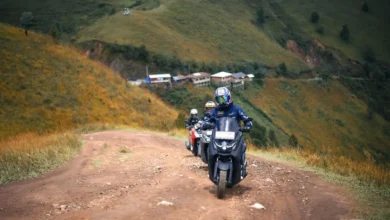
The grueling nature of the expedition was strategically designed to test the absolute limits of the vehicle under real-world conditions. Over the course of nearly three weeks, the test fleet confronted a diverse spectrum of challenging geographic landscapes unique to the island of Sulawesi. From winding mountain passes and coastal stretches to rugged gravel trails, unpredictable weather conditions, and sharp hairpin turns, the scooter successfully completed the journey with minimal mechanical intervention. This performance reinforced its branding as a reliable, heavy-duty utility vehicle tailored specifically to the dynamic mobility demands of active young families and commercial operators throughout Indonesia.
Comprehensive Route Analysis and Geographic Challenges
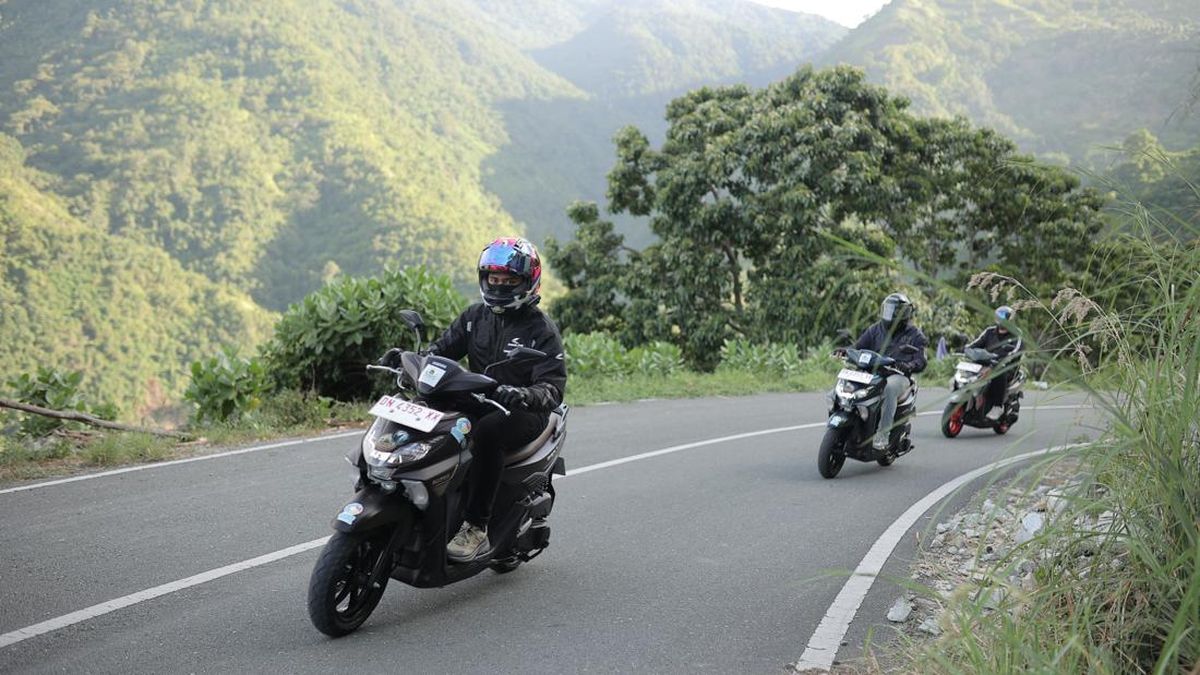
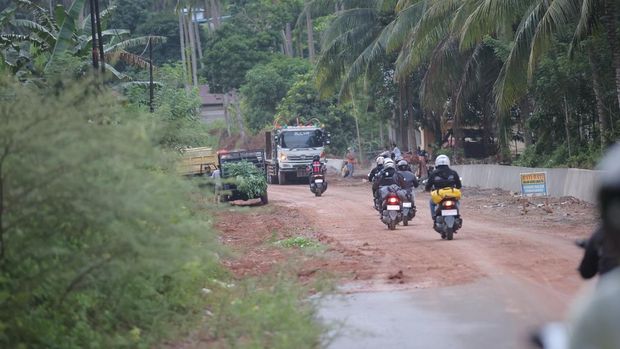
The topographical profile of Sulawesi provided an uncompromising testing ground for the Yamaha GEAR ULTIMA. Throughout the expedition, riders faced a complex matrix of obstacles, including steep inclines, loose gravel, muddy plantation trails, and deteriorating asphalt surfaces while attempting to access remote regional destinations. The vehicle’s ability to maintain structural integrity and operational stability across these severe environments can be attributed to its engineered powertrain and chassis configuration.
At the core of this performance is the Blue Core Hybrid 125 cc engine, which delivers responsive torque delivery necessary for scaling steep inclines without significant power loss. This powerplant is complemented by a rigid frame architecture, balanced weight distribution, and a lightweight handling profile that ensures precise maneuverability. During the expedition, the scooter successfully conquered famously challenging routes such as the Ollon Valley, Pundak Salena, To’Tombi Lolai, Puncak Tetetana, as well as the notoriously severe agricultural tracks of the Alindau Durian Plantation and the remote terrain leading to the Illohuwa Waterfall. The mechanical synergy of these components highlights the viability of hybrid technology within the everyday utility scooter segment.
Unprecedented Cargo Capacity and Commercial Utility
Beyond mechanical endurance and powertrain efficiency, the expedition placed a heavy emphasis on evaluating the vehicle’s cargo capacity and practical utility. In many regions of Indonesia, small displacement scooters double as primary commercial transport for agricultural and marine goods. To test these capabilities, the Yamaha GEAR ULTIMA was subjected to extreme payload conditions across various regional economies.
In agricultural zones, the vehicle demonstrated its stability while transporting harvests ranging between 100 and 200 kilograms of unhusked rice (gabah). Within regional plantation corridors, the scooter successfully carried 100-kilogram loads of fresh durian, while coastal testing involved the secure transport of 60 kilograms of fresh tuna. These heavy transport tasks were executed safely due to the integration of a reinforced multi-purpose rear handle design and a dual-hook system that secures cargo placement and prevents shifting during transit.
Furthermore, for long-distance touring and daily errands alike, the vehicle incorporates an 18.6-liter under-seat storage compartment. This generous storage volume allows riders to stow personal gear securely without compromising legroom or rider ergonomics, establishing the model as an adaptable asset for both commerce and recreation.
Fuel Efficiency and Long-Range Endurance
Sustaining a 2,740-kilometer expedition requires meticulous fuel management and high thermal efficiency. The Yamaha GEAR ULTIMA addressed this requirement through its advanced powertrain management, registering exceptional fuel economy figures over the course of the 20-day journey. Equipped with a 5.1-liter fuel tank—one of the largest capacities within its specific displacement class—the scooter demonstrated an extended operational range capable of covering up to 311 kilometers on a single full tank of fuel under optimal conditions.
Detailed telemetry data collected throughout the expedition recorded a peak fuel efficiency of 60.98 kilometers per liter on favorable routes. Even when subjected to punishing off-road environments, steep elevation changes, and loose surfaces, the overall fleet average maintained an impressive efficiency rating of 57.63 kilometers per liter. This level of fuel economy is primarily driven by the integration of the Blue Core Hybrid 125 cc system alongside the Stop & Start System (SSS), which automatically cuts off the engine during brief idling periods, thereby reducing fuel consumption and emissions in congested traffic or stop-and-go rural conditions.
The grueling transit from Makassar to Manado served as the ultimate test of this efficiency, proving that a compact hybrid scooter can successfully execute long-distance touring itineraries without imposing excessive operational costs on the rider.
Ergonomics, Handling, and Rider Comfort
Physical endurance is a critical factor during extended touring assignments, and the feedback gathered from participants provided valuable insights into the vehicle’s ergonomic design. One of the most demanding operational phases of the expedition required riders to navigate a continuous, non-stop journey exceeding 550 kilometers from Gorontalo to Manado. Despite the grueling distance and sustained saddle time, participants reported minimal physical fatigue, a testament to the neutral riding posture and well-padded seating geometry engineered into the chassis.
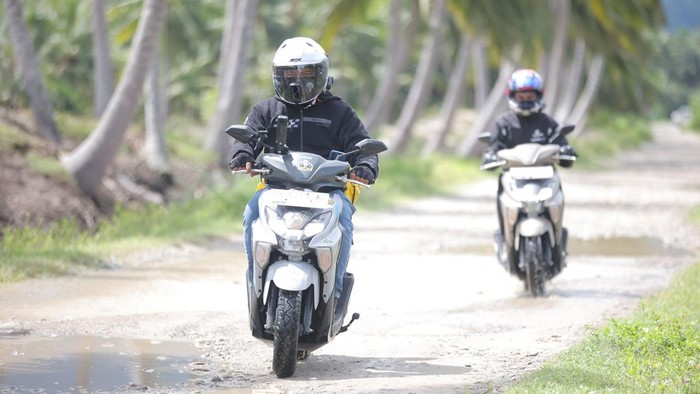
The agile handling characteristics and predictable steering response allowed riders to maintain precise control through complex corner sequences and deteriorating road surfaces. To enhance operational awareness, the instrument cluster features an informative digital speedometer, providing clear, real-time data to the operator. For consumers prioritizing advanced security and convenience, higher-tier configurations such as the Hybrid Smart variant incorporate the Smart Key System (keyless ignition).
Product Lineup and Market Positioning
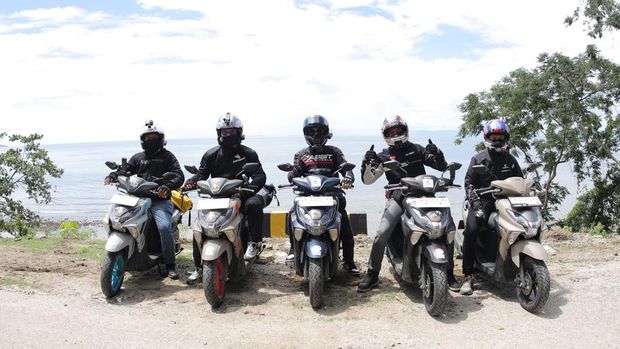
The Yamaha GEAR ULTIMA is currently marketed across three distinct tier variants to accommodate diverse consumer preferences and aesthetic tastes. The standard Hybrid series is offered in minimalist White and Black colorways; the Hybrid Solid variant introduces vibrant Solid Orange and Solid Blue options; and the flagship Hybrid Smart series features premium Magma Black and Matte Blue finishes.
The conclusion of the Celebes Expedition underscores the strategic evolution of compact automatic motorcycles in emerging markets. By successfully bridging the gap between heavy-duty commercial utility, long-distance touring endurance, and everyday urban commuting convenience, the Yamaha GEAR ULTIMA has established a distinct competitive benchmark. The empirical data gathered across the 2,740-kilometer route affirms its standing as a versatile, cost-effective, and mechanically dependable mobility solution tailored to the multifaceted demands of modern Indonesian households and commercial operators alike.